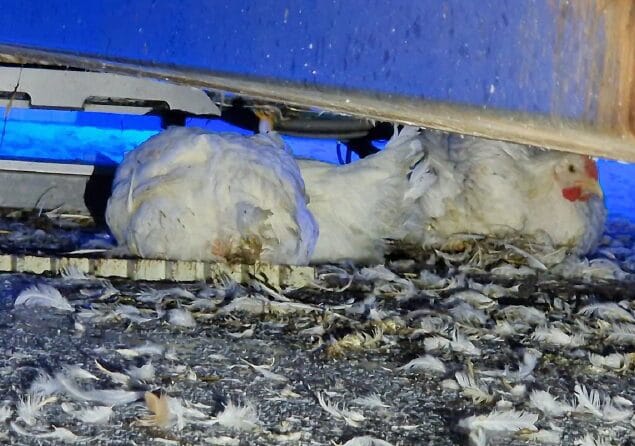
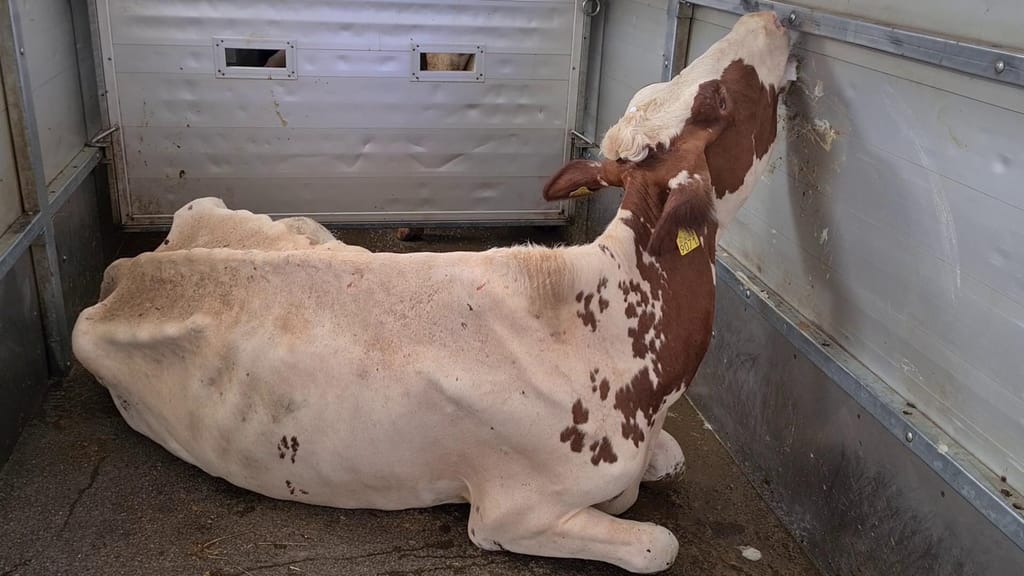
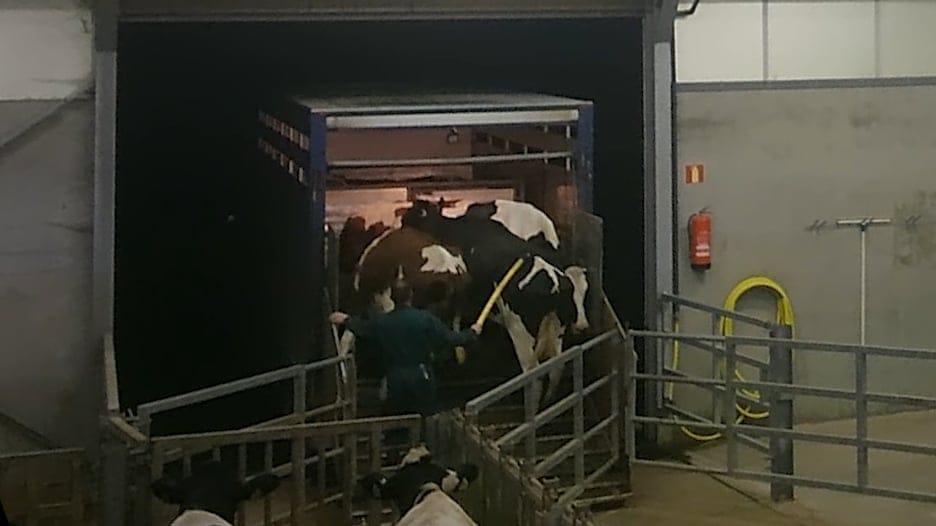
The investigation group Ongehoord has captured footage of what is claimed to be the most animal-friendly turkey farm in the Netherlands. According to the website of Sjroete Farm in Helden, Limburg, owner Ruud Bos expresses an "inexhaustible love" for turkeys. However, the footage shows him and his wife, Sabrina, removing the animals from the barns without care. In another clip, Bos hangs his turkeys upside down on the slaughter line. He uses the controversial water bath method to electrocute the animals. Despite Bos's failure to comply with legal regulations, the Netherlands Food and Consumer Product Safety Authority (NVWA) has not taken any action.
Where we filmed
Natural life
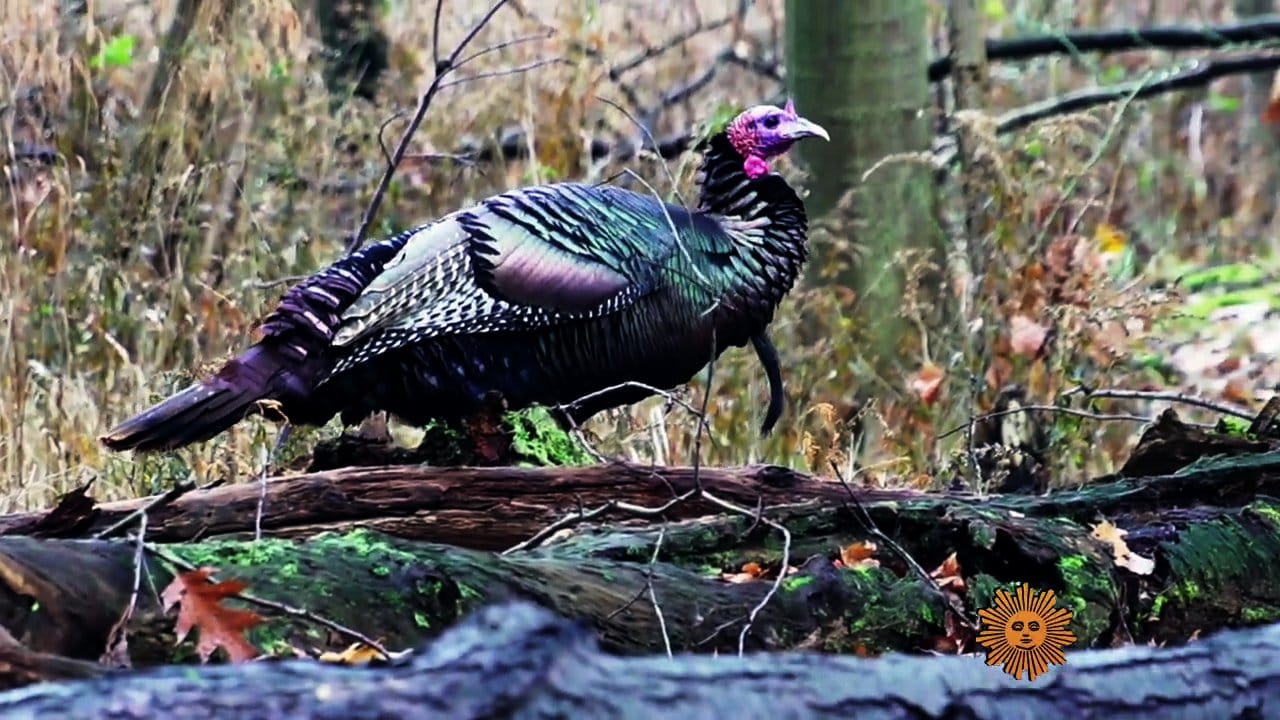
Wild turkeys come from South and Central America, where they inhabit pine and oak forests. Their habitat can range from 160 to over 800 hectares.[1] They spend most of their day searching for food like berries, leaves, grass, nuts, seeds, insects, and worms. Additionally, they dedicate a significant amount of time to dusting, basking in the sun, and grooming their feathers. Wild turkeys are capable of flight. They roost in trees to stay safe from predators.[2]
Turkeys are social animals that live in groups. Outside of the breeding season, males and females form separate groups. A female group consists of several hens and their young, allowing for a group size of up to 200 members. Despite this, turkeys can easily recognize one another.[3]
The breeding season for turkeys, like most birds, takes place in the spring. Male turkeys join female groups during this time but separate again after mating. A fertilized hen lays about ten eggs over two weeks. The chicks hatch in late May or early June and immediately follow their mother. The hen teaches her young how to find food. For the first three to four weeks, the chicks sleep on the ground under their mother's wings. Once they can fly, they roost in trees, just like the older turkeys.
Because turkeys are prey animals, they possess a strong instinct to fly. As flight animals, they are highly sensitive to stress, loud noises, and other stimuli that may startle them.[4] Wild turkeys typically live for about 3 to 5 years.[5]
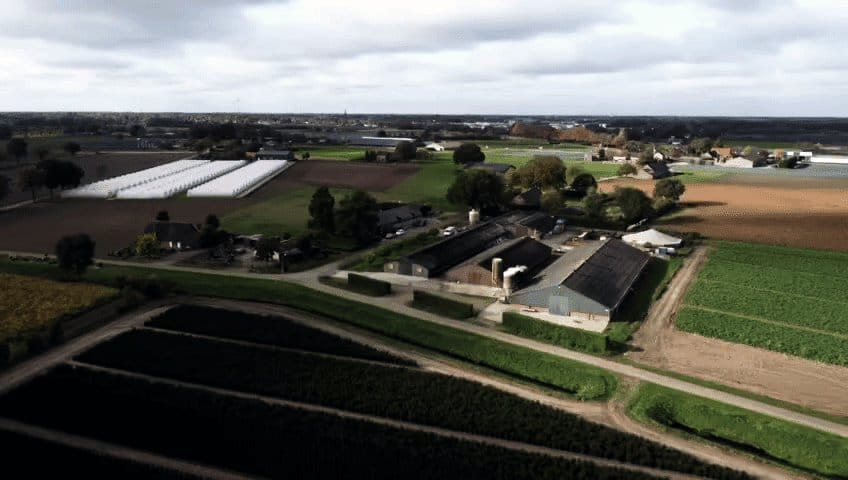
Sjroete Farm
In Helden, Limburg, Ruud and Sabrina Bos breed turkeys for meat production, offering "Burgundian pasture-raised turkey meat." They present themselves to consumers as artisanal farmers with an "inexhaustible love" for their animals. Their website and social media showcase a compassionate image of their ‘Sjroete Farm’.[6] For the sake of animal welfare, Ruud and Sabrina intentionally selected "Caringa Cartier" turkeys, a "slow-growing" breed with "chic black feathers." The turkeys are allowed to roam freely in a "herb meadow" that "perfectly mimics" their natural habitat. The slaughter of the animals occurs on the farm and is conducted in an "animal-friendly" manner, "with respect for the animal."
Company permit documents offer a clearer insight into turkey breeding and slaughter practices at Sjroete Farm.[7] The company operates three connected barns, housing over 9,000 turkeys in total. However, only one barn features an outdoor run. This outdoor area consists of bare grassland, which does not meet the animals' natural requirements. Turkeys, similar to chickens, are forest-dwelling and prey animals, and they only feel secure when there are enough trees and shrubs in their run.[8]
Every four weeks, Sjroete Farm buys new day-old chicks from a hatchery. The chicks are raised without their mothers. After four to six weeks in the enclosed chicken house, they are transferred to the middle house. This house also lacks outdoor access. Young turkeys grow up there until they reach 10-11 weeks old. Only then are they moved to a third house that provides outdoor access. The animals remain in this stable until they are slaughtered.[9]
Although the term "slow-growing breed" suggests that consumers can expect turkeys to live longer, there is actually little difference in the age at which they are slaughtered compared to fast-growing breeds. The well-known white 'broiler turkeys' are typically slaughtered at 16 to 20 weeks of age.[10] The Caringa Cartier turkeys at Sjroete Farm are usually slaughtered between 18 to 24 weeks of age.[11] Additionally, all turkey breeds raised for meat face welfare issues. Selective breeding has resulted in these animals being significantly heavier than their natural counterparts, which negatively impacts their welfare and health. The Caringa Cartier breed is known to be susceptible to leg problems and lameness, according to a recent study from Wageningen University and Research.[12]
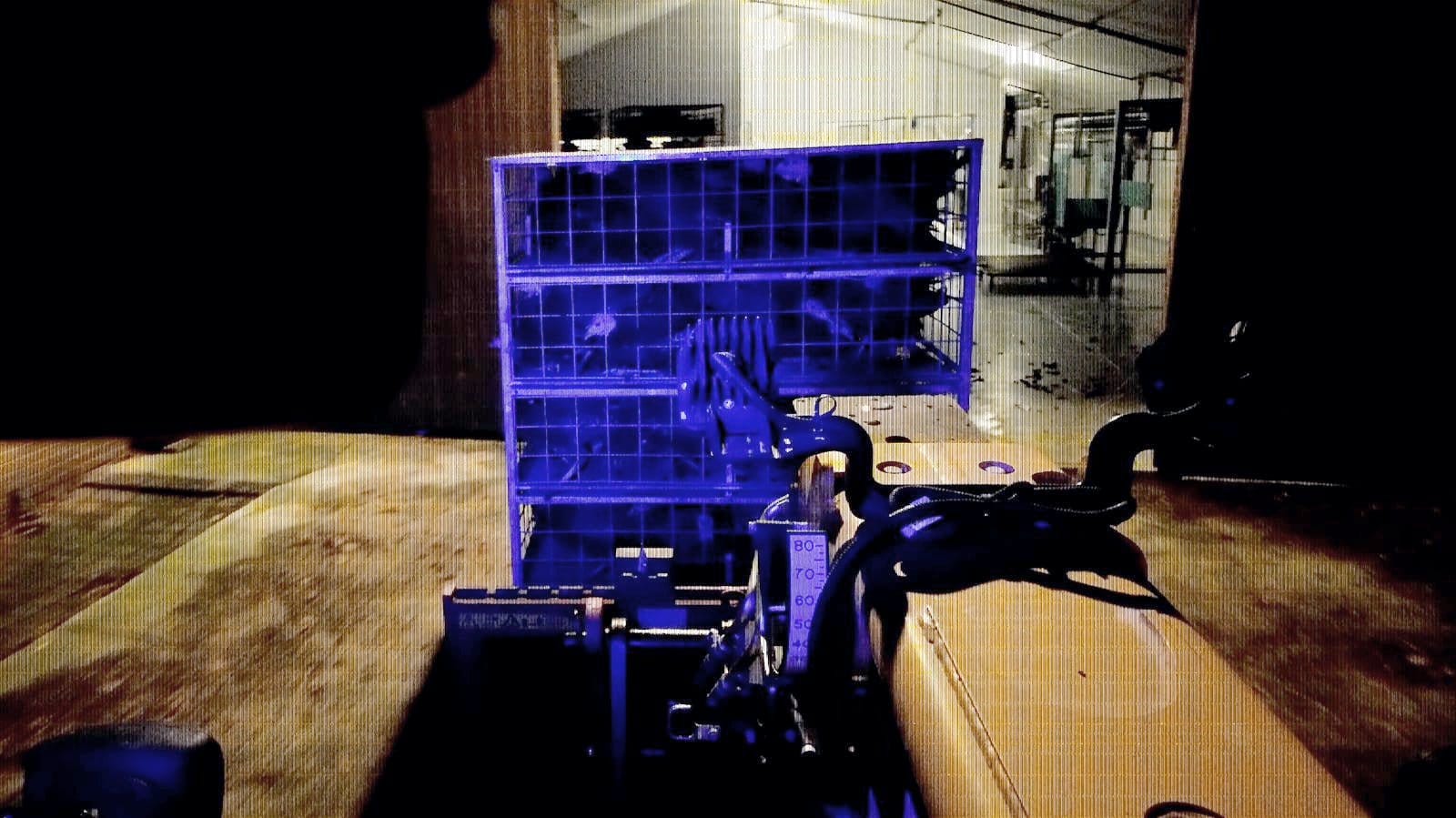
Images of capture and slaughter
In December 2024, Ongehoord recorded the end-of-life process for turkeys at Sjroete Farm using a hidden camera. Ruud and Sabrina operate their own slaughterhouse on the farm, where they process 400 animals each week. They capture the turkeys from the barn and place them into steel containers. This process is very stressful for prey and flight animals like turkeys. Scientific research also indicates that capturing and confining poultry is an extremely stressful experience, putting birds at a high risk of injuries and broken wings.[13]
To reduce stress and prevent injuries in the animal industry, animal welfare experts suggest the following method: the catcher should grasp a turkey by the shoulder of one wing with one hand, while using the other hand to hold both legs. When lifting the turkey, the catcher must keep it close to their body. Only one bird should be carried at a time.[14] The most effective way to minimize stress for turkeys and other birds is, of course, to avoid handling or lifting them altogether.
Trapping turkeys at Sjroete Farm
At Sjroete Farm, workers pick up turkeys by their wings, often grabbing two at a time. They place the turkeys in steel containers. Once full, these containers are transported to the slaughterhouse using a telehandler. This process causes a lot of shaking and jerking. Inside the slaughterhouse, workers stack the containers. The slaughter of the turkeys doesn't start until the next day. Afterward, the crates are moved back outside and driven one by one to the slaughter line.
At that point, the turkeys have already gone without food or water for over 12 hours. This duration exceeds that of turkeys transported by truck from the Netherlands to German slaughterhouses, which applies to most Dutch turkeys. Additionally, there is a legal requirement to provide water to animals traveling for more than 12 hours at least every 12 hours.[15]
Christmas turkeys are not allowed to roam freely
The footage from Ongehoord reveals that not all turkeys for slaughter come from free-range barns. Ruud and Sabrina also gather birds from a central barn that lacks outdoor access. In this barn, young turkeys can be kept for up to 11 weeks. These birds are placed in containers for slaughter without ever having been outside.
The Sjroete Farm website claims that the slow-growing black breed "Caringa Cartier" is chosen for animal welfare reasons. However, Ruud and Sabrina also fatten regular white turkeys in a different section of the central barn. We observe them catching the white birds and transporting them to the slaughterhouse in containers.
The slaughter
After the turkeys have spent the night in containers without food or water, the slaughter process begins. Ruud Bos removes the birds from the containers by their legs and hangs them upside down on the slaughter line. According to EFSA research, live hanging of slaughter birds, such as chickens and turkeys, is both stressful and painful. Suspending them from the hooks exerts pressure on their legs, leading to discomfort. Turkeys, in particular, can experience significant suffering due to their heavy weight. Additionally, birds lack a diaphragm, which causes their organs to press against their lungs when they are in an inverted position. This is painful and makes breathing difficult.[16]
Bos ties a rubber band around the birds' wings to stop them from flapping in stress. Then, the birds are lowered headfirst into an electrified water bath, where they are electrocuted to knock them unconscious. After that, their throats are slit open to let them bleed to death. The still-living turkeys in the containers at the slaughter line watch their companions go through the slaughter process up close.
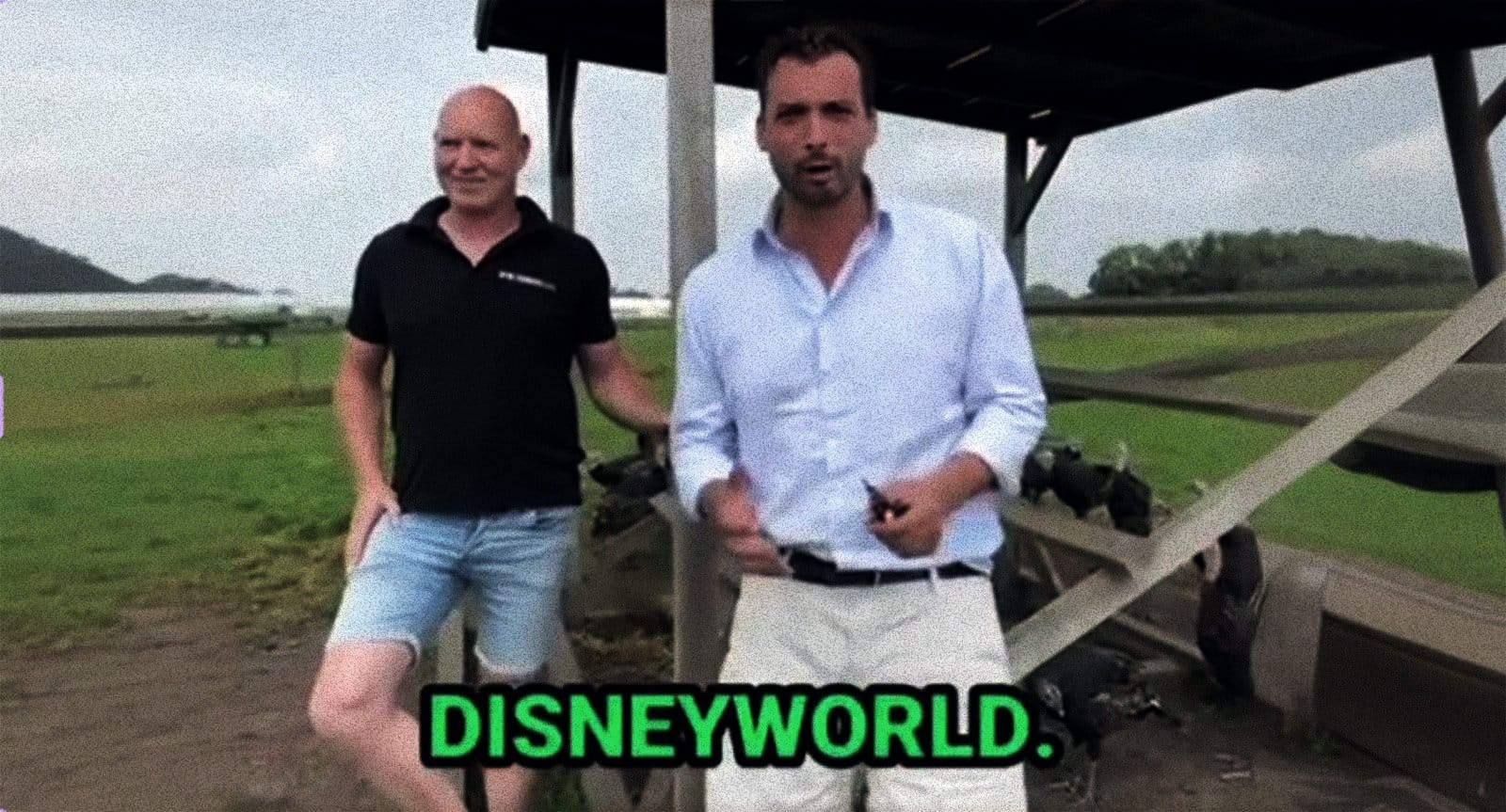
Animal welfare as a marketing tool
Ongehoord has been investigating animals in livestock farming since 2011. Whether at conventional, organic, Beter Leven certified, or other animal welfare farms, the investigation has revealed animal suffering at every location. Sjroete Farm is no exception. It serves as another clear example of how the industry uses animal welfare as a marketing tool to enhance the image and sales price of meat.
Contrary to what consumers see on the Sjroete Farm website, the "Burgundian pasture turkeys" actually spend more than half their lives in closed barns. The breeders do not provide conditions that truly meet the animals' natural needs. Images captured by Ongehoord at the slaughterhouse reveal that the lives of turkeys at Sjroete Farm, like those of all other animals in the meat industry, end in stress, fear, and pain.
What can you do?
Share this investigation
Share this investigation with people around you.
Sources
21 sources
Wild Turkey Habitat Management - NYSDEC
Permit file De Sjroete Farm - Business Operations p.6
Permit file De Sjroete Farm - Business Operations p.6
REGULATION (EC) No 1/2005. Appendix 1, Chapter 3, Methods of Transport
REGULATION (EC) No 1099/2009. Appendix 3, Operational Regulations, Bleeding of Animals
Articles on COM(2013)915 - About the different stunning methods for poultry
Dijksma: "A ban on the live hanging of poultry on the slaughter line should be regulated at European level."_ Poultry Web 2015
"Wiersma will not reduce slaughter speed." Poultry Web 2024