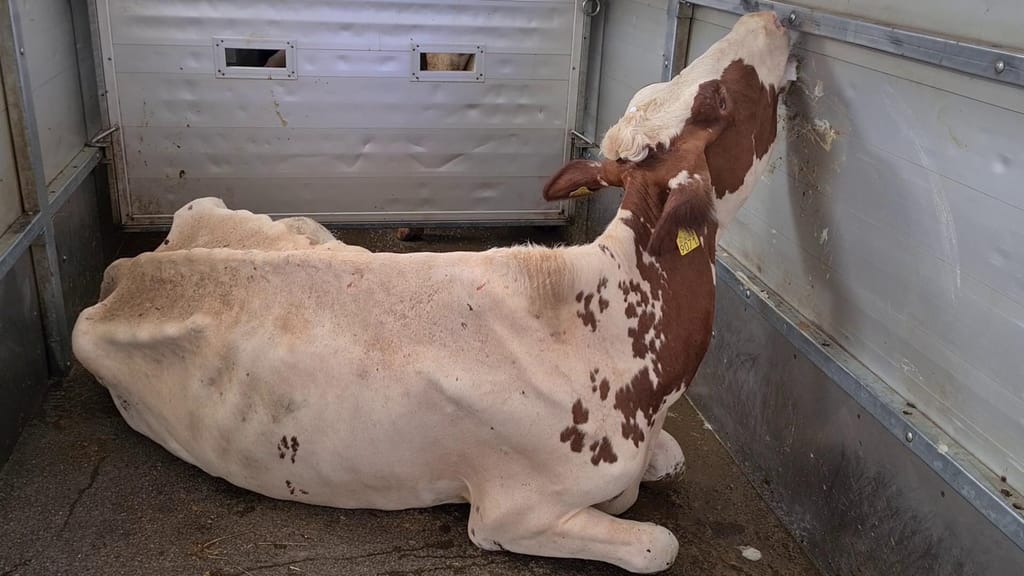
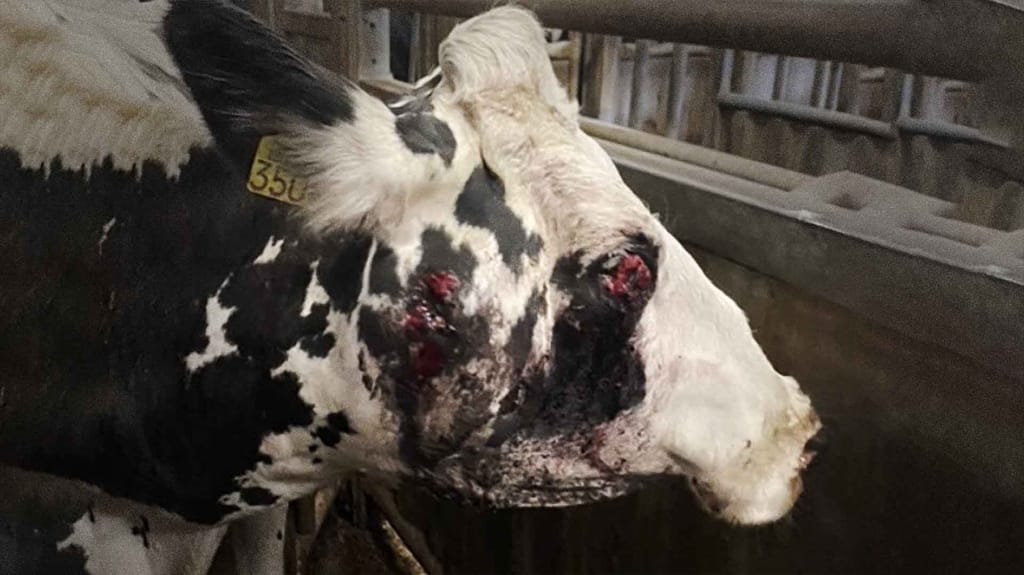
Footage from the Ongehoord Investigation Group shows a cow that cannot stand. A cattle trader kicks her, pulls on her legs, and delivers over 40 electric shocks. When this doesn't work, the cow, still fully conscious, is tied by her hind legs and dragged away with a shovel. Ongehoord used hidden cameras to capture the loading and unloading of animals at five locations in the Netherlands. At all these farms, cows and calves are kicked, beaten with sticks, or chased with stun guns.
Where we filmed
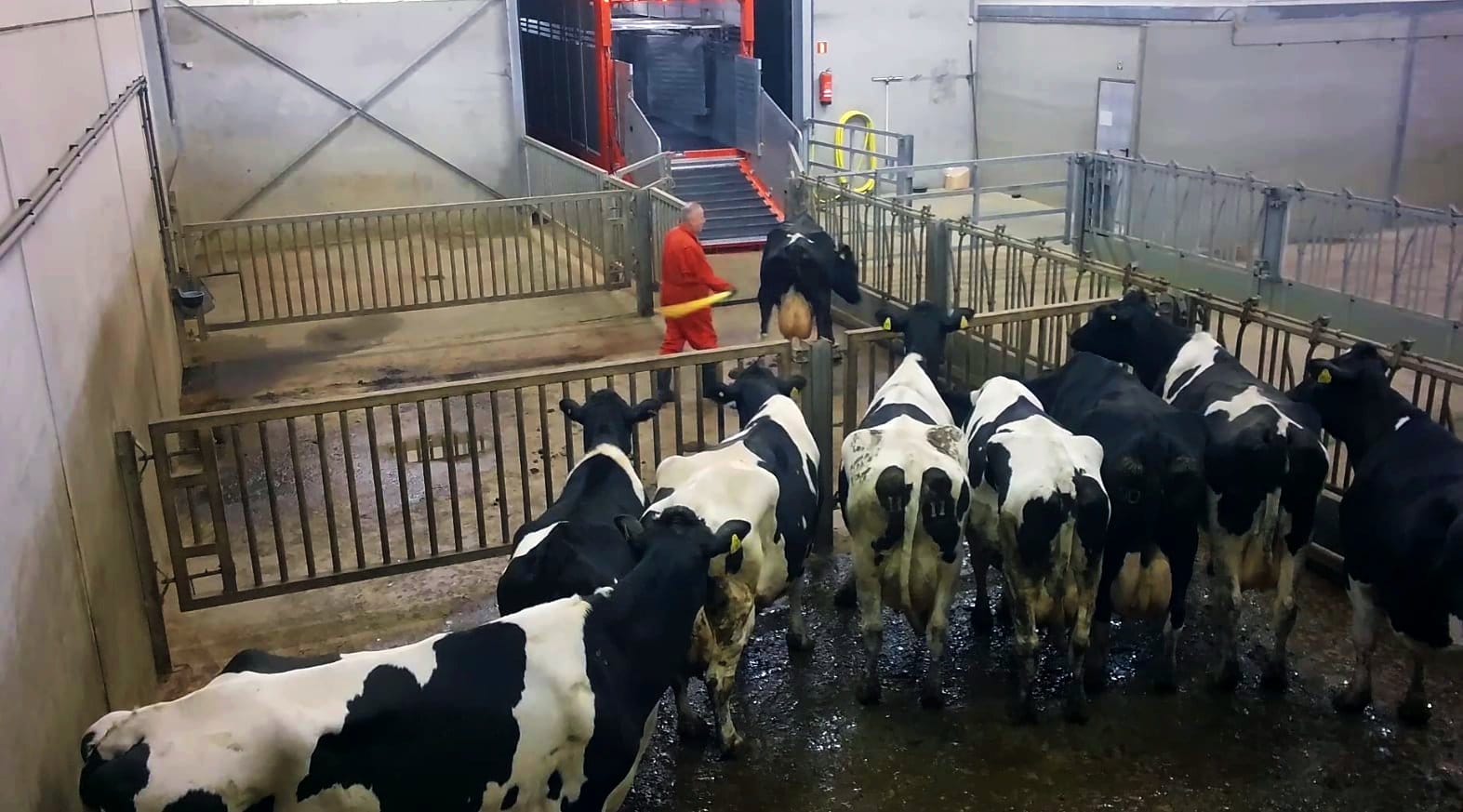
Research on transporting cows and calves
In 2025, the Ongehoord Investigation Group filmed the treatment of cows and calves in livestock collection centers. In these facilities, livestock transporters gather animals from different livestock farms. They then transport the animals to breeding farms, fattening farms, or slaughterhouses. Ongehoord filmed for 4 to 18 days at Veveha in Sint-Oedenrode, De Keizer Vee in Oud-Alblas, VVC Noord-Holland in Noordbeemster, De Bruijn Impex in Steenbergen, and Stens Transport in Staphorst.
Our new footage is part of a large-scale research project on animal transport. In 2020, we recorded pigs being unloaded from trucks at the Westfort slaughterhouse.[1] In 2022, we captured footage of pigs being herded into trucks using electric shocks, firecrackers, and bulldozers.[2] In 2023, our images of mistreated calves and cows sparked a media outcry, resulting in the suspension of a collection point.[3] The Netherlands Food and Consumer Product Safety Authority repeatedly promised improvements, but by 2025, no changes have occurred. Ongehoord concludes that animal suffering during transport is systemic and insurmountable.
Structural abuses
Slipping and falling
Floors in trucks and assembly areas were often slippery because they were soiled with feces and urine. This made it easy for animals to slip. In addition, assembly areas frequently lacked grids, which led to even more accumulation of urine and manure. Animals faced a high risk of falling on loading ramps as their poor depth perception made it difficult for them to judge the slope of the ramp.
Falling and slipping is dangerous and studies have highlighted that it leads to injuries and skin lesions in animals.[4] In the latest footage from Ongehoord, we observed calves falling during unloading in Sint-Oedenrode. At VVC Noord-Holland and Stens Transport, animals were seen slipping multiple times. In 2023, Ongehoord also captured a calf falling in the assembly area of Van der Walle livestock trading, along with several cows slipping in the assembly area of T. Kuiper Transport.
Crippled animals
Although European transport regulations prohibit the transport of lame animals, lame cows could still be found at the collection points of De Keizer Vee, VVC Noord-Holland, Stens Transport, and De Bruijn Impex. These cows cannot stand on all fours due to pain. We observed animals with swollen joints and hunched backs. Cows arch their backs to alleviate discomfort in their legs.[5]
In 2023, the same issue was observed at the collection points of Dane (Oudemolen) and Kuiper (Hoogblokland). Lame cows, suffering from pain, struggled to walk and moved slowly. This difficulty increased their risk of being violently pushed forward with sticks or electric shocks.
Lack of rest
Under normal circumstances, cows require at least 12 hours of lying down each day. This behavior is essential for relieving pressure on their hooves and enabling them to ruminate and rest. For weak or lame cows, the need to lie down becomes even more critical. When cows are forced to stand for extended periods, they experience stress.[6][7] According to scientific research, insufficient rest or lying down poses one of the main risks for dairy cows during transport or at collection points.[8]
At the Stens Transport assembly station, cows, some of which were clearly lame, stood for over 17 hours. The crowded pens left little space, and the floors were covered in a thick layer of urine and manure. As a result, most cows refused to rest. A cow that could no longer endure the discomfort was forced to lie down in the slurry of urine and feces.
Use of stun guns
The use of stun guns has sparked controversy for years, yet they remain standard equipment for livestock traders and transporters. At Veveha, De Keizer Vee, and De Bruijn, stun guns were often used to herd cattle, particularly targeting lame or slow-moving animals. This practice was also observed in 2023 at Dane and Kuiper. At Veveha and VVC Noord-Holland, young calves received electric shocks, which is against the EU Transport Regulation. In 2023, investigators filmed the use of electric shock weapons on calves at the assembly station of Vanlommel, Belgium's largest veal producer.
Beating with sticks or other tools
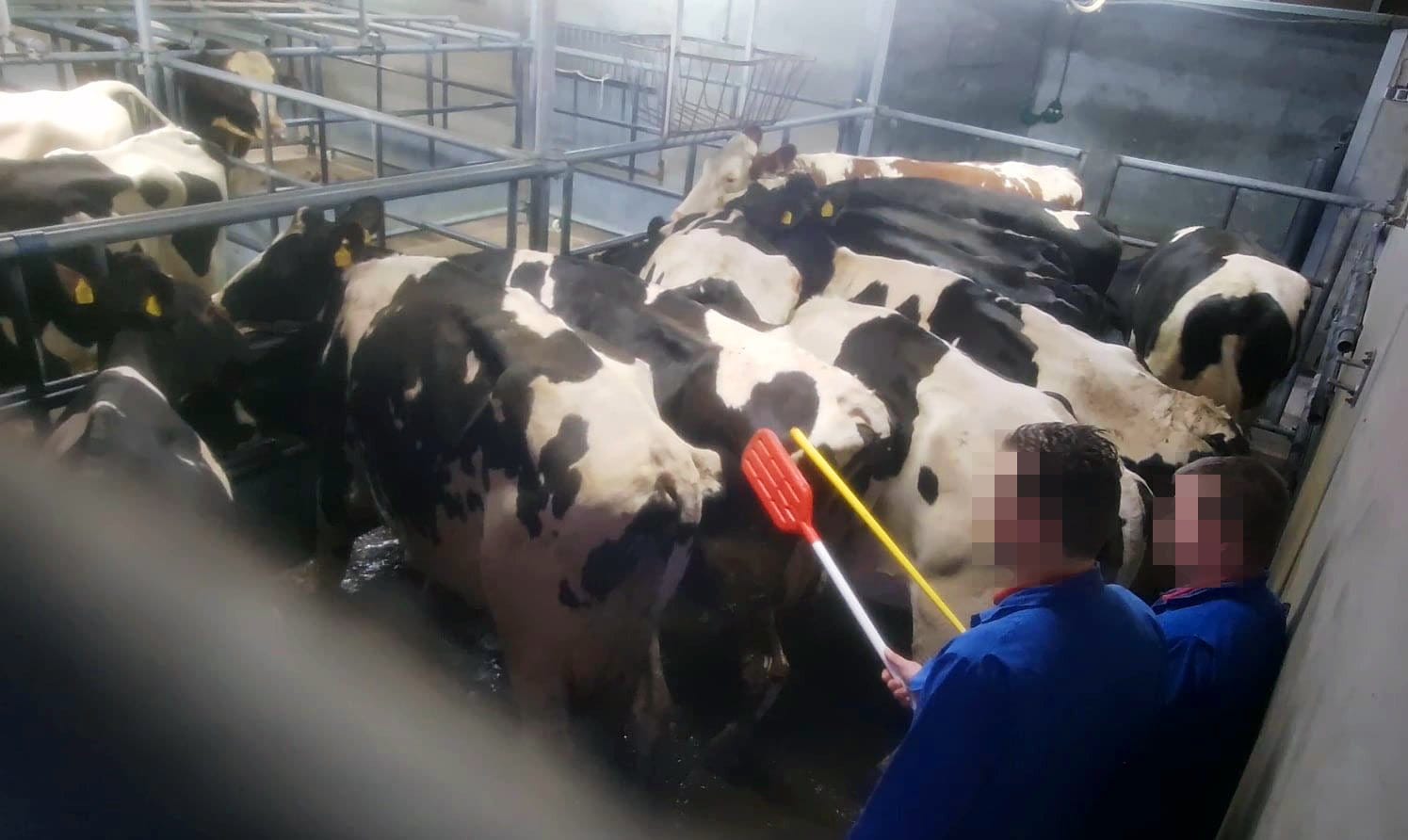
At all the locations investigated, workers routinely used sticks to herd animals, including cows and young calves. When the animals didn't move quickly enough, they were struck hard with the sticks, often hitting sensitive areas like the head. Workers also prodded animals in the buttocks or flanks, which caused significant pain. In assembly stations where electric shock devices were not used, the use of sticks became even harsher. This was evident at VVC Noord-Holland, where cows were beaten on various parts of their bodies with sticks and clubs.
At Veveha, a cattle trader strikes a calf with a spade. At De Keizer Vee, someone hits a sick cow on the head with a broom. At other locations, transporters hit animals with a herding rattle, a steel pin, a floor squeegee, and a ring binder. In 2023, investigators filmed animals being hit and prodded with a pitchfork at Dane.
Kicking, hitting with hands, pulling tails and ears
When transporters lacked sticks or stun guns, they resorted to using their hands and feet to move animals. They hit, kicked, or pulled on the ears and tails to get them to move. Calves, being small and weak, often couldn't resist and were regularly dragged by their tails or ears. This behavior was evident at Veveha and VVC Noord-Holland, where transporters pushed and hit calves by hand and pulled them by their tails. Similar incidents were observed in 2023 at veal traders Vanlommel and Van der Walle.
Excessive violence against sick animals
At the De Keizer Vee collection point, a cow arrived unable to stand. The staff, including director Niek de Keizer, kicked her, pulled her by the tail, yanked her legs, hit her in the face with a broom, and tortured her for an extended period using a stun gun. Director Niek delivered over 40 electric shocks to the cow. When this didn't work, they left her to fend for herself overnight. The next day, while she was fully conscious, they tied her hind legs to a shovel and dragged her away.
In 2023, similar scenes unfolded at the Dane livestock trading center in Oudemolen. There, after enduring prolonged abuse, a terminally ill cow was lifted with a hip clamp and then dragged away using a shovel.
Overview of the companies
The Emperor Cattle, Heiweg 4, Oud-Alblas (South Holland)
De Keizer Vee states on its website[9] that it engages in the purchase and sale of calves and cows for both dairy and meat production, including breeding animals and those intended for slaughter. The company is Skal-certified and serves many organic livestock farms as clients. In addition to transporting within the Netherlands, De Keizer Vee also exports cows to Kuwait, Russia, and Ethiopia.[10] During the four days of filming by Ongehoord, primarily cows that could no longer produce milk were present. Since no NVWA inspections were conducted, we know that the animals were intended for Dutch slaughterhouses (NVWA inspections at collection points only take place when animals are being exported).
De Keizer Vee describes itself on its website as a trustworthy family business with years of experience and expertise. The website states that director Niek de Keizer "had a love for animals instilled in him from a young age." However, footage filmed by Ongehoord shows Niek repeatedly abusing a seriously ill cow with a stun gun.
The website and corporate film demonstrate that De Keizer Vee collaborates closely with the livestock transporter Vandommelen from Woerden.[11][12] A report (2023) requested by Ongehoord last year revealed that the NVWA observed cattle with lameness or other serious health issues almost weekly during export inspections at Vandommelen. At that time, Ongehoord also sought information about De Keizer Vee, but the NVWA was unable to provide a single inspection report for the entire year of 2023.[13] The NVWA (Netherlands Food and Consumer Product Safety Authority) is also noticeably absent from the recent footage released by Ongehoord.
According to Niek de Keizer, it's not the cows, but the farmers in the Netherlands who are facing harsh treatment. That is why he participated in the notorious tractor demonstrations in The Hague, where Geert Wilders commended farmers for their significant exports and encouraged them to persist in opposing nitrogen regulations.[14][15]
De Keizer Vee considers "transparency in their actions" a key value for the company. Ongehoord is pleased to support this by publishing the footage.
Cattle collection center North Holland, Middenweg 5, Noordbeemster (North Holland)
VVC Noord-Holland serves as the assembly center for livestock trader Richard Nelis. The company holds a permit to collect cattle (both calves and adults), as well as sheep and goats.[16] During the four days that Ongehoord filmed on-site, adult cattle were present, intended for Dutch customers (since no NVWA inspections were conducted). We also captured footage of young calves, which were destined for veal fattening farms.
VVC Noord-Holland has been designated as a "Calf Assembly Center" by the interest group Vee & Logistiek. Vee & Logistiek's recognition schemes are not related to official government recognition or permits; they are designed solely to build customer confidence and improve the image of companies and the sector.[17]
Limited public information is accessible regarding the company. VVC Noord-Holland/Veehandel Nelis lacks a company website, but frequently posts animals for sale on their Facebook page.[18]
Veveha, Zwijnsbergen 3, Sint-Oedenrode (North Brabant)
Veveha serves as a collection point for calves and adult cattle, both within the Netherlands and for export. During the four days that Ongehoord filmed there, both calves and cows were present. Veveha does not have a public website, is not active on social media, and does not contribute to articles or reports in the press.
The company is owned by Martien Verhagen, a lobbyist for the animal industry who appears in the Ongehoord footage. Verhagen serves on the board of Veepro, which is part of Vee & Logistiek, the interest group representing Dutch livestock traders, collectors, and animal transporters.[19] Within Vee & Logistiek, Veepro specifically targets export activities. Veepro's primary objective is to trade and transport breeding cattle from the Netherlands to markets around the world. To expand its export opportunities, Veepro organizes trade fairs, conferences, and trade missions. Veepro collaborates closely with the Ministry of Economic Affairs and the NVWA, the agency responsible for animal export documentation.[20]
Among the members of Veepro are cattle dealers Dane (Oudemolen), De Keizer Vee (Oud-Alblas), and, of course, Veveha, the company owned by board member Martien Verhagen.[21] The Ongehoord Investigation Group filmed instances of animal abuse at all these locations.
De Bruijn Impex, Zegblokswegje 2, Steenbergen (North Brabant)
De Bruijn Impex appears to avoid publicity: there is no website, no social media presence, and they have never been featured in the press. According to the NVWA register, this location serves as a collection point for cattle, sheep, and goats.[22] Ongehoord documented the activities in the cattle department over nine days. De Bruijn works with T. Kuiper Transport, the same company where Ongehoord recorded footage of lame and abused cows in 2023.
Stens Transport, Industrieweg 42, Staphorst (Overijssel)
In Staphorst, Ongehoord recorded the arrival and departure of cattle, including many lame animals, over a period of 18 days. Stens Transport delivers cattle daily for various livestock traders to nearly all slaughterhouses in the Netherlands. According to their website, Stens claims that it "does not engage in long-distance transport." For the sake of animal welfare, their trucks are on the road for a maximum of 8 hours.[23]
That Stens' concern for animal welfare should not be taken too seriously is evident from another of the company's "specializations." Stens transports breeding cattle for export on behalf of various livestock traders, moving them to other collectors who then transport the animals over long distances.[24] Breeding cattle are shipped globally from the Netherlands, with the entire journey often lasting several days. During this time, the animals are repeatedly loaded and unloaded at collection pens and checkpoints, which means they endure the stressful experience of being herded multiple times.
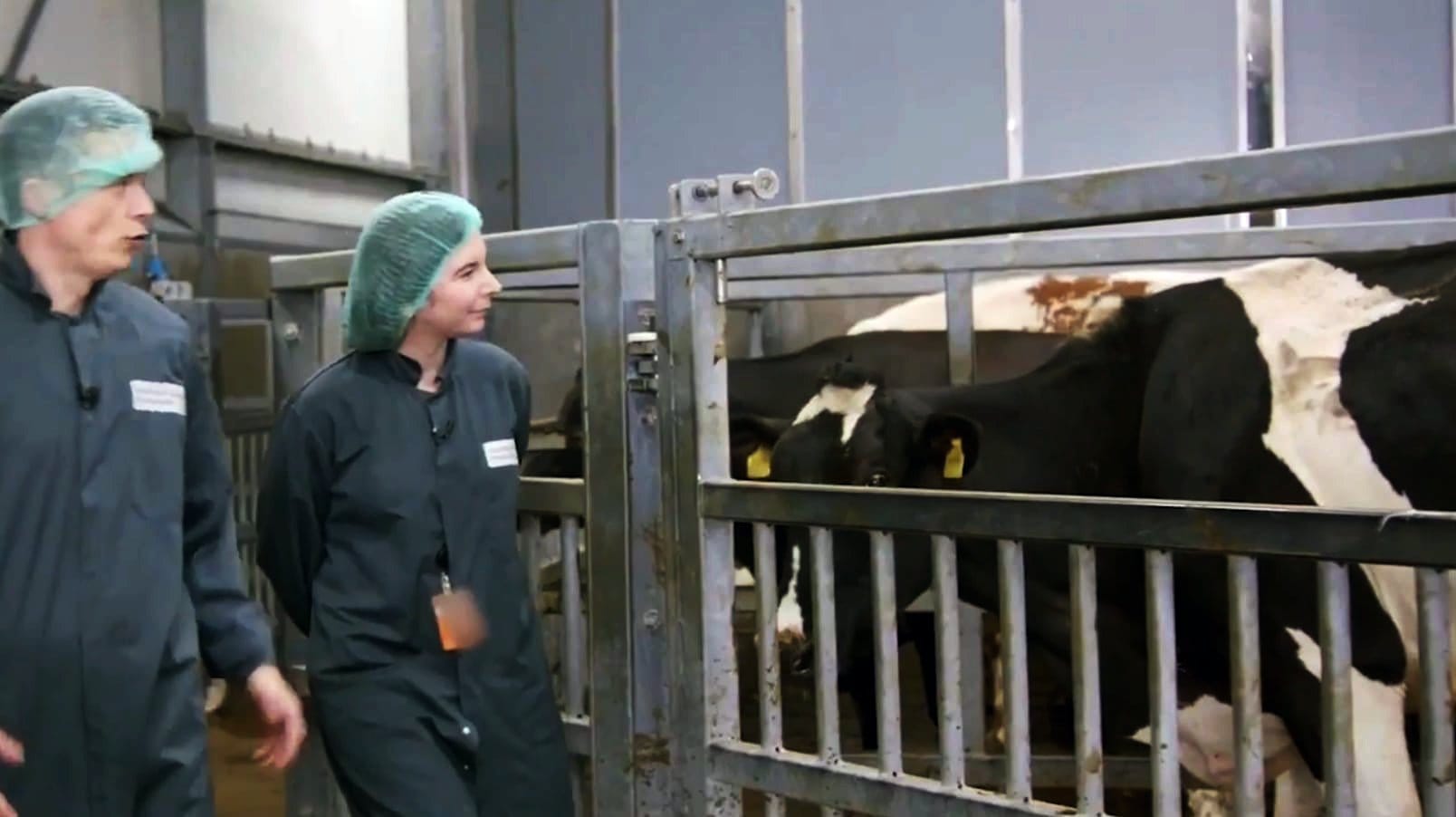
NVWA Oversight
Dane and Kuiper: measures for the stage
After our publication in April 2023, the NVWA announced in the media that livestock trader Dane (Oudemolen) had been under 'enhanced supervision' for some time and that the company had been immediately shut down.[25] This was merely a symbolic measure, as Ongehoord captured footage of Dane's cattle trucks operating during the suspension. It later came to light that the NVWA had temporarily revoked the permit for its collection point but had left its livestock trade, animal transport, and breeding activities unaffected.[26] In August 2023, Dane's collection point was also permitted to reopen. The NVWA expressed in the media that it had "every confidence" in Dane's improvement plan and in "the significant steps" the company had taken.[27] Interestingly, a WOO (Work and Safety at Work) request from Ongehoord concerning the improvements at Dane was rejected by the NVWA.
The NVWA initially stayed silent regarding the abuses at Teus Kuiper's collection point in Hoogblokland. It was only when EenVandaag sought information that the agency disclosed that the company had not been suspended but was under increased scrutiny. “Additional checks must ensure that animal welfare is guaranteed,” stated the NVWA.[28] New footage from Ongehoord shows a Kuiper transporter still loading cattle trucks in 2025. Earlier this year, the company was featured on Respect Vee, the promotional website of the interest group Vee&Logistiek. Wilco Kuiper, son of director Teus, was asked to explain how animals at their collection point receive "optimal care" and how he learned from his father and brother "how to transport livestock in a respectful manner".[29]
NVWA supervision: a drama for years
NVWA oversight has faced criticism for years. Even though the regulator has repeatedly introduced "tightened regulations," abuses in live animal transport seem to persist.
In 2019, the NVWA faced criticism regarding export certificates for seriously ill animals.[30] The 2Solve report on the NVWA highlighted major inconsistencies in how regulators interpret and enforce standards. An animal considered seriously ill by one inspector may be approved for transport by another. Some veterinarians take action against abuses, while others overlook infringements.[31]
In response to this criticism, the NVWA implemented "four-eyes supervision" for export inspections in 2019. This involved assigning a second inspector to evaluate the suitability of animals for transport. In April 2021, the Ministry of Agriculture determined that the NVWA should follow the “European guidelines for transport worthiness” when evaluating the condition of animals.[32] In September 2021, Ongehoord, through requested inspection documents, highlighted that the four-eye supervision and guidelines were not benefiting the animals: seriously ill and lame animals were still being transported to slaughterhouses.[33] Although the NVWA asserted in 2021 that Ongehoord's criticism was "outdated" (34), the supervisory authority reintroduced stricter rules in 2023, as the four-eye supervision and guidelines ultimately proved to be ineffective.[34][35]
As recently as 2023, Ongehoord recorded seriously ill cows at collection points, and NVWA whistleblowers reported on EenVandaag that sick animals were still being sent to slaughterhouses. "Traders and transporters communicate about where a strict veterinarian is located and where a more lenient one can be found. If stricter inspections are implemented, the transports will simply be redirected." Inspectors who wish to take action feel hindered. They often find themselves in disputes with their managers or even face reprimands.[36]
In 2024, a WOO request from Pigs in Need revealed that the NVWA, during its limited inspections, observed numerous sick and lame cows being unloaded from trucks at slaughterhouses.[37] Supervisory measures and fines have had no impact on the industry whatsoever.
The new footage from Ongehoord shows that the NVWA has not yet addressed the issues related to the transport of animals in 2025. Similar to 2023, the investigation captured several lame cows at various collection points.
Supervision according to industry regulations
The European transport regulation is clear: if animals are “unable to move painlessly on their own,” they cannot be transported.[38] It is undeniable that a lame cow feels pain when it moves. Abnormal walking behavior, even in mild cases, always signifies pain: the cow alters its walking behavior in an attempt to alleviate discomfort in a painful area of its body.[39]
The ban on transporting lame cows conflicts with the financial interests of the animal industry. Meat from a lame cow is safe for consumption, allowing slaughterhouses to generate revenue from it. If farmers cannot transport lame cows to a slaughterhouse, they face costs for treatment, euthanasia, and disposal.
In 2012, the European animal industry lobby launched the “European Guidelines for the Transport Worthiness of Cattle.”[40] This brochure presents the industry's interpretation of transport regulations. According to the industry, cows with mild forms of lameness can be transported. The guidelines include a "lameness assessment," which states that "cows with impaired mobility" or "reduced mobility" may be transported. This encompasses, for instance, cows that "walk with shortened steps and a hunched back" (a sign of pain). Only when a cow can no longer support itself on all four legs is its mobility considered "significantly impaired," and, according to the lobby, it is then prohibited from being transported.
The powerful livestock lobby easily promoted its guidelines to the authorities in European member states. Even though these guidelines conflict with the original transport regulation, the Dutch Ministry of Agriculture decided that the Netherlands Food and Consumer Product Safety Authority (NVWA) must follow the industry's guidelines for veterinary inspections.
With these guidelines, the animal industry is bending regulations that are inconvenient for its operations. Cows with milder forms of lameness can now be transported to slaughterhouses, even though the animals are in pain, the travel conditions are particularly harsh, and scientific research has demonstrated that lameness worsens during transport. According to BuRo, lameness increases after approximately three hours of transport. Repeated unloading and loading, such as during transport through collection points, also leads to increased lameness and additional suffering. In the Netherlands, the transport time for cows going directly to a slaughterhouse ranges from 1 to 8 hours. Transport through collection points to Dutch slaughterhouses takes 10 to 20 hours. When cows are transported via collection points to foreign slaughterhouses (Belgium, Germany), the transport time can be up to 30 hours.[41]
The NVWA appears to be slowly recognizing that the industry guidelines are resulting in more abuses. Improvements were promised for early 2025 with a "new assessment protocol." Regrettably, the regulator has not gained much insight from previous experiences: this protocol is also being developed “in collaboration with the industry.”[42]
Ongehoord believes that other protocols or stricter regulations will not lead to meaningful change. With BBB leading the Ministry of Agriculture (which also oversees the NVWA), the power and influence of the livestock lobby have only increased. BBB promotes "simplified supervision," which would further limit the NVWA's role. This would put oversight and inspections in the hands of the market players themselves. The NVWA must "trust the companies," abuses should be viewed as "mistakes," the current fine policy needs to be further relaxed, and more opportunities should be created to slaughter unsuitable animals.[43]
New welfare measures are coming soon
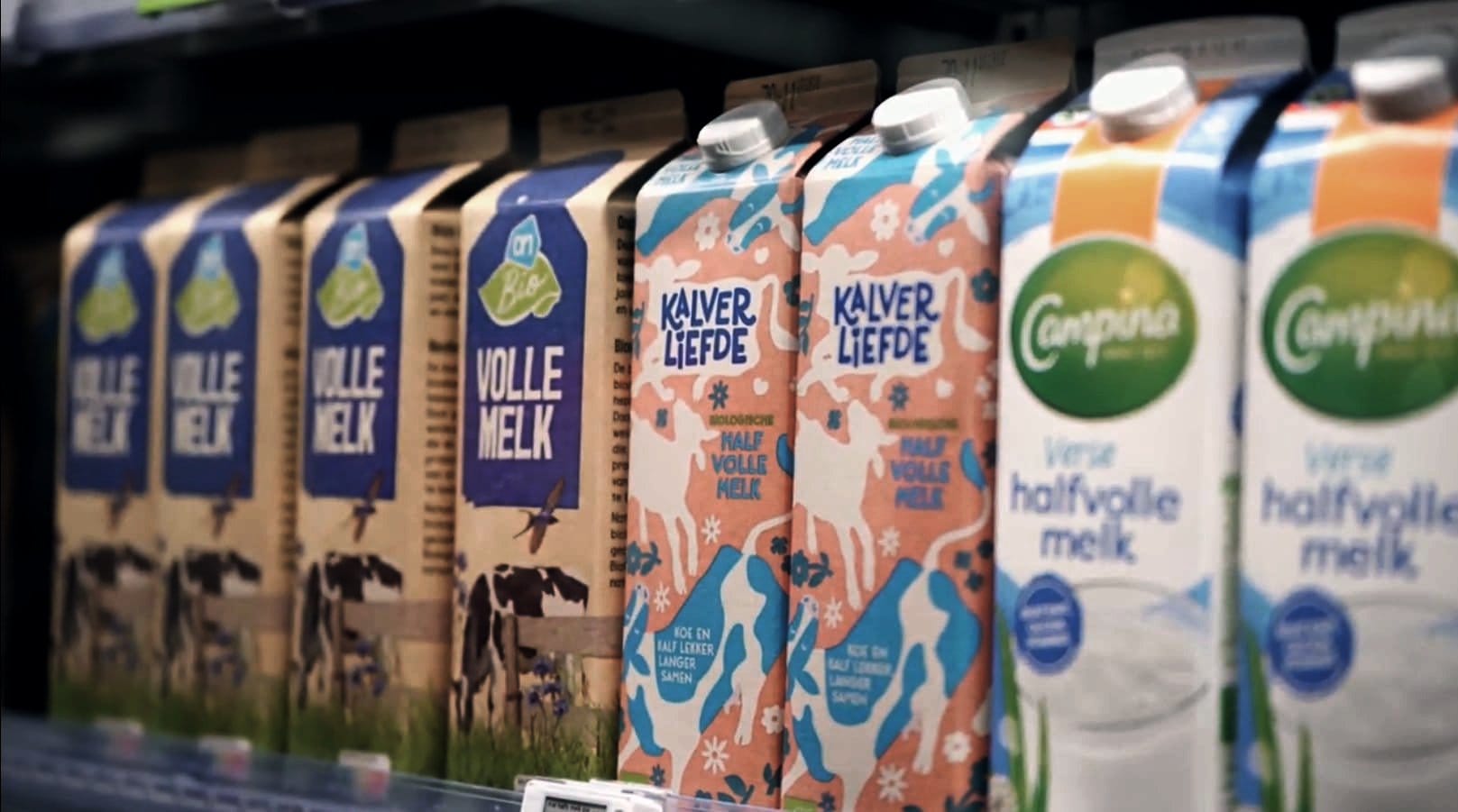
In response to increasing public criticism of animal transport, the industry and government are rolling out new measures. However, Ongehoord sees these welfare and supervisory measures as a false solution. They fail to prevent violence during loading and unloading and do not tackle the root issue of dairy production: the constant flow of exhausted cows and unwanted calves. Additionally, welfare measures often come with their own drawbacks.
Ban on stun guns
To reduce violence against animals, a ban on stun guns is being considered.[44] Ongehoord's footage demonstrates that such a ban is ineffective. In situations where transporters lack stun guns, animals are subjected to even harsher treatment, including being beaten with sticks, kicked, or dragged by their ears and tails. Ongehoord has been raising awareness about this issue for years. In 2023, we reached similar conclusions at other collection points. In 2020, we recorded the unloading of pigs at Westfort, a slaughterhouse that had initiated a ban on stun guns within its premises. Animals were brutally beaten with firecrackers. When Westfort also prohibited firecrackers and replaced them with "animal-friendly flag waving," inspection documents revealed that pigs were being struck with flagpoles.[45]
Aside from these objections, it remains to be seen how the NVWA (Netherlands Food and Consumer Product Safety Authority) will enforce the ban. The NVWA is typically not present when animals are loaded at breeding farms or collection points, and it lacks the capacity to monitor these activities. We also cannot depend on the industry's self-regulatory efforts. A ban on stun guns has been in place for years for animals under the Better Life quality mark. Although the Animal Protection Society asserts that compliance with regulations is closely monitored, Ongehoord has recorded the use of stun guns on multiple occasions at Beter Leven farms.[46]
CCTV surveillance in assembly points
Inspired by the use of camera surveillance in slaughterhouses, options for implementing CCTV at collection points are currently being explored.[47] However, CCTV has not effectively prevented abuses in slaughterhouses. Westfort was already under CCTV surveillance in 2020. In addition to instances of violence against animals, Ongehoord captured footage of the arrival of numerous sick and crippled animals, as well as pigs hung up on hooks, bleeding out while still conscious. In 2021, undercover investigations by Pigs in Need uncovered serious abuses of cattle and pigs at the Gosschalk slaughterhouse, despite the presence of CCTV surveillance.[48]
Increase in the transport age of calves
The transport of surplus calves from dairy farms is socially controversial because the animals are only two weeks old. To address consumer concerns, the government plans to raise the minimum transport age for calves to 4 weeks by 2028.[49] However, increasing the minimum age will not eliminate the violence that occurs during loading and unloading. WUR calculated that raising the minimum transport age to 4 weeks would require 10% more transport movements to carry the same number of animals. Since 4-week-old calves are larger and heavier, fewer of them can fit in a truck.[50] More transports will result in increased work and time pressure for livestock traders, collectors, and transporters. It is anticipated that the use of violence will actually rise.
Main reasons for transportation issues
The debate about animal transport mainly centers on improving travel conditions. This includes shorter transport times, reducing heat stress, and enhancing supervision. The investigation by Ongehoord calls for a deeper discussion. They argue that violence against animals isn't solely due to travel conditions; rather, it stems from animals' natural fear of getting in and out of livestock trucks.
The issues related to transporting cows and calves are closely tied to the dairy industry's production system. Milking cows for dairy production harms their health and leads to the production of surplus calves. As long as the dairy industry operates this way, farmers will need to dispose of their exhausted cows and unwanted calves.
Transport and natural behaviors
When loading cattle for transport, the industry forces them to act against their natural instincts. Cattle must enter and exit trucks using corridors, passageways, and loading ramps. This process is frightening for the animals because they have poor depth perception; they struggle to tell the difference between the slope of the loading ramp and a drop-off.
The presence of strangers, unfamiliar animals, loud noises, and bright lights adds to their stress, anxiety, and disorientation. Cattle need time to explore new environments and prefer having space around them to escape. When people enter their "flight zone," the animals feel threatened and want to flee. Additionally, animals transported through staging areas must repeatedly face the stressful conditions of loading and unloading.
For additional insights into the natural behavior of cattle and the challenges associated with loading and unloading, please refer to our 2023 publication "Cows and Calves."[51]Byproduct of the dairy industry: a million surplus calves
In the Netherlands, dairy farms keep one and a half million cows for milk production. Since cows only produce milk after giving birth, farmers artificially inseminate them every year. This leads to the birth of one and a half million calves annually, but only a third of these calves are meant to replace older dairy cows. Bull calves and surplus female calves hold no value for dairy farms; they are viewed as "waste products."
Housing and feeding calves can be costly, so dairy farmers quickly transport them to veal farms via collection points. The calves are just two weeks old when they are transported. Their small size allows many animals to fit in the truck, which helps keep costs down. Because veal yields are low, loading and unloading must happen quickly.
Milk production is at the expense of animal health
Cows have been selectively bred to produce more and more milk. However, this high milk production negatively impacts their health. The energy that cows have goes primarily into milk production, leaving less for other important bodily functions. As a result, dairy cows often face energy deficiencies, exhaustion, lameness, and mastitis, which is painful inflammation of the udder.
For additional details on the primary health concerns affecting dairy cows, please refer to our publication "Koetjes en kalfjes" (Cows and Calves), 2023.[52]The average cow in the dairy industry typically lives no longer than 6 years, whereas these animals can naturally live up to 20 years. In recent decades, the industry has made efforts to extend the lifespan of cows. Currently, cows live 280 days longer than those from 25 years ago.[53] This improvement benefits the economic outcomes and public perception of the sector, but it does not necessarily mean that the animals are healthier. The GD (Animal Health Service) has found that the 'aging' of cows is linked to a rising number of mastitis cases.[54] Helma Lodders, a BBB member and chair of the interest group Vee&Logistiek, acknowledges that a longer lifespan in dairy cows is correlated with an increase in lameness.[55]
Each year, around 30% of the Dutch dairy herd is removed from the industry.[56] Slightly more than 3% of cows either die or are culled on the dairy farm.[57] Most cows that cannot produce any more milk are sent to slaughter. By the end of their "career," dairy cows are rarely in good condition; reduced milk production or unsuccessful inseminations are often associated with their poor health. As a result, transporting weak, lame, and sick animals is unavoidable.
According to known welfare issues in dairy cows, BuRo estimates that around 37,000 cows culled each year are at high risk of (increased) lameness during transport.[58] This is a staggering figure, but not entirely surprising: research indicates that 28% of all dairy cows in the Netherlands are lame, which equates to 420,000 cows. Factors contributing to lameness in dairy cows include poor hygiene in barns and unsuitable surfaces like concrete slats and contaminated barn floors, which expose the animals' hooves to manure and urine. Unsanitary and damp cubicles also harm hooves. The humid and warm barn environment, combined with the presence of manure, creates a breeding ground for bacteria. Additionally, the poor body condition of dairy cows and a higher lactation number (the number of times a cow has calved) further elevate the risk of lameness. Severely lame cows produce less milk and are thus no longer profitable. Lameness is therefore a significant reason for transporting animals to slaughter.[59]
Conclusion
In recent years, Ongehoord has repeatedly captured footage of abuses during live animal transport. This includes lame and sick animals that should never have been transported, as well as the use of excessive force to move them. It's clear that these abuses are widespread and deeply ingrained. Animals naturally fear and hesitate to enter and exit trucks, making violence during loading and unloading unavoidable. The transport of weak, lame, and sick animals stems from the industry's production system.
Welfare measures mainly enhance the image of meat and dairy products rather than genuinely improving animal welfare. Legislation often caters to the industry's needs. The government appears more focused on the financial interests of the livestock industry than on preventing animal suffering. With support from parties like the BBB and PVV, livestock farmers have gained even more influence in The Hague.
Animals have no hope from politicians, the NVWA (Netherlands Food and Consumer Product Safety Authority), or the industry lobby. Now, it's up to society to decide what to do next. Should we let politicians keep using ineffective measures for an unchangeable industry? Or should we take strong action to address animal suffering at its root? To truly end animal suffering, the industry must be dismantled.
What can you do?
Share this investigation
Share this investigation with people around you.
Sources
59 sources
Woo-documenten 2023, opgevraagd door Ongehoord.
Woo-documenten 2023, opgevraagd door Ongehoord.