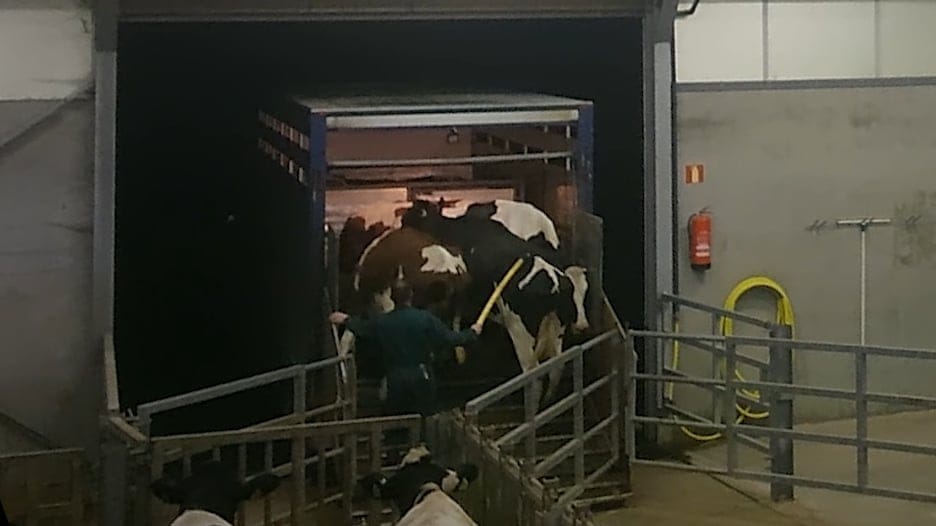
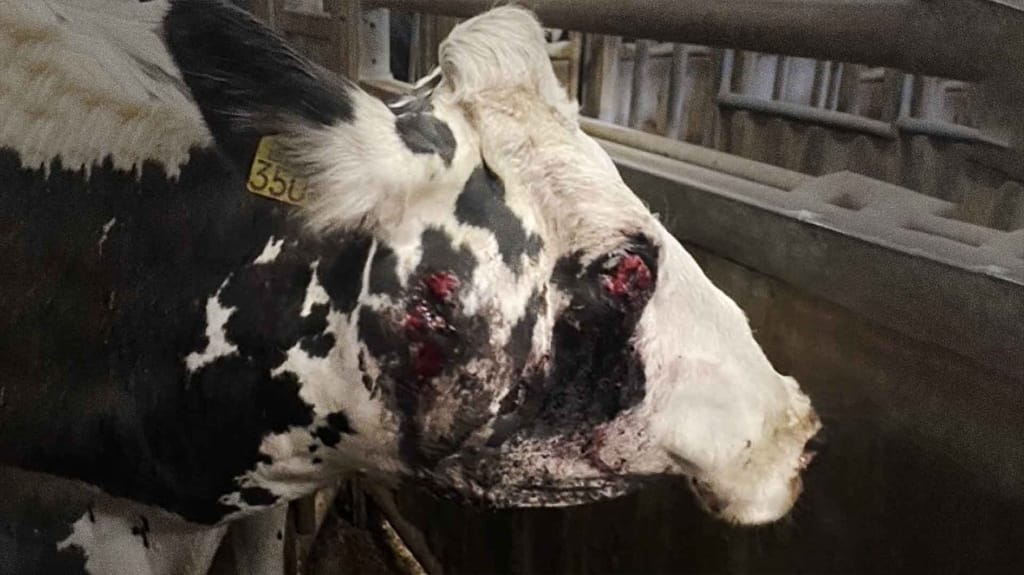
One transporter went too far: he brought eight severely sick cows that were rejected for export at the Leeuwarden livestock market (Stichting Veehandelscentrum Noord-Nederland) to a Dutch slaughterhouse. There, an observant inspector discovered that his colleague in Leeuwarden had already ordered the animals to be immediately put out of their misery. The rejected export cows were secretly reloaded and taken to a slaughterhouse.
NVWA hardly acted against abuses in cattle transport
5 chapters · ± 6 min read
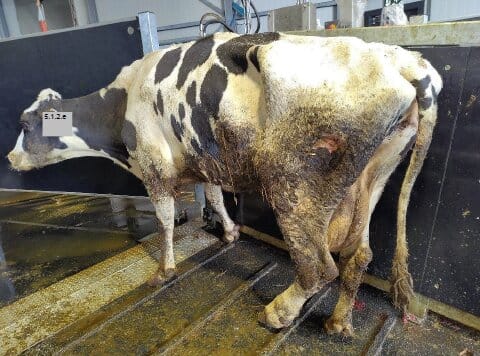
Cows limping on three legs, with wounds and abscesses on their hooves, or with swollen hock and knee joints "the size of a melon." Cows with open wounds on their udders, "a hand's width large" and "smelling of pus." These are abuses reported by NVWA inspectors in slaughterhouses for spent dairy cows. Although the images speak for themselves, this is just the tip of the iceberg. A very large portion of the slaughtered dairy cows experience pain while walking, as we observed in various investigations. Yet the NVWA issued fewer than 150 fines in 2024. These fines then appear to have little effect.
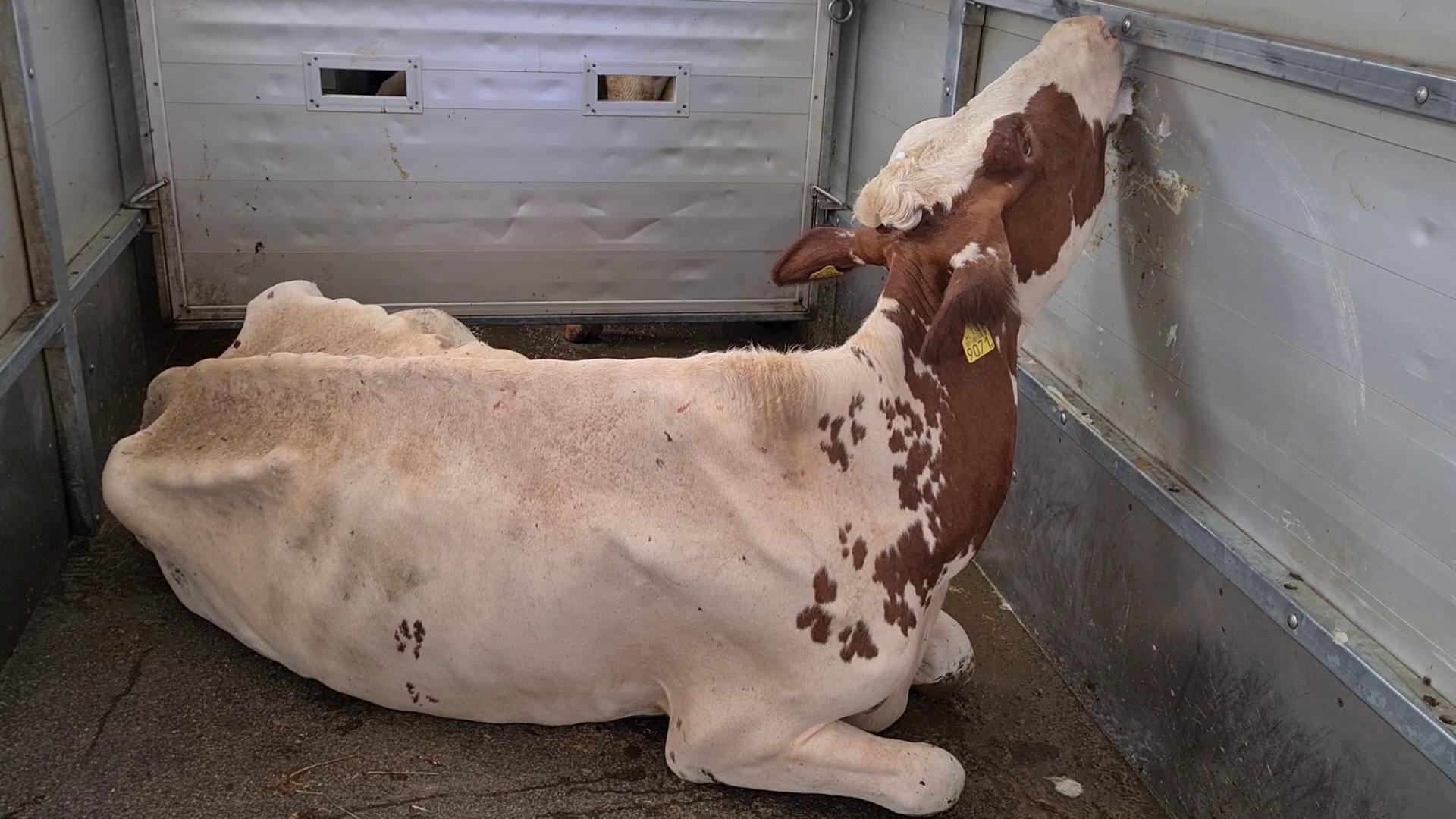
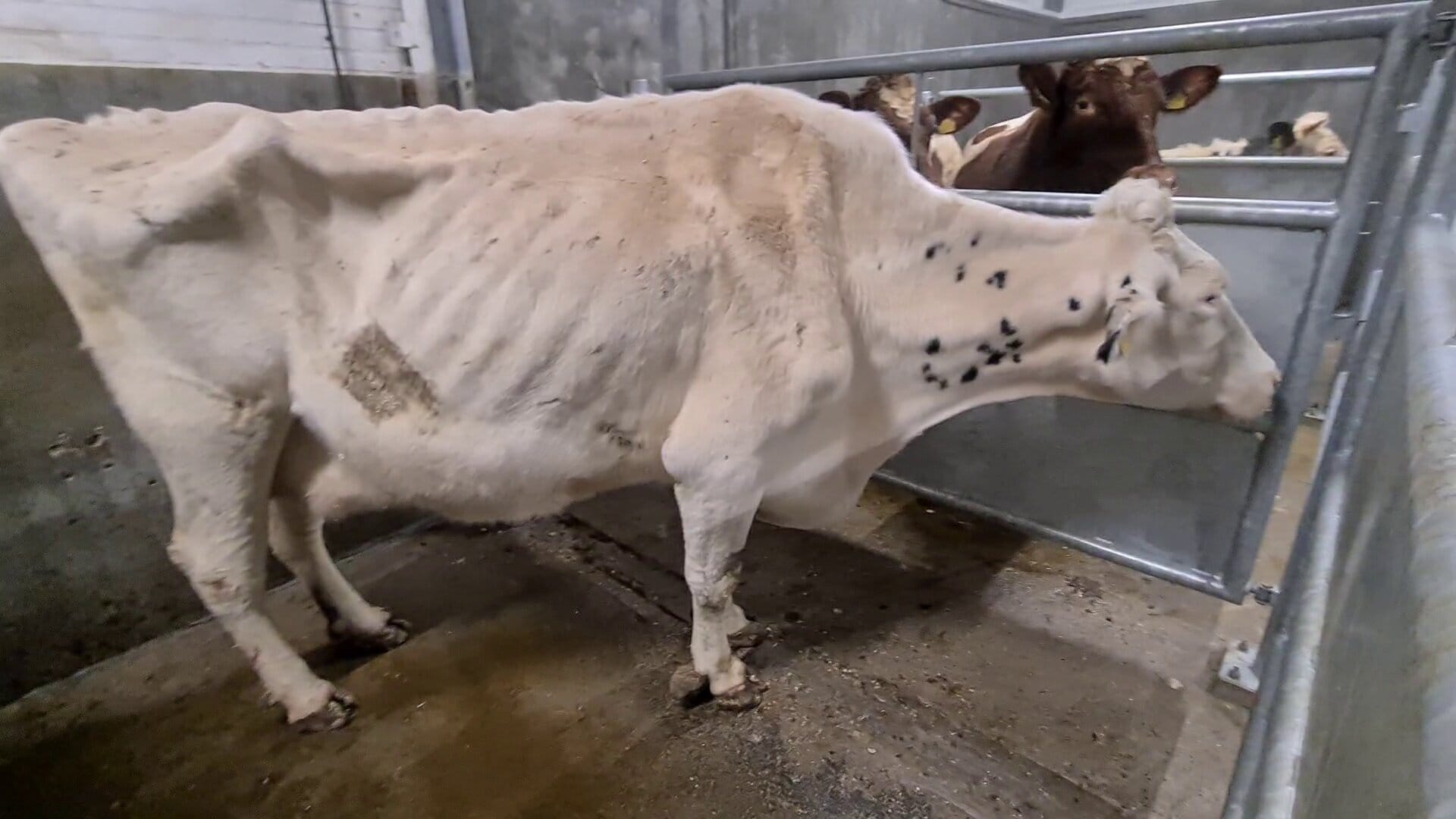
From requested inspection documents, it appears that the NVWA in 2024 drew up nearly 150 'reports of findings' and 'penalty notices' against farmers, traders, and transporters who transported severely lame and sick animals to slaughter.[1] Dozens of cows hobbled off the trucks, gritting their teeth in pain – with abscesses and open wounds on their hooves, or with thick swollen and inflamed leg joints. Many of these animals were severely emaciated: due to pain and illness, they barely ate or drank anymore. Their ribs and hip bones were clearly visible under the skin. Some cows remained lying in the truck, too sick and too weak to respond when transporters tried to drive them out of the vehicle.
Video footage also shows cows with severe udder infections. They have large and deep wounds on the udder, from which pus and blood drip. An inspector spoke of a "rotting smell": the wound tissue of the udder was dying.
Some cows showed combinations of welfare problems: they were transported with inflamed joints and swollen udders. Inspectors describe how loading and unloading, the movements of the vehicle during turns, accelerating, braking, and bumps in the road make the journey to slaughter extra painful for lame and sick animals.
Chapter 1 / 5
Mere Appearance for the Public
The NVWA also publishes inspection results on the transportworthiness of animals. The most recent figures, from the year 2024, mention only 24 'reports of findings' on lame, injured, and sick animals.[2] However, those who look closely will see that the NVWA only publishes results from its limited, risk-oriented samples. These samples are a supplement to the daily, regular supervision of the NVWA in slaughterhouses. They are, for example, conducted outside the normal, scheduled hours of the regular inspectors. It can also involve transport checks on the road, where the NVWA examines a number of animals in a truck.
The results of the regular, daily checks on the delivery of animals in slaughterhouses — the data that Research Group Unheard requested via a Woo request — are not published.
Chapter 2 / 5
Lameness in Dairy Farming
In the appendices to the reports, we found some "Collection States of Slaughter Animals" — lists on which the NVWA keeps track of inspection results per slaughterhouse. On those lists, there are many more cows with inflamed legs than the number of cows for which the NVWA issues fine reports.
That is no surprise: research from Wageningen University shows that on average 28% of dairy cows are lame.[3] Lameness goes hand in hand with declining milk production, and is therefore one of the main reasons to send cows to slaughter. The Bureau for Risk Assessment & Research (BuRo), part of the NVWA, estimates that annually about 37,000 culled dairy cows are at high risk of (increased) lameness during transport.[4]
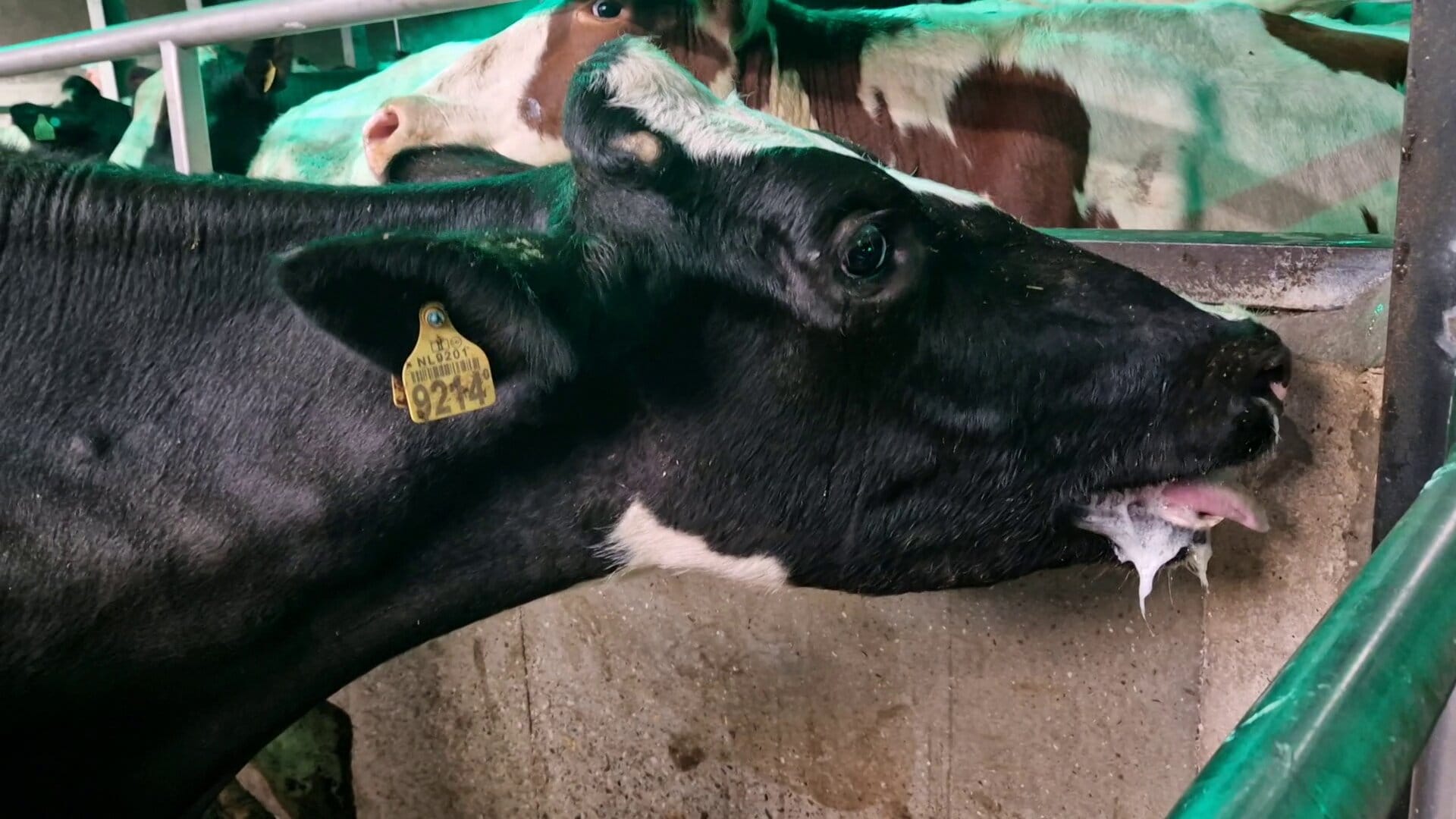
This is also confirmed by our research into collection points in 2025.[5] Investigation group Ongehoord filmed usually only a few days per location and in just 5 of the 50 collection barns in the Netherlands. Yet we regularly see in those images lame cows being violently loaded and unloaded from trucks. Over an entire year, spread across the Netherlands, you can indeed expect thousands of lame cows to arrive at the slaughterhouse.
Chapter 3 / 5
Industry Rules
The European transport regulation states that animals may not be transported if they are "unable to move painlessly on their own."[6] However, the NVWA uses guidelines for inspection that have been drawn up by the meat lobby itself — a sector with a clear financial interest in a more lenient interpretation of the rules.[7]
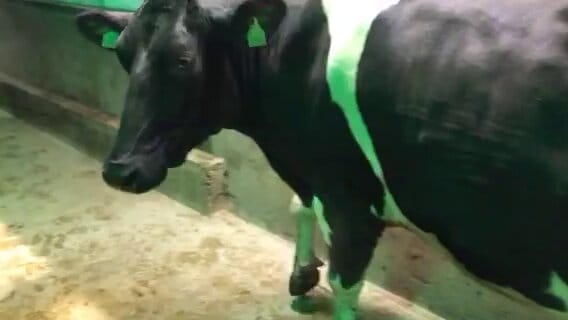
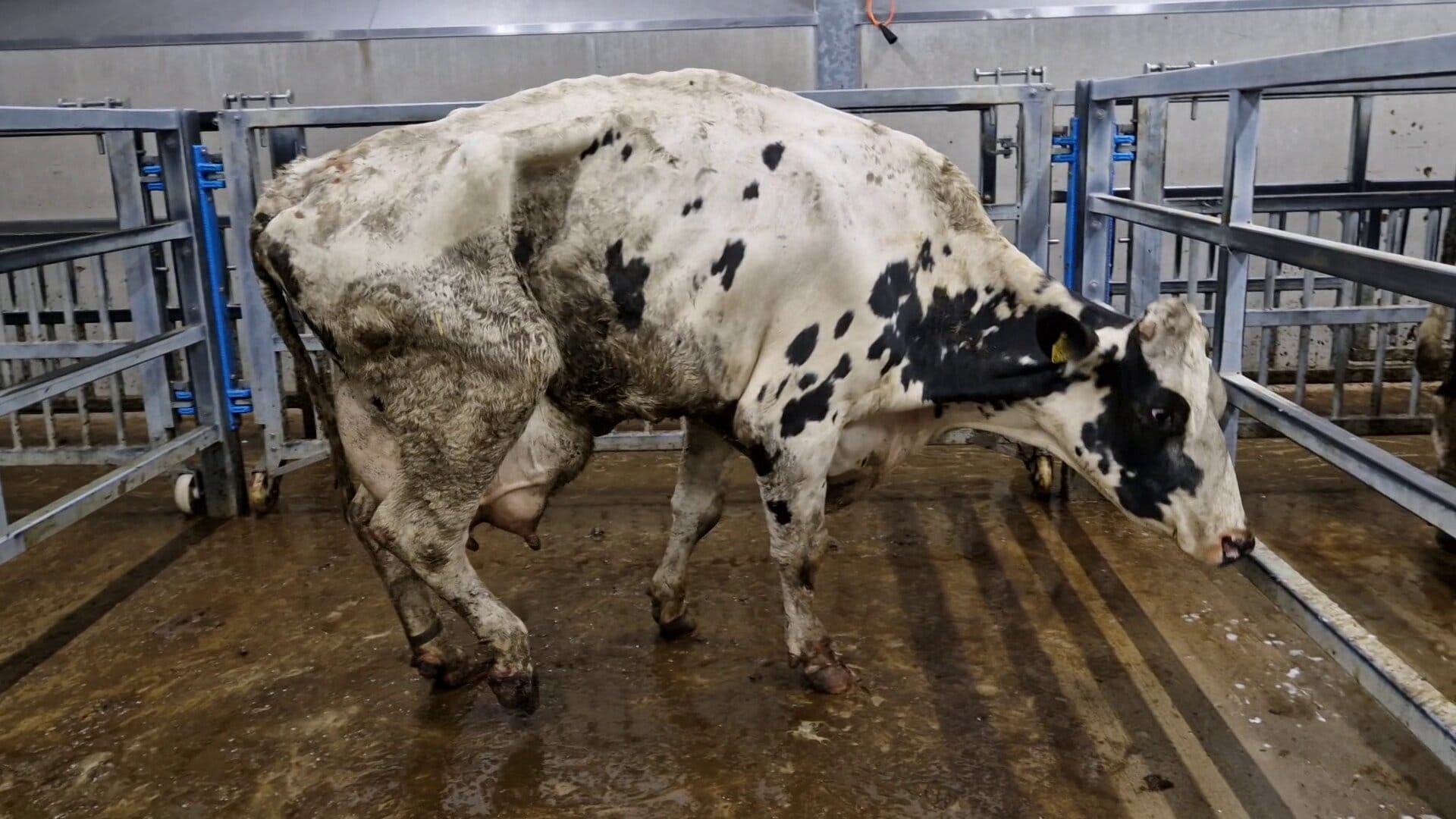
According to these guidelines, cows with "impaired" or "reduced mobility" may be transported, even if they, for example, walk "with shortened steps and a curved back" — an evident sign of pain. Only when a cow can no longer stand on her four legs does the lobby speak of "severely impaired mobility" and thus of a violation.
This interpretation sharply contrasts with the original legal text, which prohibits any transport of animals that cannot walk painlessly. In practice, the animal industry thus avoids many fines because the NVWA complies with its guidelines.
Chapter 4 / 5
Failing Recidivism Policy
The NVWA applies a recidivism policy for violations.[8]
The structure of the recidivism policy is as follows:
| Violation | Fine Amount |
|---|---|
| First fine | 1,500 euros |
| Recidivism within 5 years | 3,000 euros |
| For each subsequent violation | + 1,500 euros on top of previous fine |
| Ceiling | 10,500 euros |
That a fine does not lead to improvement is evident from the requested documents: more than half of the fined livestock transporters were repeat offenders, with corresponding increased fines. In 3 fine decisions, there were recidivists who had already reached the ceiling amount.
Chapter 5 / 5
Animal Suffering is Part of the Dairy Industry
The inspection reports make it clear that fines have little effect and the NVWA only acts sparingly. Dairy farmers need to get rid of their cows when the animals develop health problems and their milk production declines. Treatment or euthanasia of sick and lame animals on the farm costs money. Moreover, dairy manufacturers penalize farmers with a lower price for the milk when mortality on their farm increases. If the cow still makes it to the slaughterhouse, it actually brings in money. It is therefore more attractive for dairy farmers to still transport sick cows to slaughter.[10]
The conditions described in the inspection reports are typical production diseases of dairy farming. Cows have been selectively bred to give more and more milk, at the expense of their health. All energy goes to milk production, at the expense of other bodily functions for which a cow also needs energy. Lameness, mastitis (painful udder inflammation), and exhaustion are therefore common.[11][12]
Annually, about 30% of the Dutch dairy herd is culled. Slightly more than 3% of the cows die or are euthanized on the farm itself; the majority of the spent dairy cows are transported to slaughter.[13] Because dairy cows are rarely in good condition at the end of their "career," transport of weak, lame, and sick animals is inevitable. Stricter supervision and higher fines change little about this — to structurally end this animal suffering, the sector as a whole would have to disappear.
What can you do?
Sources
13 sources
Official document 4Regulator 3Research publication 3Industry source 2Own research 1