The footage captured by the Ongehoord investigation team at De Weerd deer farm in Nijbroek is far from cheerful. Red deer dash around in sheer panic as they are shot one by one. One deer, believed to be dead, unexpectedly lifts its head, only to have its throat cut. The animal, still conscious and struggling, bleeds to death.
Where we filmed
Natural life
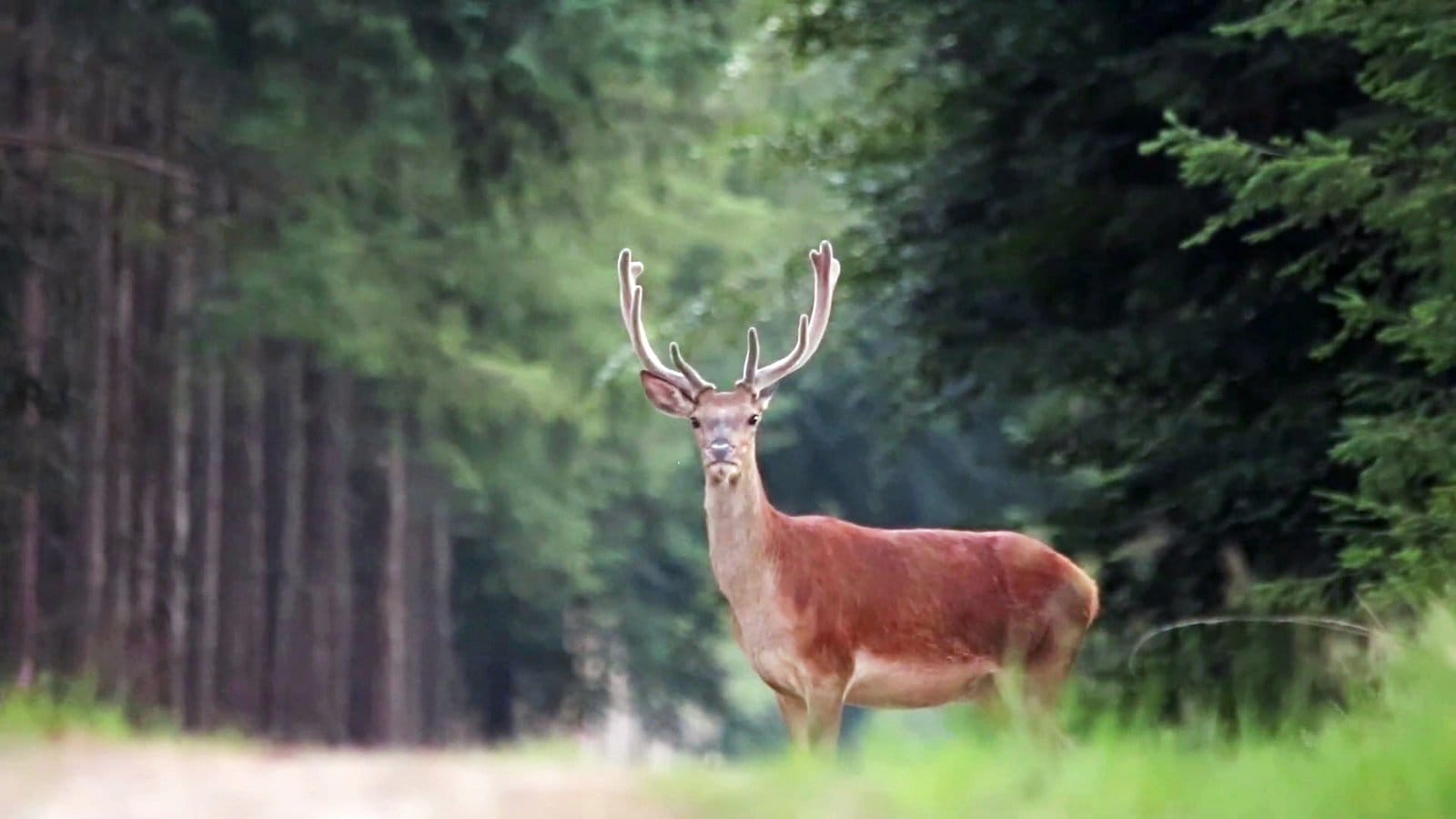
Deer are naturally inclined to flee; escaping from potential threats is their main survival tactic.[2] In the wild, they inhabit expansive forests where they seek shelter among shrubs or densely packed pines. Highlands, mountainous regions, and hilly landscapes also provide suitable habitats. They prefer to rest in clearings where they can spot approaching danger from a distance and escape in time. In forests, the range of red deer spans 200-400 hectares, while in mountainous areas, it can extend up to 2,400 hectares. They spend 7 to 12 hours each day foraging. Their diet includes grasses, herbs, leaves from deciduous trees, shrubs, and saplings. They also enjoy snacking on acorns and beechnuts and nibbling on tree bark to aid in digestion.
Female red deer live in herds of 5 to 15 related animals, led by a matriarch. There are also herds of male deer. During the rutting season (September-October), male herds disperse as male stags join hind herds. After the rut, the males separate from the hinds. In May-June, hinds give birth to a calf. Calves stay with their mothers until they are two years old. Red deer do not reach full maturity until they are seven years old. They typically live for about 15 years, with some individuals reaching up to 25 years of age.[3][4][5]
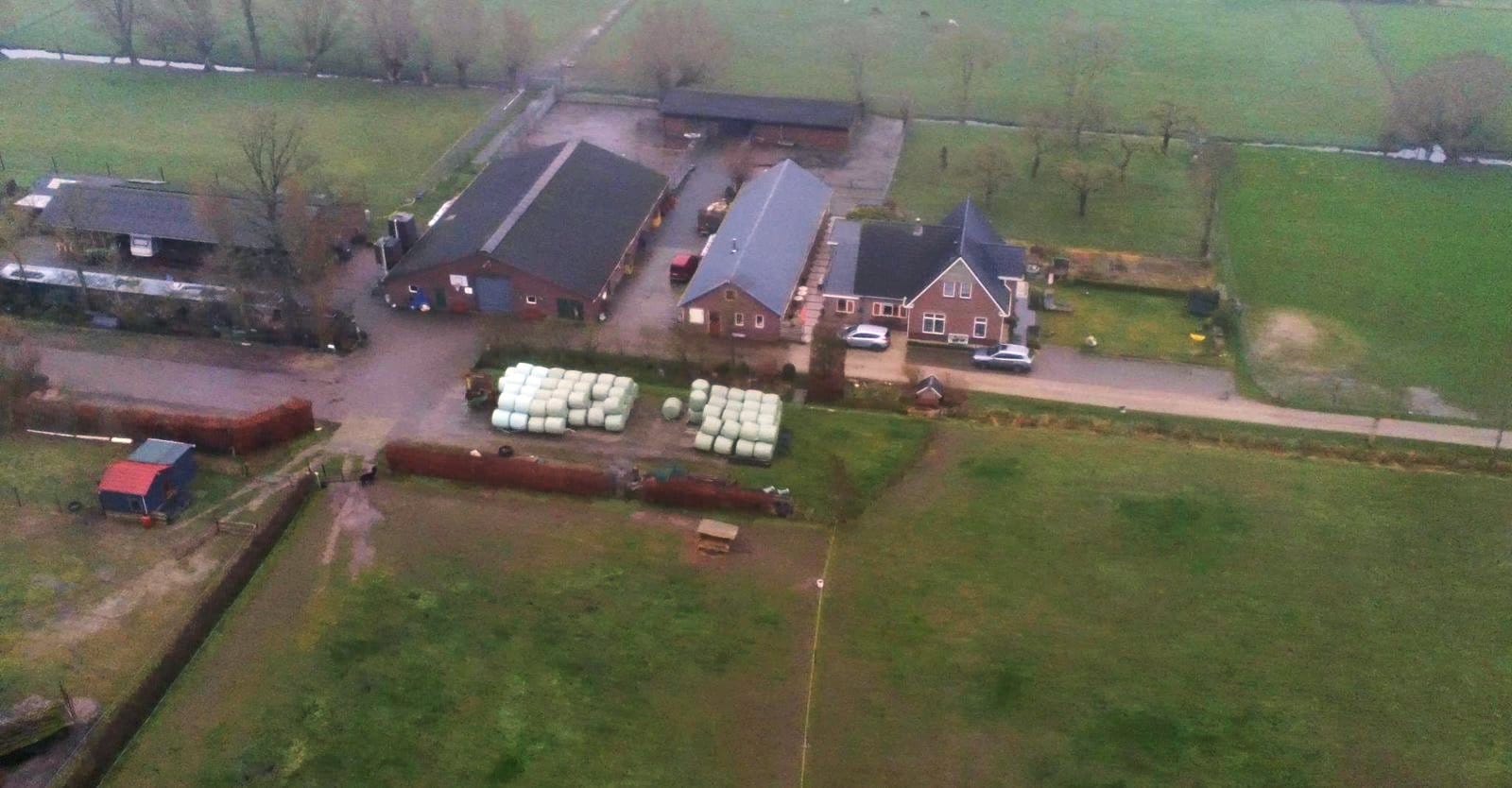
Life on a deer farm
This is also evident in practice. Deer farmer De Weerd states in the Nederlands Dagblad: “A deer never becomes tame. Does that roam freely outside may appear calm, but they panic if I make an unexpected movement. “Catching is actually best achieved with a tranquilizer gun.”[7]
Living conditions on a deer farm are significantly different from those in the wild. The farm features several fenced pastures and winter stables. The pastures accommodate 20 to 25 deer per hectare, which is over 200 times smaller than their natural habitats.[8]
Near the stables, there is also a treatment area equipped with a deer crush. This device securely holds the animals between two walls. Since deer are wild animals, it is not feasible to carry out veterinary procedures on them without restraint, such as blood collection or deworming. The crush is also used for, among other things: to prepare stud bucks before sawing off their antlers.[9][10]
Female breeding deer give birth to a calf in May or June. Mothers and calves spend the summer together in a pasture. In autumn, when the calves are 4 to 5 months old, they are separated from their mothers, even though they would naturally stay with them for two years. The calves are then grouped together to grow until they are 18 months old. At that point, some of the female calves are chosen as new breeding mothers, while most of the calf group is slaughtered for their meat. Mother animals are used for breeding for about 7 years.[11][12]
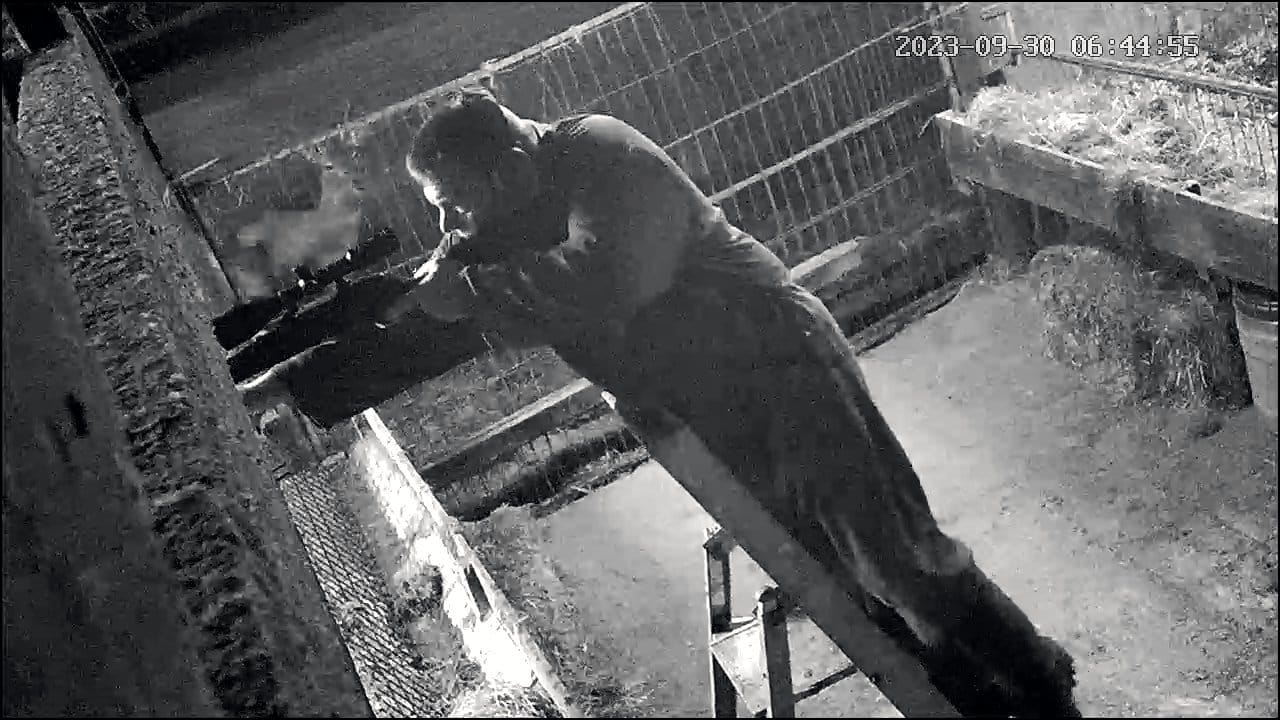
Hunters shoot deer at the Weerd farm in Nijbroek
Transporting deer to a slaughterhouse is challenging due to their wild nature, which is why they may be killed for meat production on farms. The law allows for the animals to be shot in the head with a firearm. Ideally, a well-aimed shot to the head should result in an instant death for the deer. When the deer reach slaughter age, the Netherlands Food and Consumer Product Safety Authority (NVWA) inspects the living animals to approve them for slaughter and consumption. The shooting of the animals is not supervised.[13] In 2023 and 2024, Ongehoord used hidden cameras to film the shooting of red deer at the De Weerd farm on the Middendijk in Nijbroek.[14] Although deer farmers argue that deer slaughter is humane because the animals avoid transport stress, the footage from Ongehoord reveals a different story. Deer farmer Voortman drives his deer into the barn and then shuts the door. Edwin van der Cruijsen, chairman of the Association of Dutch Deer Farmers and owner of a large game farm in Mill, then begins shooting. Deer are flight animals, and shooting in the barn inevitably leads to severe stress and anxiety. The animals display intense reactions to the sound of the shots. They witness other deer around them falling dead or wounded. The deer panic and run through the barn, but there is no escape. Studies show that hunting deer in the wild is already stressful, but the images suggest that the "hunt" in the barn causes even more stress.[15] Not all deer die instantly after being shot. We observe a deer lying on the ground that raises its head minutes after being shot. Deer that survive a shot are killed by having their throats slit without prior stunning. The dead deer are then taken to the game dealer in Mill for further butchering and processing.
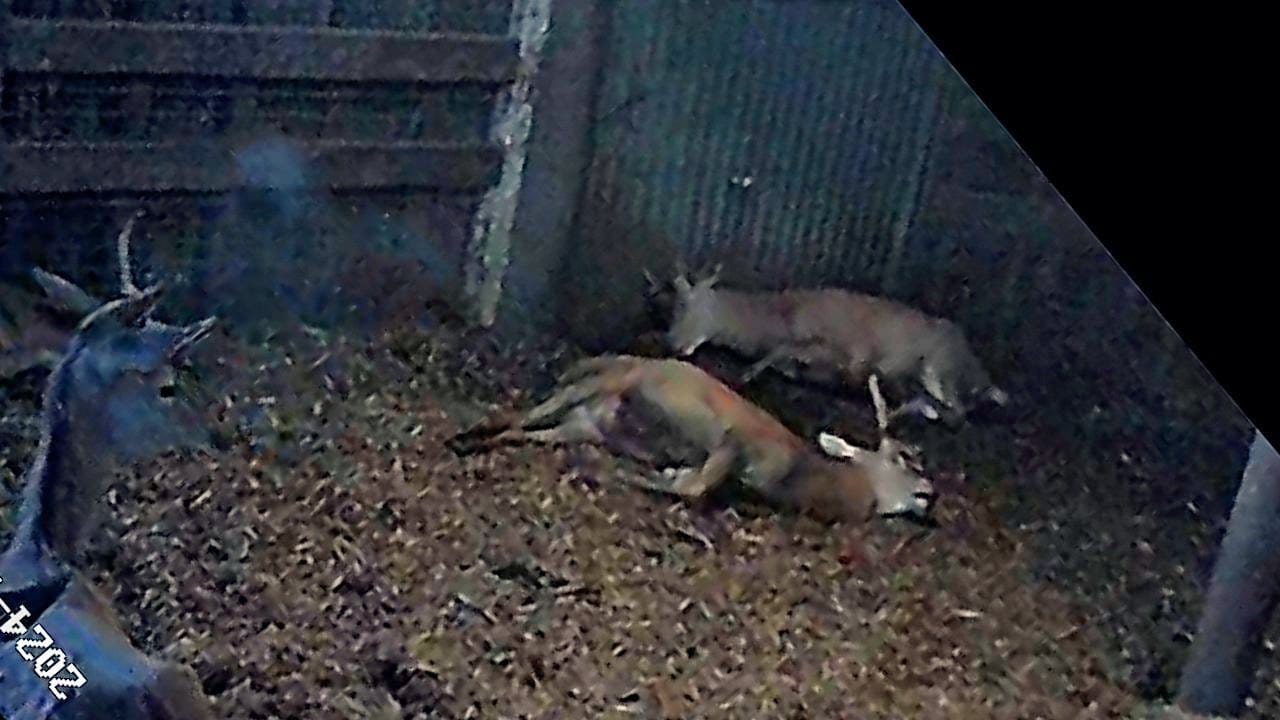
Deer farming in the Netherlands
The Dutch deer farming industry lacks transparency. Unlike other livestock species, deer are excluded from government statistics on animal use and slaughter. A recent report from BuRO (Bureau for Risk Assessment and Research) provides limited information. The Netherlands reportedly has 21 deer farms raising red deer, but BuRO does not know how many of these farms breed deer for recreational purposes or meat production. According to internal figures from the NVWA, 586 farmed red deer were slaughtered in 2019.[16] The 'Dutch Association of Deer Farmers', the interest group for farmers who raise deer for meat production, has seven affiliated breeding farms, including De Weerd farm.[17] The government neglects animal welfare. The new pet and hobby animal list, which outlines mammal species that individuals are allowed to keep, took effect on July 1, 2024. This list was created by a committee of scientists who assessed the risks associated with keeping over 300 animal species, including deer. They considered the welfare risks for the animals, the safety of people, and the potential for zoonosis.[18] Deer were excluded from the new list because scientists determined they are highly unsuitable for livestock farming. They fall into the highest risk category due to their strong flight responses to disturbances, limited foraging opportunities, insufficient space in enclosures, and the stress and aggression issues that arise from unnatural living conditions. Additionally, there is a risk of zoonoses, and people can be seriously injured when handling red deer.[19] When the new list was announced in January 2023, then-Minister of Agriculture Adema expressed his commitment to adhere to the scientific recommendations. Deer should no longer be kept in deer parks after July 24 because, according to Adema, "animal welfare must come first."[20] However, farms that breed deer for meat production were immediately exempted from the ban on keeping them for economic reasons.[21] Due to pressure from the deer lobby, Adema also granted deer parks a "permanent exemption" in December 2023. Although deer are not included on the list of pets and hobby animals, and the law states that they may not be kept, this still occurs.[22] Legislation that supports animal welfare is frequently overturned by the livestock farmers' lobby. A similar situation occurred with the "Amendment Vestering," which aimed to end factory farming. Adema refused to implement the amendment passed by the House of Representatives and replaced it with a "covenant" allowing the animal industry to establish its own regulations. Even when legislation is in place, the NVWA often opts not to enforce it. This was evident, for instance, regarding legislation on livestock transport.[24] The fact that even the deer farming industry can block legislation shows how readily the Ministry of Agriculture, Nature and Food Quality (LNV) aligns itself with the interests of the animal industry.
What can you do?
Share this investigation
Share this investigation with people around you.
Sources
24 sources
Mammal Species Assessment, 2022. (The Red Deer p. 473)
Red deer (Mammal Society)
Red deer (Nature Point)
Chapter 8, Kept Game.
Deer farming. Animal Production Department - Ghent University p.6
Deer make farming more fun. Dutch Daily Newspaper, 2007.
Chapter 8, Kept Game.
Deer farming. Animal Production Department - Ghent University, p.13
Chapter 8, Kept Game.
Chapter 8, Kept Game.
Water buffalo, deer and ostrich farming in the Netherlands. Wageningen University, p.12
Physiological Stress Reactions in Red Deer Induced by Hunting. - Vilela et al, 2020. Activities
Chapter 8, Kept Game.
Mammal Species Assessment, 2022. (The Red Deer p. 473)
Minister Adema insults the House. - NRC, 2022.
NVWA still at fault. Ongehoord, 2021.