Chapter 1 / 4
Natural life
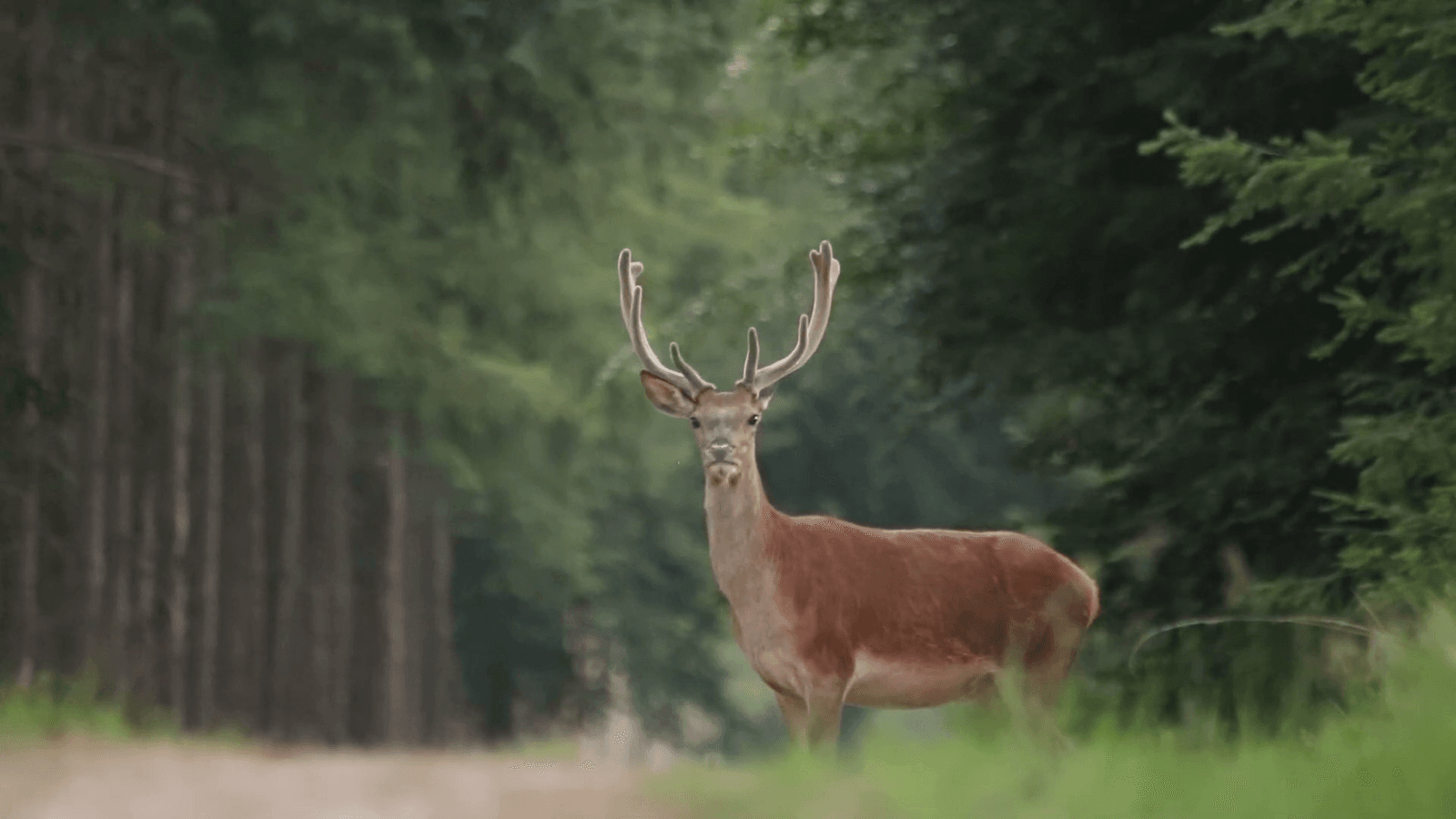
Deer are naturally inclined to flee; escaping from potential threats is their main survival tactic. [2] In the wild, they inhabit expansive forests where they seek shelter among shrubs or densely packed pines. Highlands, mountainous regions, and hilly landscapes also provide suitable habitats. They prefer to rest in clearings where they can spot approaching danger from a distance and escape in time. In forests, the range of red deer spans 200-400 hectares, while in mountainous areas, it can extend up to 2,400 hectares. They spend 7 to 12 hours each day foraging. Their diet includes grasses, herbs, leaves from deciduous trees, shrubs, and saplings. They also enjoy snacking on acorns and beechnuts and nibbling on tree bark to aid in digestion.
Female red deer live in herds of 5 to 15 related animals, led by a matriarch. There are also herds of male deer. During the rutting season (September-October), male herds disperse as male stags join hind herds. After the rut, the males separate from the hinds. In May-June, hinds give birth to a calf. Calves stay with their mothers until they are two years old. Red deer do not reach full maturity until they are seven years old. They typically live for about 15 years, with some individuals reaching up to 25 years of age. [3] [4] [5]
Sources
- 1
Mammal Species Assessment, 2022. (The Red Deer p. 473)
- 2
- 3
Red deer (Mammal Society)
- 4
Red deer (Nature Point)
- 5
Chapter 8, Kept Game.