Chapter 2 / 2
The investigation
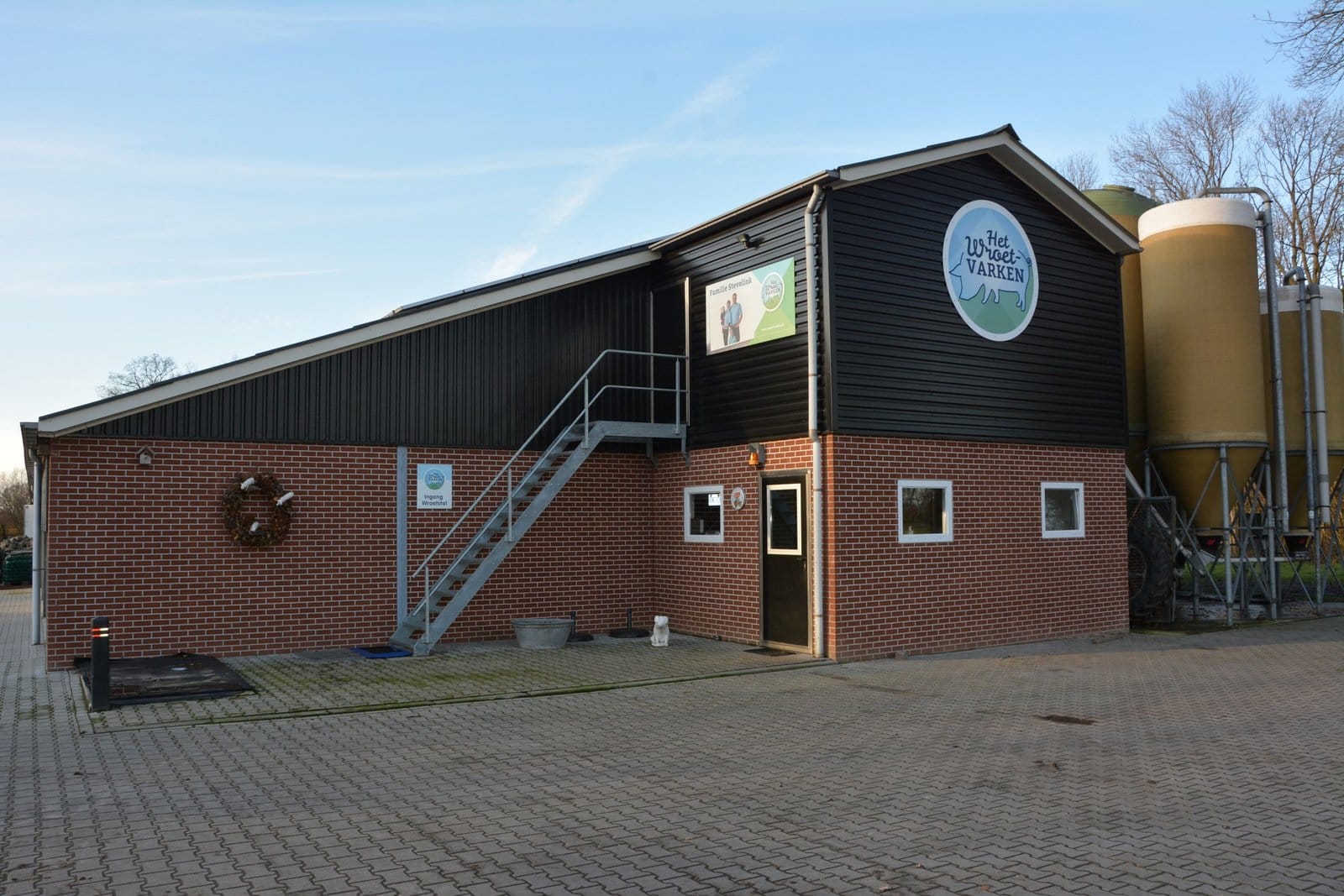
In June and September 2021, Ongehoord conducted an investigation into the rooting pig chain. A team visited the barns of founder Broenink and subbreeder Tijink to film the pigs' living conditions. They observed severe animal suffering in both the subbreeding facility and the rooting barn.
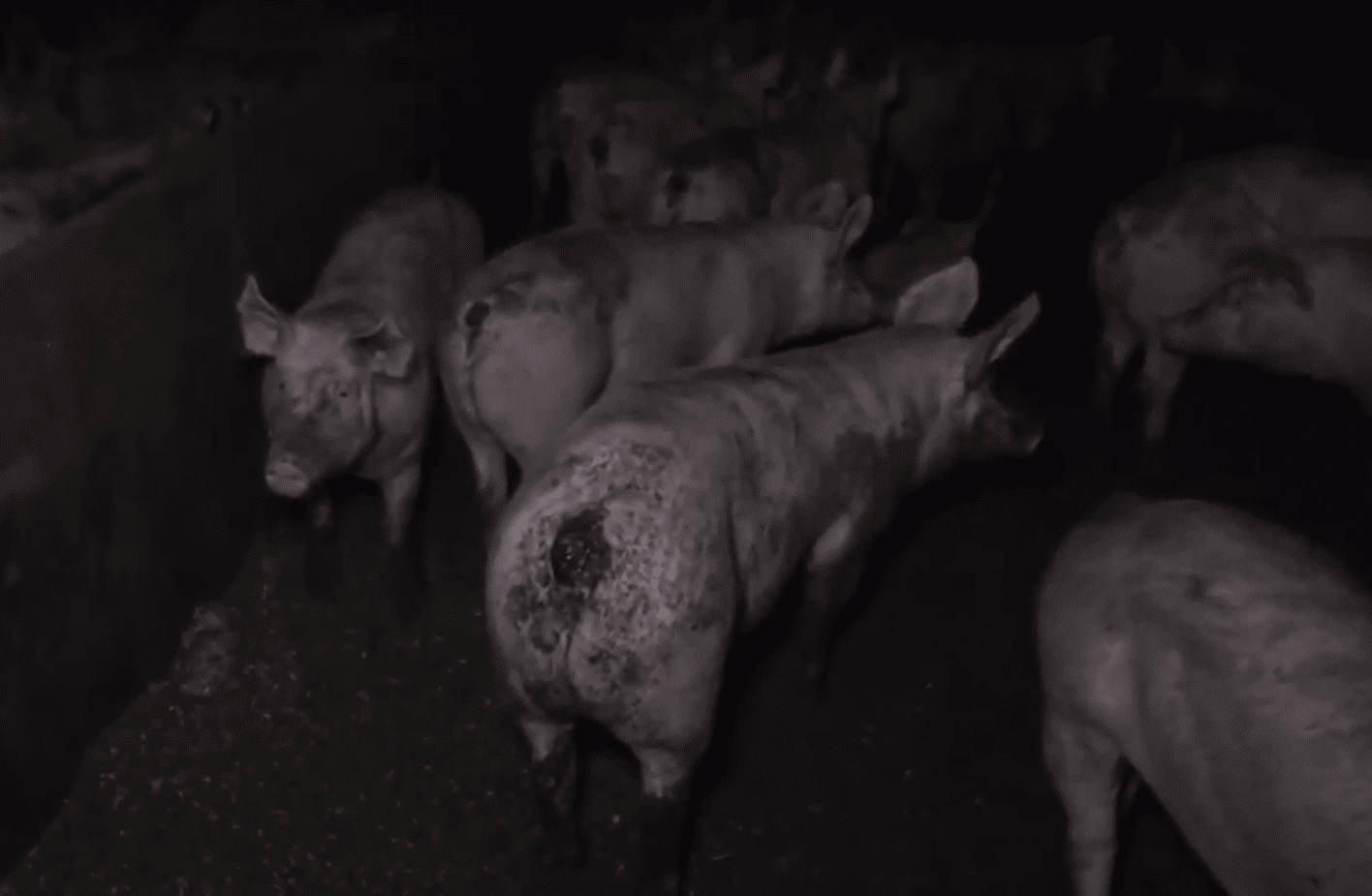
Pigs with serious bite wounds in the rooting stable of founder Broenink
The research team visited Jan Broenink's rooting barn in Langeveen, which is licensed to house 1,000 finishing pigs. The farm contained growing finishing pigs of various ages. At Broenink's, Ongehoord filmed pigs with severe wounds from tail and ear biting, as well as scratches and injuries on their bodies, umbilical hernias, and severe lameness. The bedding in the pens where the pigs root and live was contaminated with feces. Several animals had feces on their bodies from lying in the soiled bedding. Under natural conditions, pigs would never soil their resting areas. Mother pigs teach their young to urinate and defecate in a separate manure area, which is located 5 to 15 meters away from the nest. [19] The pigs' feed troughs were infested with flies. Research has shown that flies can transmit a number of diseases, including various forms of diarrhea, salmonellosis, Aujeszky's disease, and swine fever. [20] Flies can not only transmit diseases, they also cause unrest and discomfort in pigs. [21] In the wild, pigs enjoy mud baths. The mud crust that this creates on their skin protects them from flies. [22]
Subbreeder Tijink: wounds, lameness, skin diseases
Pigs of various ages were kept at the Tijink breeding farm. The animals were housed in pens with concrete floors and slats, lacking any bedding. The farm was also infested with flies. One pig had its tail completely eaten away and suffered from severe open wounds across its back. A young piglet could only stand on three legs, indicating a painful leg issue. Several other animals walked stiffly. A few pigs had abnormal skin rashes covering their entire bodies. The animals constantly scratched themselves with their hind legs and shook their heads, showing signs of itching and irritation. Outside the barn, on the farm grounds, the research team discovered two barrels containing dead piglets. The barrels were primarily filled with deceased farrowing piglets and only larger piglets. Dead piglets are a common occurrence on pig farms. In the Dutch pig industry, 12.2% of piglets die in the farrowing pen. In mother pigs, premature mortality is 6%, and in finishing pigs, it is 2.5%. [23] Annually, this results in 4 million farrowing piglets and over half a million finishing pigs and mother pigs.
Livestock farming related welfare issues
The abuses captured in the sub-breeding facility and the rooting pen reflect common welfare issues in the conventional pig industry. This shows that the rooting pig concept fails to prevent significant animal suffering.
Biting
According to researchers at Wageningen University & Research ( WUR ), ear-biting and tail-biting in pigs are behavioral disorders primarily caused by boredom, lack of stimulation, and frustration. Sources of frustration for pigs include poor barn conditions, excessively large group sizes, and issues with feed composition and feeding methods. [24] When a pig bites the tails and ears of others, it can cause bleeding wounds. The taste of blood and the resulting unrest in the pen can escalate the issue, leading other pigs to engage in biting behavior as well. This can even result in cannibalism. Tail-bite wounds can become infected, leading to abscesses that may cause lameness, paralysis, and death. [25] Ear bite wounds can also become infected with bacteria, leading to swollen ears and dying ear tips. Through these wounds, bacteria can penetrate deeper into the body, damaging organs and putting the pig at serious risk of illness and death. [26] According to Wageningen University, biting occurs on 50% of all pig farms, ranging from conventional to organic.
Scratches and wounds on the body
The scratches and wounds on the bodies of the rooting pigs, as shown in the images, highlight welfare issues among the pigs. These injuries stem from mutual aggression, which can be triggered by challenges in the animals' physical and social environments. Researchers from Ghent University note that injuries to the front of the body typically arise from fights that establish social hierarchy within a pen. This situation often occurs when pigs from different pens are combined. In the rooting barn, we observe pigs with scratches on the front of their bodies, likely due to the transfer of piglets from the breeders to the rooting barn. During this transition, the animals are placed into newly formed groups. Injuries to the hind part of the body indicate fights over food. [27]
Umbilical hernias
An umbilical hernia is a bulge of abdominal contents through an opening at the navel. These hernias can become so large that they touch the ground, causing skin irritation and making movement painful. The contents of an umbilical hernia may include intestines and other abdominal materials, or it could be an abscess filled with pus. Most umbilical hernias arise from infections at the umbilical site, frequently seen in maternity wards. [28]
Lameness
Lameness is a common and well-recognized issue in the pig industry. Often, it is caused by arthritis and meningitis resulting from streptococcal infections. Additionally, lameness can stem from osteochondrosis, a joint disease that arises from selective breeding of pigs for faster growth rates. The cartilage fails to keep pace with the pig's rapid growth, leading to joint defects. Movement disorders are painful and can lead to abnormal walking or even prevent the animal from standing upright. [29]
Sources
- 19
Natural Behavior of Pigs. RDA, 2006: p. 28. rda.nl/publicaties/ziensw...urlijk-gedrag-van-varkens
- 20
Fly control in pig houses. Applied Pig Farming Research. IKC, 1998. edepot.wur.nl/38302#:~:te...ee%20generaties%20vliegen
- 21
Controlling flies in piggeries. Farmers' Union. boerenbond.be/actualiteit...an-vliegen-de-varkensstal
- 22
Natural Behavior of Pigs. RDA, 2006: p. 27. rda.nl/publicaties/ziensw...urlijk-gedrag-van-varkens
- 23
Handbook of Quantitative Information on Livestock Farming. wur.nl/nl/product/Handboe...atie-Veehouderij-KWIN.htm
- 24
Preventing tail biting in pigs. Wageningen University Research. wur.nl/nl/show/Staartbijt...CBgHROQXKPodrr1wvP0ZxYJpQ
- 25
Preventing tail biting in pigs. Wageningen University Research. wur.nl/nl/show/Staartbijt...CBgHROQXKPodrr1wvP0ZxYJpQ
- 26
Ear necrosis and ear biting. Pig Business, August 2015. pigbusiness.nl/artikel/20...NUNs1pWFm6eBoILoboATCiJh8
- 27
Evaluation protocol for animal welfare and health on Flemish pig farms. Ghent University, 2005: p. 20. researchgate.net/publicat...0cf225bddcc7c283/download
- 28
Congenital abnormalities. Pig Business, July 2017. pigbusiness.nl/artikel/32...8-aangeboren-afwijkingen/
- 29
Lame pigs: infection or something else? Pig, 2016. edepot.wur.nl/402860
What can you do?
Share this investigation with people around you.