Chapter 1 / 2
The rooting pig idea
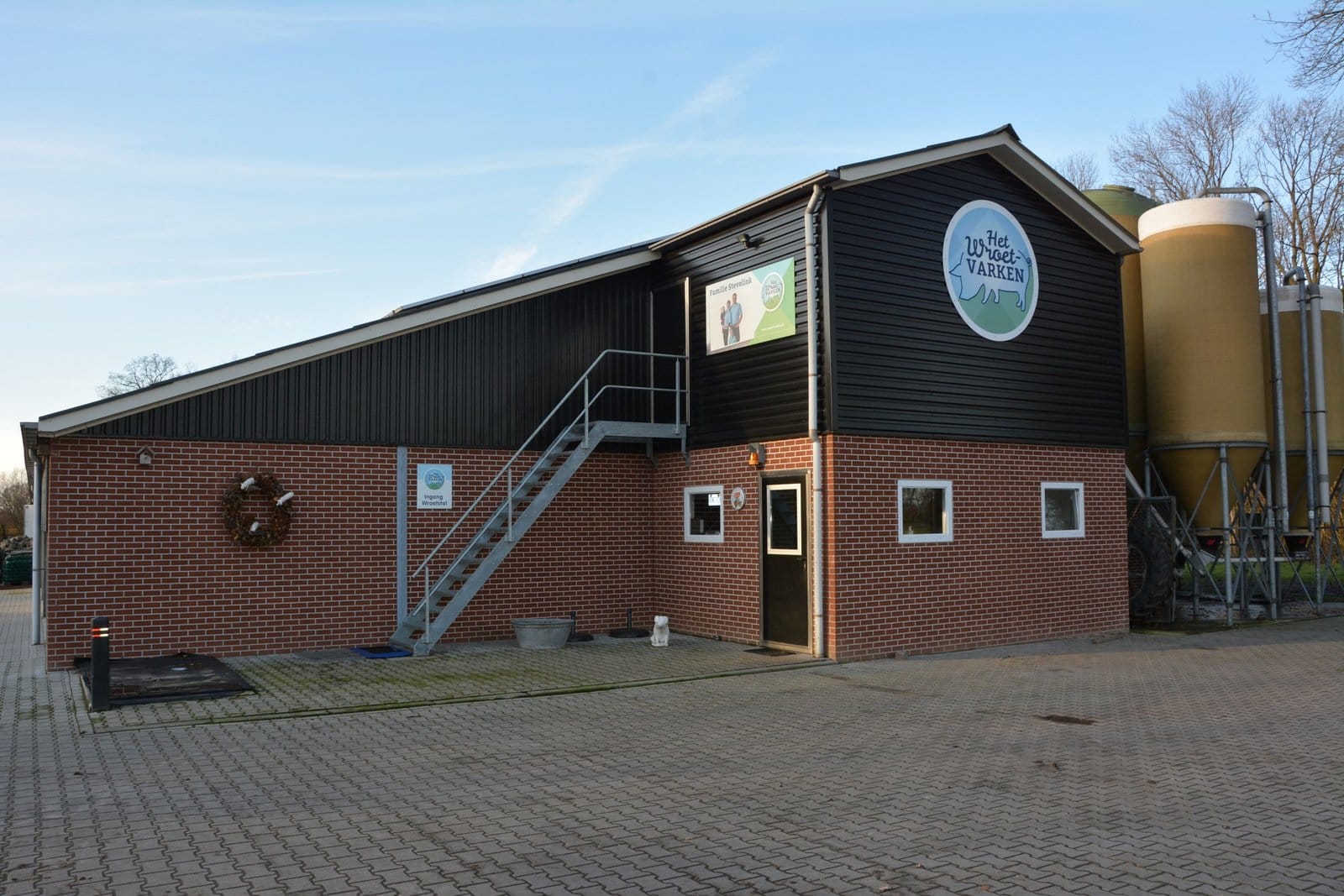
The rooting pig concept started in 2004 when Jan Broenink teamed up with the Dutch Society for the Protection of Animals (Dierenbescherming). Broenink built the first "rooting stable" in Langeveen for 1,000 finishing pigs. The meat from these rooting pigs was marketed with one star of the Beter Leven welfare certification. Other pig farmers adopted the concept, and by 2021, the rooting pig chain was delivering 500 pigs for slaughter each week. Certified butchers sell the meat.
Wroetvarken: a chain concept
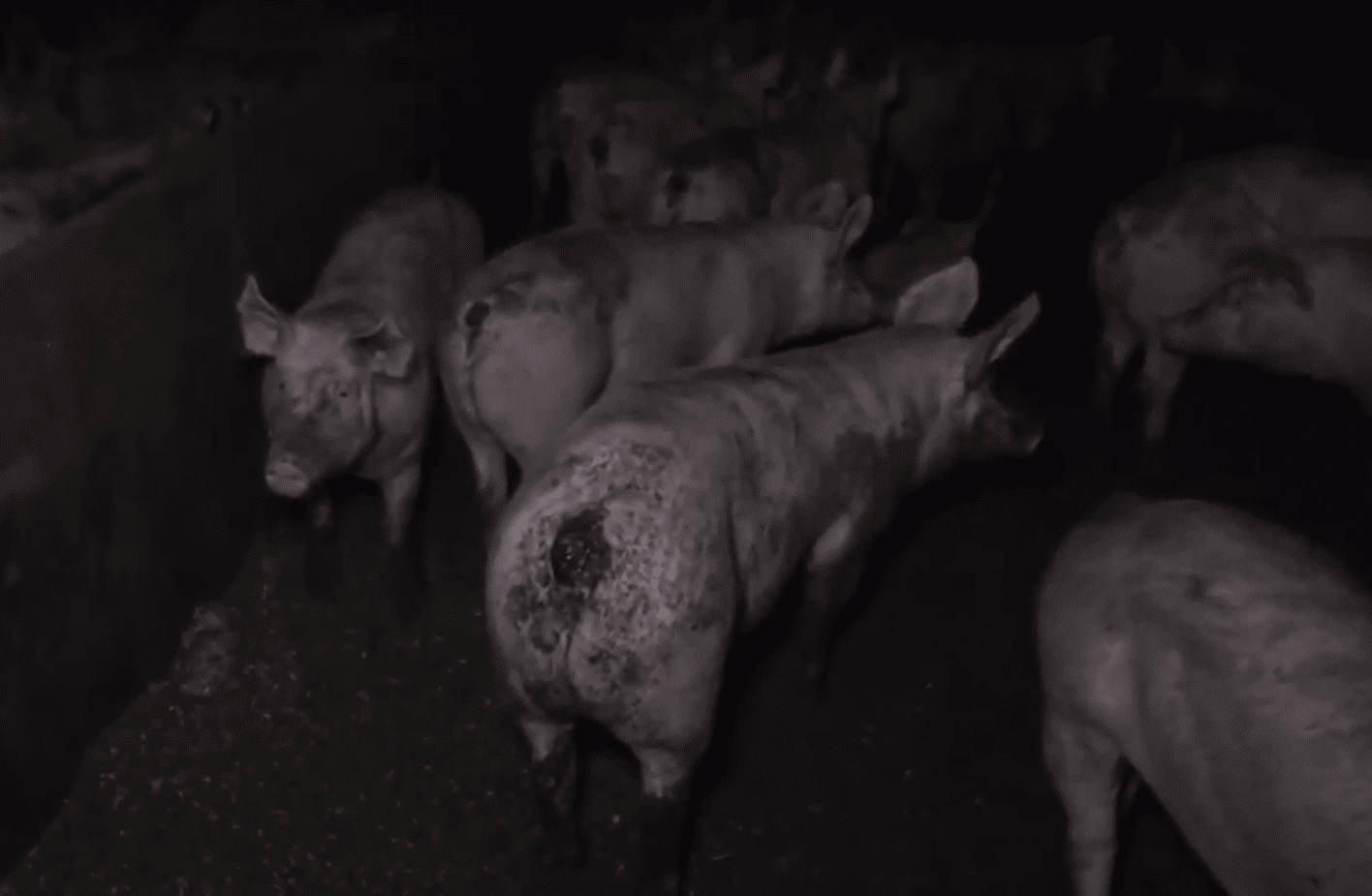
In a rooting stable, finishing pigs are housed in groups. Each group has a pen with litter. The size of each group ranges from 20 to 32 pigs, with a density of 1 square meter per animal. The stable's floor is made of concrete, featuring a slatted section for waste. The litter on the floor primarily consists of pine sawdust. [1]
The term "rooting pig" describes the rooting behavior of pigs, which is a vital part of their natural instincts. Pigs root to find food, an activity they engage in for much of the day. Researchers at Wageningen University characterize natural rooting behavior in pigs as “ploughing the soil to extract roots, insects, and worms.” [2] In a barn setting, pigs' rooting behavior is restricted to turning over a layer of bedding on a concrete floor.
As of 2021, 16 pig farmers are part of the rooting pig chain. They all adhere to the principles of the rooting pig concept. [3] The initial link in the rooting pig chain is sub-breeder Tijink. [4] A sub-breeding farm is where mother animals are raised for the pig industry. Tijink's farm breeds animals from Topigs Norsvin, a major breeding organization that develops pig breeds for the industry through genetic selection. The emphasis is on “cost-effective pig (meat) production.” [5] Tijink's farm can accommodate 447 breeding sows and 880 rearing animals. Tijink provides the mother animals for the entire rooting pig chain. [6]
From the sub-breeding facility, the mother animals are sent to rooting pig breeders. At these breeders, they give birth to piglets that will be raised in rooting sheds. The mother animals in the rooting pig chain are housed in a traditional system. This means they are confined between bars in breeding pens for artificial insemination. To give birth and nurse their piglets, the mothers are kept in farrowing cages for a month. [7] Confinement between bars severely limits pigs' freedom of movement, social interaction, and grooming behavior. Due to the lack of space, the animals frequently rub against the bars, which can result in injuries. [8] At 12 weeks old, the piglets are moved from the breeding farms to a rooting stable, where they are fattened until they are ready for slaughter at 28 weeks, or approximately 6.5 months old. [9]
The Wroetstal Foundation: Broenink and Gosschalk
Initially, the rooting pig meat was sold to supermarkets, but sales did not meet expectations. This prompted Broenink to partner with Gosschalk slaughterhouse in 2011, which would subsequently sell the meat to (Keur) butchers. [10]
In 2014, Jan Broenink and Ben Gosschalk, the director of the slaughterhouse, established the "Stichting de Wroetstal" (The Wroetstal Foundation) to "organize, monitor, and supervise a high-quality pig chain." Broenink serves as the chairman of the foundation, while Gosschalk holds the positions of secretary and treasurer (11). [12]
When the Gosschalk slaughterhouse faced criticism in 2021 due to an undercover investigation by Pigs in Need, Jan Broenink announced on behalf of the De Wroetstal Foundation that the slaughter of rooting pigs would (temporarily) be transferred to the Van Rooi slaughterhouse in Helmond. The foundation “distanced itself from any form of disrespectful treatment of animals” (13). [14] Notably, Ben Gosschalk continued to serve as a board member of the De Wroetstal Foundation. Ongehoord previously discovered that Gosschalk slaughterhouse also remained the chain director for the Animal Protection Association. [15]
Winner of the Animal Protection Society's livestock farming award
In 2021, Jan Broenink received the Deltaplan Livestock Farming Award for his rooting pig concept, a new initiative by the Dutch Society for the Protection of Animals (Dierenbescherming). Through the Deltaplan Livestock Farming, animal protection organizations aim for "animal-centered, integrally sustainable livestock farming." The plan describes the vision for livestock farming in 2050 as envisioned by the animal protection organization. [16] The Deltaplan Awards jury recognized Broenink's concept as "a source of inspiration for livestock farmers." [17] Pig farmer Annechien ten Have chaired the Deltaplan Award jury, during which Ongehoord also captured shocking images of animal suffering. According to the Dutch Society for the Protection of Animals (Dierenbescherming), Ten Have and Broenink are prominent figures in the Delta Plan for Livestock Farming. Both pig farmers are also members of CARING FARMERS, a farmers' advocacy group supported by the Dutch Society for the Protection of Animals (Dierenbescherming). [18]
Sources
- 1
Environmental impact of rooting sheds: a chain exploration. Wageningen UR Research: pp. 14-15 edepot.wur.nl/222196
- 2
Natural behavior of pigs. Wageningen UR. edepot.wur.nl/115243
- 3
Wroetvarken, our farmers. wroetvarken.nl/onze-boeren
- 4
Wroetvarken, our farmers. wroetvarken.nl/onze-boeren
- 5
Topigs Norsvin. topigsnorsvin.nl/over-ons/
- 6
Topigs Norsvin, Tijink. topigsfarms.topigsnorsvin...2:::::P2_RELATIENR:765198
- 7
Report on a rooting pig breeder. Pigs, August 2019. varkens.nl/nieuws/2019/08...etvarken-voel-ik-me-thuis
- 8
Discomfort in cattle, pigs, poultry, mink, and horses. Wageningen UR Livestock Research, 2011. edepot.wur.nl/190225
- 9
Expedition East. RTV Oost, September 2019. rtvoost.nl/nieuws/318590/...s-de-aard-van-het-beestje
- 10
Quality Impulse Guidelines for Agriculture and Food, 2017. farmconsult.nl/bestanden/...tsimpuls_Agro_en_food.pdf p36
- 12
Report on the wroetvarken. Taste in the Business, 2018. smaakindezaak.nl/a/39-het...-om-het-verschil-te-maken
- 14
Fall in cattle prices after Gosschalk closure. Farm, July 2021. boerderij.nl/prijsdaling-...vee-na-sluiting-gosschalk
- 15
Ongehoord Research 2021: Beter Leven quality mark.
- 16
Delta Plan for Livestock Farming, Animal Protection. deltaplanveehouderij.nl
- 17
Deltaplan Livestock Award, winners 2021. deltaplanveehouderij.nl/n...aplan-veehouderij-awards/
- 18
Delta Plan for Livestock Farming: frontrunners. deltaplanveehouderij.nl/#koplopers