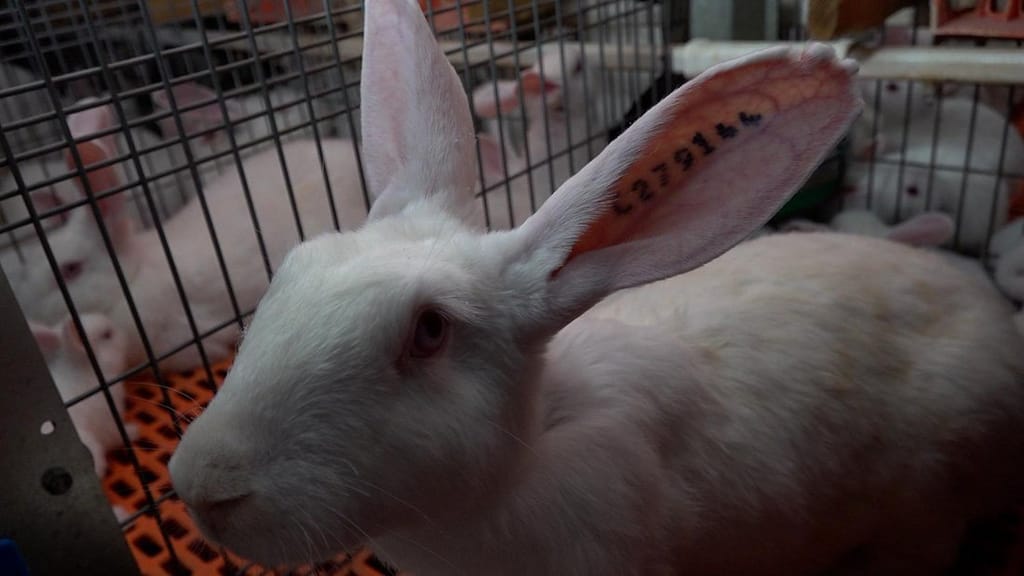
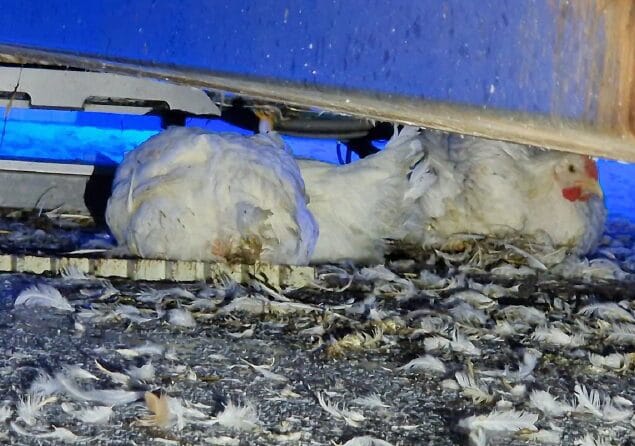
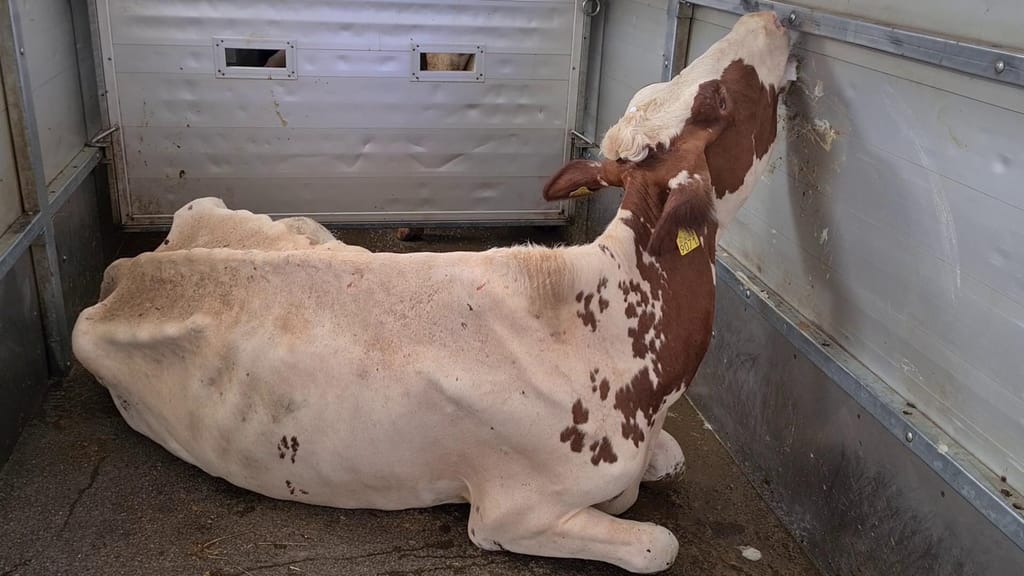
On December 19, 2011, Ongehoord published an undercover investigation into rabbit farming in the Netherlands. The images are shocking. Thousands of rabbits are crammed into cages, suffering from wounds, tumors, deformities, broken limbs, encephalitis, diarrhea, and other health issues. At every farm investigated, dead animals were found among the living ones. Ongehoord investigated nearly 10% of the rabbit farms. Industry spokespersons documented the worst conditions. At one farm with the Beter Leven label from the Dutch Society for the Protection of Animals (Dierenbescherming), rabbits were fattened under similar conditions.
On the pages below, you will find the results of the investigation. You'll also find news articles and source material about rabbits and the rabbit industry in the Netherlands.
Where we filmed
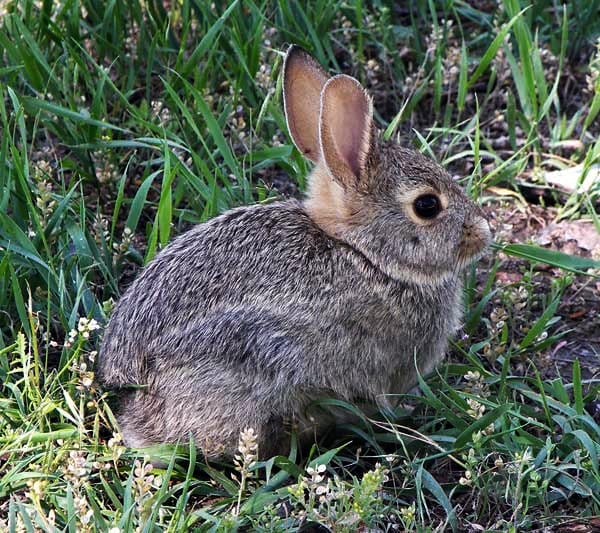
The natural life of a rabbit
One of the most common mammals in the Netherlands is the rabbit. These animals are not only a joy to watch but also play a vital role in the Dutch landscape. Without rabbits, the dunes and the Veluwe would look very different. As strict vegetarians, rabbits are the smallest grazers in the Netherlands. They eat a wide variety of plant foods, including grasses, herbs, tubers, tree bark, and crops. This grazing helps keep vegetation short, allowing many other animals and plants, including protected species, to thrive. Abandoned rabbit burrows also provide popular nesting sites for various birds.
Rabbits, ruminants? Did you know that rabbits have the habit of eating their own droppings? This is because digesting grasses is hard on the stomach. A cow has four stomachs for it. Rabbits cleverly deal with this by simply eating everything twice...
In the wild, rabbits live in groups, making them social animals. These groups typically have more females, known as doers, than males, called rattles. Rabbits also maintain a strict hierarchy. Alpha males may even bite baby rabbits to death if they are uncertain whether the young ones are their own offspring.
Communication, living groups and dissemination
Rabbits are quiet animals. They warn each other of danger by stamping their hind legs on the ground. The only sound they make is a squeal, which happens when they feel scared or injured. When rabbits run, their tails flip up, revealing a white underside. This helps other rabbits in the group keep track of each other, especially in low light.
In a rabbit's territory, the burrow serves as the central point. Rabbits usually stay close to their burrow; the farther they wander, the more timid they become. They dig impressive tunnels that can reach up to 3 meters deep and 40 meters long, complete with nurseries.
Rabbits reproduce quickly, which is why there are so many proverbs about them. They become fertile at a young age and can start reproducing after just four months. Although they remain fertile throughout the year, most young rabbits are born between February and August. A female rabbit, or doe, can have three to seven litters each year. Interestingly, she terminates about 60% of her pregnancies. After giving birth, she is mated again right away. Factors like her status and food availability also affect her ability to carry a pregnancy to term.
After a pregnancy lasting 28 to 32 days, a mother rabbit gives birth to three to twelve young. The nursery is located at the end of long tunnels and is lined with soft materials like moss and hair that the mother pulls from her own abdomen. She spends only five minutes a day nursing her young. To protect them from other rabbits and predators, she closes the entrance to the burrow each time she leaves.
Wild rabbits can live up to nine years, but this is rare. They are popular prey for birds, foxes, and humans. Since 1990, the rabbit population in the Netherlands has been struggling. In 1952, bacteriologist P. A. Delille introduced the rabbit disease myxomatosis in Europe to eliminate rabbits from his backyard. This disease still affects the rabbit population across Europe today. In other regions, this bacterium was deliberately spread to control rabbit plagues. Another disease used for this purpose is Viral Hemorrhagic Syndrome (VHS).
These two diseases have drastically reduced the rabbit population in the Netherlands. In 2007, the Mammal Society recommended to the Minister of Agriculture, Nature and Food Quality that rabbits be listed as a protected species. However, this recommendation was not acted upon because the population was showing slight increases, and hunting animals on the red list is prohibited.
The life of a rabbit in the industry
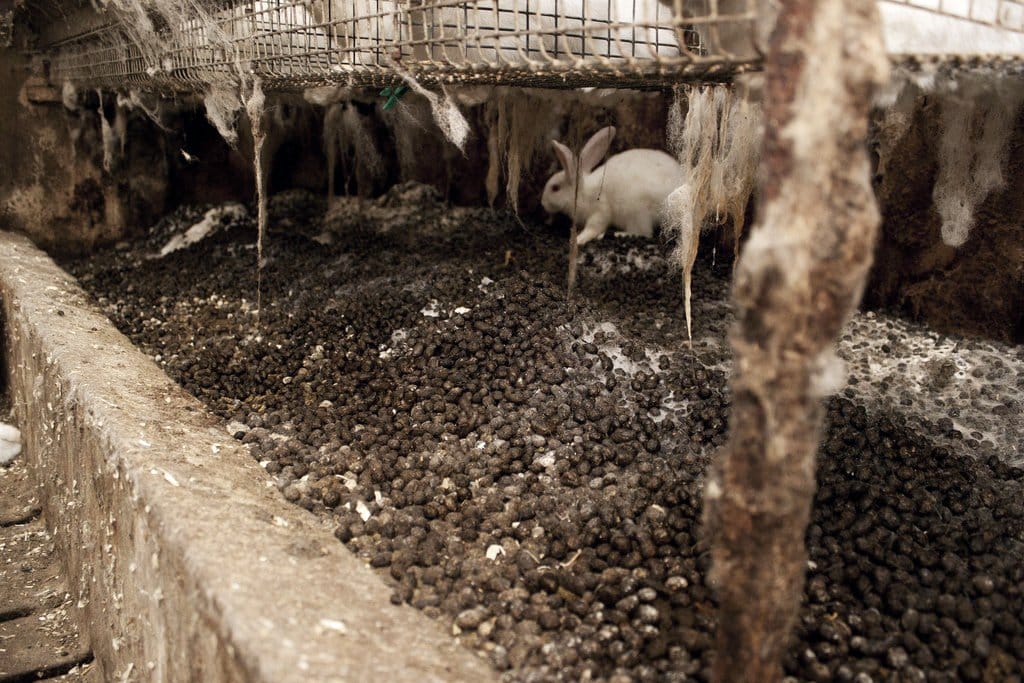
The lives of meat rabbits are very different from those of pet rabbits and wild rabbits. In the Dutch meat industry, all 300,000 rabbits are kept in wire cages. They never get to eat fresh grass or dig burrows. The investigation team observed rabbits grazing on the fur of a dead rabbit, treating it as if it were grass. Living rabbits also tried to burrow into the bodies of dead animals. Newborn rabbits often lose their siblings quickly. Rabbit farmers kill the smallest babies, known as day-old rabbits, by breaking their necks. This practice ensures that all litters are the same size.
Rabbits stay with their mothers for about a month. After that, they are taken away and fattened. A rabbit in the meat industry has a one in five chance of dying early from disease, wounds, or infections, but they are always transported to the slaughterhouse after 11 weeks. A mother rabbit, called a doe, lives alone in a wire cage with her young. Doe rabbits often suffer from illness and exhibit stereotypical behavior because they live much longer in these cages. A doe is usually euthanized after a year, or sooner if she doesn’t have enough young or becomes ill. If a doe survives a year in the industry, she will have 7 to 8 litters, averaging 10 babies each.
Shortly after giving birth, a doe is impregnated again. She is separated from her young for one or two days by closing the nest box flap, which is intended to make her "willing" to mate. This separation causes stress for both the mother and her babies. Most doe rabbits are impregnated through artificial insemination. They are often placed head-down in a piece of PVC tubing and inseminated with an insemination straw or gun. Rabbits experience spontaneous ovulation; an egg is released only when they mate with a ram. To stimulate ovulation during insemination, they are given an injection. The does remain pregnant for about one month.
Transport
When rabbits reach slaughter age, farmers place them in crates and load them onto trucks for transport to the slaughterhouse. Since there are no rabbit slaughterhouses in the Netherlands, most rabbits are sent to Belgium or France. This results in long transport times, especially as the truck must stop at several breeding farms to fill up. The transportation process is stressful for the rabbits and can lead to injuries. The industry acknowledges that there is limited knowledge about the best practices for transporting rabbits.
Slaughter
When the rabbits arrive at the slaughterhouse, they must be unloaded again, which adds to their stress. After unloading, the industry electrocutes the rabbits and hangs them by their heels using hooks. Next, workers stab the rabbits in the neck to bleed them out.
A troubled industry
Rabbits experience high levels of distress. This is primarily caused by husbandry conditions… The individual housing of does and cage floors are significant sources of distress in commercial rabbits. - Animal Sciences Group Report, “Discomfort in Rabbits, Turkeys, Ducks, Sheep, and Goats,” 2009
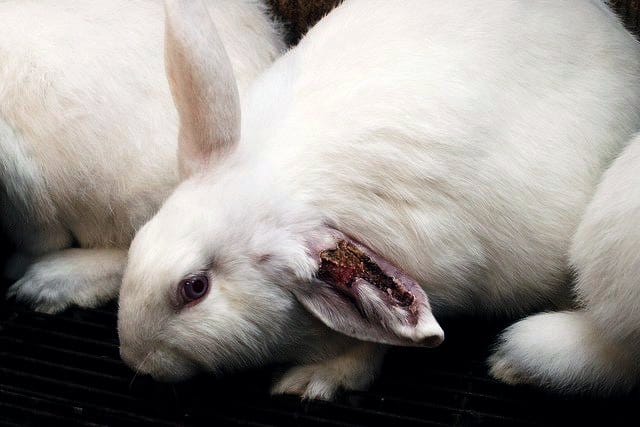
The investigation team found many diseases and behavioral issues among meat rabbits. Life for a meat rabbit is very different from that of a wild rabbit, as none of their natural needs are met. This leads to significant frustration and boredom, which can result in self-harmful behavior. Diseases are common because of the poor living conditions. An average mega farm has 900 does and several thousand meat rabbits. When a rabbit gets sick, it’s impossible to provide enough care and attention to each individual animal. As a result, the investigation team discovered sick, injured, or dead rabbits in the cages at every location visited.
Stereotypical behavior
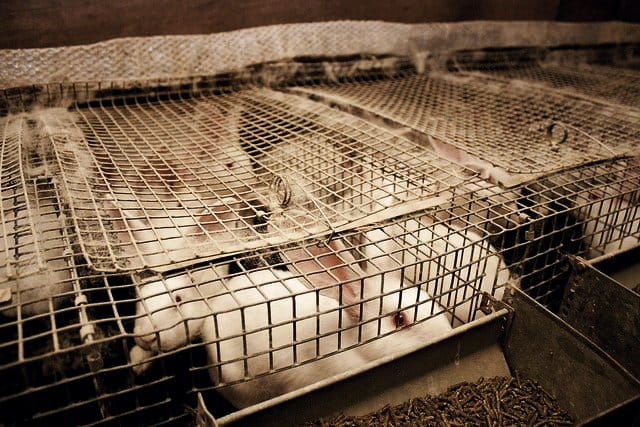
Rabbits are usually kept in wire cages. These cages are often too low and small, forcing the animals to live in close quarters. This setup prevents rabbits from engaging in their natural behaviors like hopping, standing on their hind legs, running, lying down, and gnawing. As a result, they experience boredom, frustration, and stress, which can lead to stereotypical behavior. Stereotypical behavior involves repeating the same body movements or actions. Common examples include gnawing on wire mesh, biting each other's ears, eating hair, or shaking their heads side to side.
Rabbits are naturally social animals, but only meat rabbits are typically housed in groups. Does, or mother rabbits, are usually kept alone or with their young, never with other adults. This loneliness can also trigger stereotypical behavior. In many stables, the investigation team found some cage enrichment, like a small block of wood. However, rabbits have also been observed in cages where they chew on the wire or get injured by other rabbits.
Leg disorders
Rabbits kept in wire cages frequently suffer from foot injuries. Common issues include bald patches, calluses, and wounds. Meat rabbits experience these problems less often because they are slaughtered after three months, and these conditions typically develop later. Sometimes, farmers place plastic mats in the does' cages, but research shows that this measure does not effectively prevent foot pad disease.
Digestive disorders
Many rabbits experience digestive problems from viral infections or intestinal inflammation. One reason for this is their diet, which is designed for rapid growth. Intestinal inflammation often occurs in young meat rabbits after weaning and in does. A common issue is diarrhea, which may signal intestinal inflammation but can also result from stress.
Respiratory diseases
Many of the barns investigated were dusty and filled with cobwebs. Poor air quality makes it hard for rabbits to breathe and raises their risk of infections. This issue is particularly serious for does and older meat rabbits, contributing significantly to their mortality.
Mortality
The mortality rate in rabbit farming is alarmingly high. The industry often uses euphemisms like "failure" and "replacement" to downplay this issue. One in five young rabbits dies before reaching the slaughter age of three months. Twelve percent of these youngsters die before weaning, often because rabbit owners break their necks to avoid higher costs later on.
In the industry, does are immediately inseminated—made pregnant—after giving birth to their litter and while still nursing. This practice leaves them weak, leading to deaths from disease, low-energy feed, or euthanasia due to insufficient offspring production.
Regulations and Quality Standards
In the EU, there are no specific regulations for commercial meat rabbit farming. Dutch welfare standards for this industry were set in 2006, mainly by the sector itself. These standards outline the layout and size of cages. The Welfare Regulation will not be fully implemented until 2016, with half of the regulations scheduled for implementation by 2011. The key changes include enlarging the cages, adding enrichment, and installing platforms so mothers can separate themselves from their young.
In the Netherlands, only one rabbit farm has received the Beter Leven label: Frans Köhlen's farm in Kelpen-Oler. However, not all the stables at this farm are as ideal as the media suggests. Most of the rabbits on this farm are still kept in standard stables.
What can you do?
Share this investigation
Share this investigation with people around you.