Chapter 2 / 4
Beter Leven Mega Stables
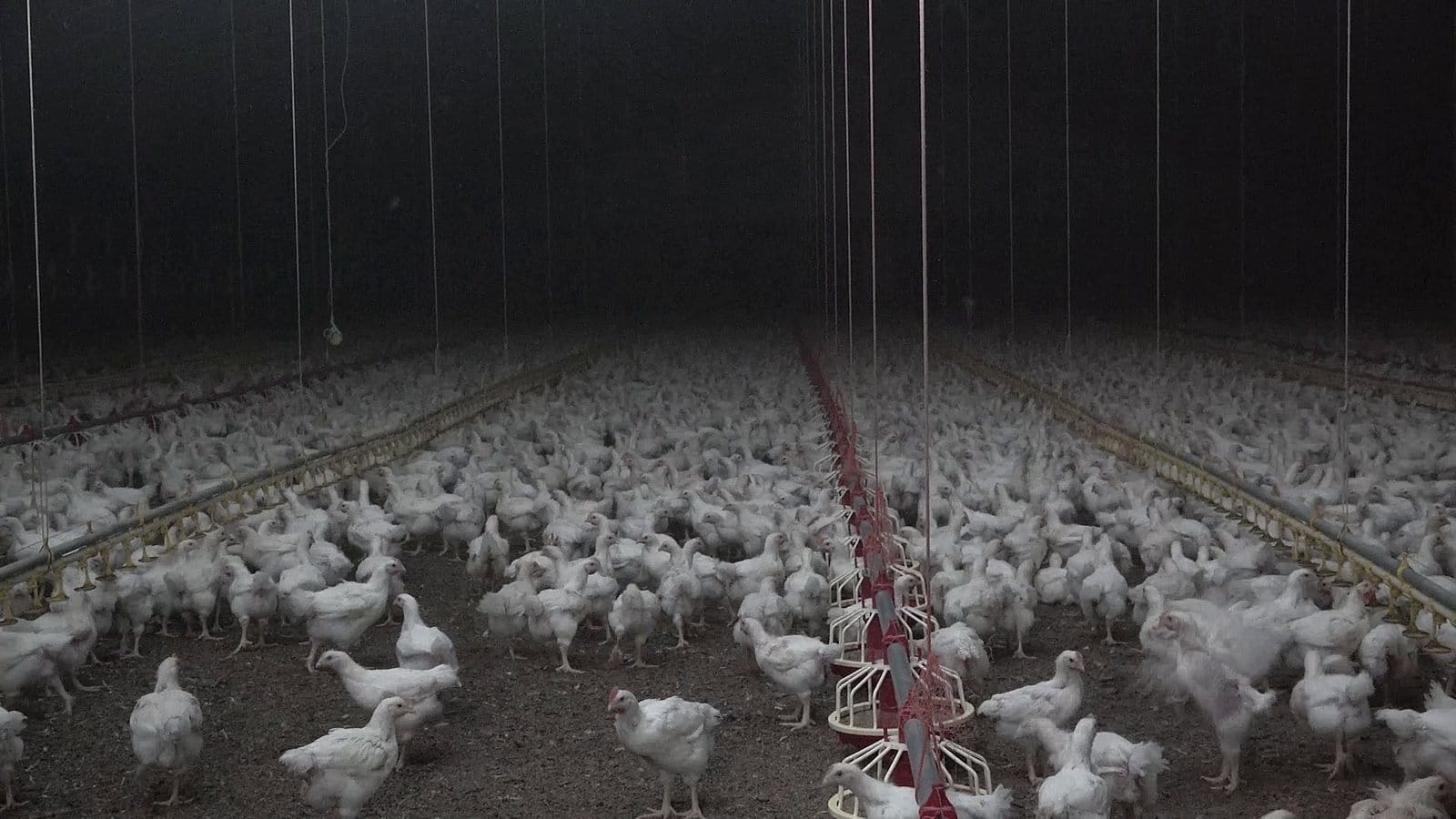
The Dutch Society for the Protection of Animals (Dierenbescherming) has prohibited mega farms from receiving the Beter Leven label. Their public stance on mega farms is that:
"The large number of animals often means that less attention is paid to each individual animal, which can negatively impact animal welfare."
"More animals are 'at risk' during events like an animal disease outbreak, a fire, a ventilation failure, or contaminated feed, all of which can have serious consequences for food safety."
The Dutch Society for the Protection of Animals (Dierenbescherming) focuses on value through quality rather than quantity. As a result, scaling up is not desirable.
"The Dutch Society for the Protection of Animals (Dierenbescherming) commissioned Motivaction to conduct research on the opinions of the Dutch population and its supporters. This research shows a strong aversion to increasingly large barns and a lack of confidence that this would improve animal welfare." Allowing mega-stables to Beter Leven would therefore pose a significant risk of demolition, according to the Dutch Society for the Protection of Animals (Dierenbescherming). [10]
Animal protection actively participates in cheating scheme
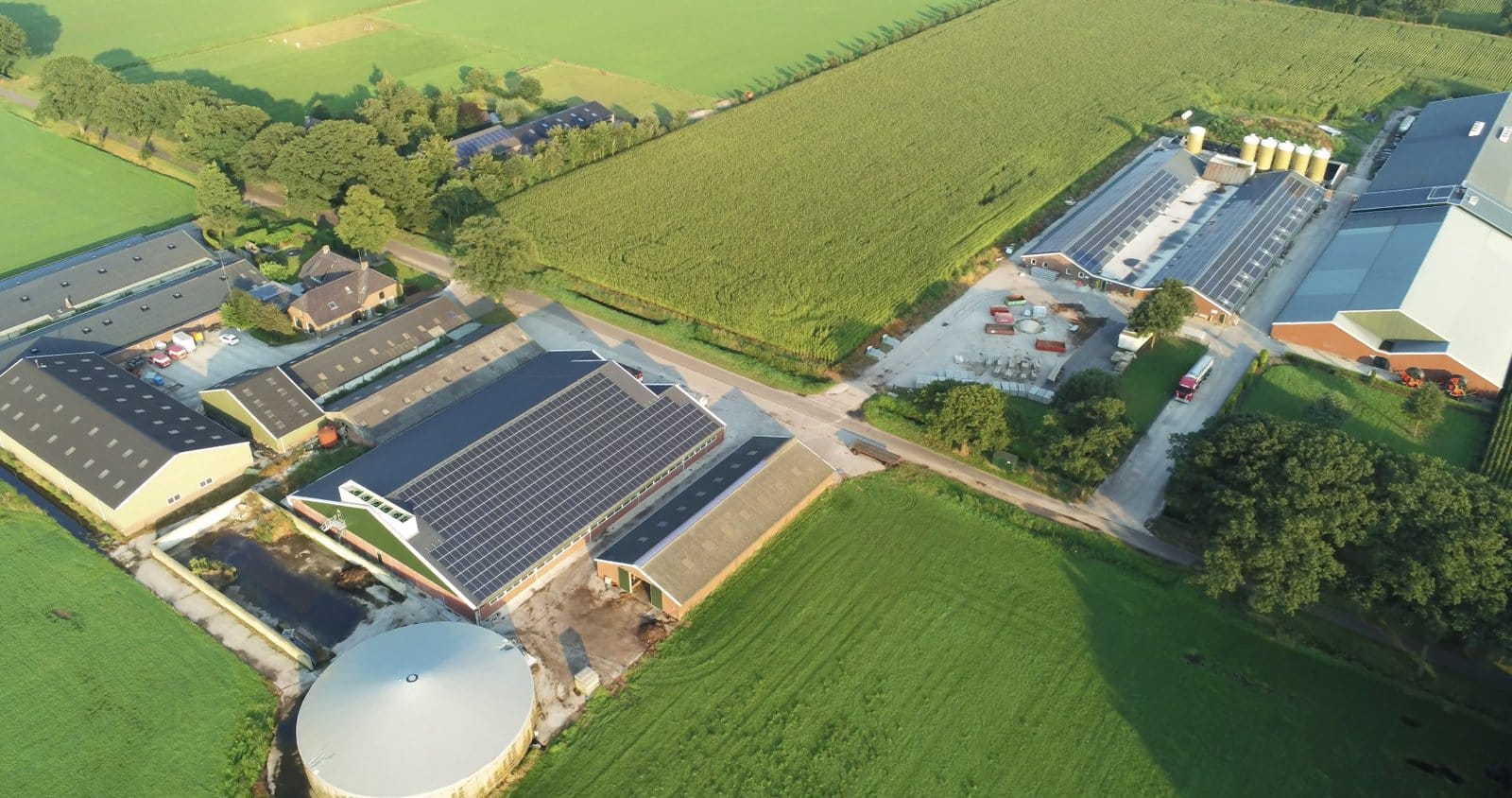
Yet, behind the scenes of the Beter Leven quality mark, mega-farms—physical business locations where very large numbers of animals are kept—are allowed through an administrative loophole. Various barn buildings at these locations are registered with the government under separate UBNs (Unique Business Numbers), creating the illusion, on paper, that these are distinct, smaller locations. However, the environmental permits reveal that the different UBNs are part of the same large-scale operation, yet the Dutch Society for the Protection of Animals (Dierenbescherming) issues separate Beter Leven certificates for each UBN. In 2018, the criteria for the Beter Leven quality mark were revised, meaning that animal numbers no longer had to be counted per business location, but per UBN. [11]
The Dutch Society for the Protection of Animals (Dierenbescherming) advises livestock farmers with mega farms to split their businesses administratively. This information came to light in 2018 when laying hen farmer Eric Hubers, who is the former chairman of the Poultry Farming section of the Dutch Federation of Agriculture and Horticulture (LTO) and the current vice-chairman of the European poultry working group Copa-Cogeca, shared it during a livestock farming debate at Utrecht University.
Hubers explained that improvements in animal welfare within his business were inherently linked to scaling up; without this, he couldn't recover his investments. Hubers expanded to 160,000 laying hens, while the maximum allowed for Beter Leven is 120,000. Hubers revealed that “the Animal Protection Society recommended that he split his company administratively so he could continue to support the stars.” [12]
Pigs with abscesses and paralysis symptoms in Albers' Beter Leven mega-stable
In August 2024, Ongehoord inspected the Beter Leven mega-farm owned by pig fattener Albers. The company operates several pig farms at Boekelsebaan 12 in Landhorst. Directly across the street, at number 7, Albers has additional farms. According to the environmental permit, the farm buildings on both sides of the street belong to the same company, which can house a total of more than 11... 400 pigs can be kept. [13] For the Beter Leven quality mark, pig farmers are permitted to keep a maximum of 7,551 pigs for meat production at a single location. Albers has administratively divided its mega-farm into two smaller sites. The sections on either side of the street are registered under different UBNs (Universal Numbers), and each has its own Beter Leven certificate.
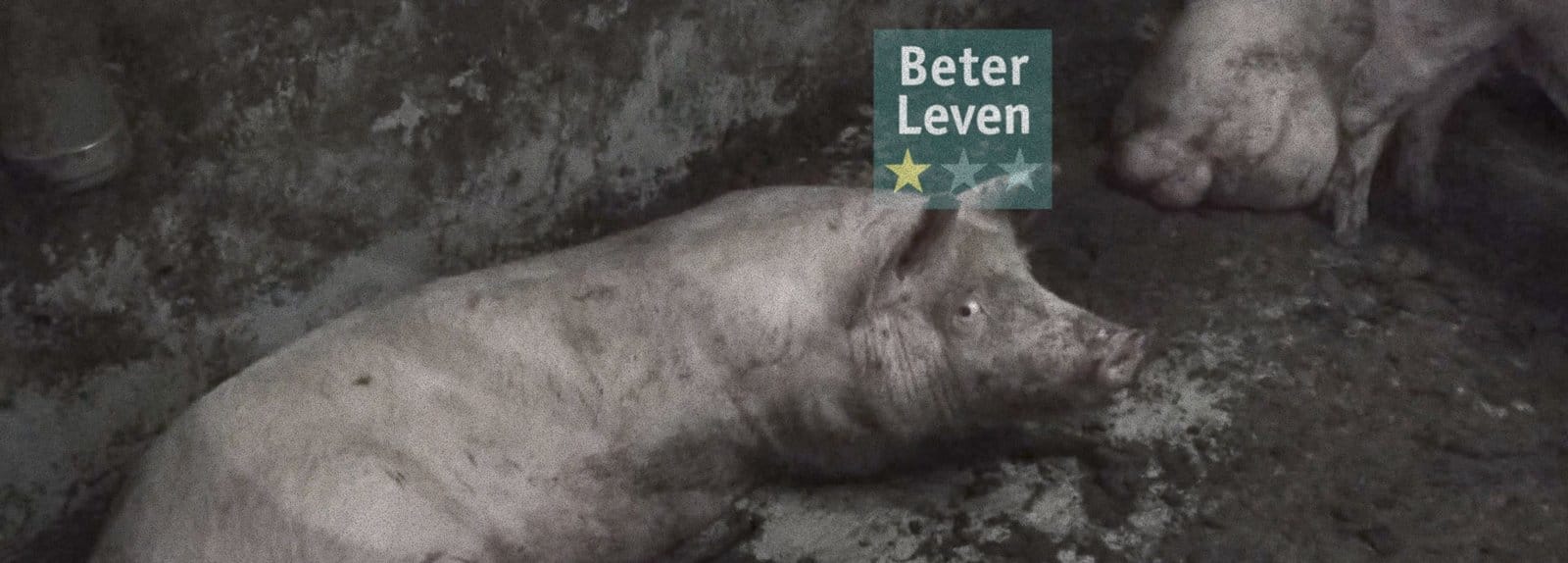
In Albers' mega-farm, Ongehoord filmed pigs living on concrete and slatted floors surrounded by their own feces. Many of these animals had large umbilical hernias or abscesses on their necks, injuries caused by vaccination needles. Some pigs showed signs of severe paralysis.
The pen enrichment included a chain with a ball and empty straw tubes, which does not satisfy the quality mark requirements. On its Beter Leven website, the Dutch Society for the Protection of Animals (Dierenbescherming) emphasizes the importance of cage enrichment: pigs are intelligent animals that require stimulation to alleviate boredom and frustration. [14]
In June 2024, Albers also made headlines due to a barn fire that affected part of his mega-barn. This incident resulted in the death of 500 pigs. [15]
Tip of the iceberg?
In 2021, Ongehoord recorded severely ill and injured pigs at the 2-star farm owned by Annechien ten Have (Beerta), who is a prominent figure for the Beter Leven quality mark. Mother pigs in the insemination and maternity wards were not given adequate pen enrichment. Ten Have managed 600 sows and 4,900 finishing pigs at her farm. When assessing the company size for Beter Leven, the number of sows can sometimes outweigh that of finishing pigs; the combination of 600 sows and 4,900 finishing pigs constitutes a mega-stable. [16] According to the environmental permit, Ten Have's sow and finishing pig barns were considered a single, closed pig farm. However, the documentation indicated that the reality of the Beter Leven quality mark involved two UBNs, each with separate Beter Leven certificates. In 2023, a fire erupted in the sow section of Ten Have's farm, resulting in the deaths of hundreds of animals.
At a pig farm owned by Martin Houben, one of the largest pig breeders in the Netherlands, Ongehoord filmed pigs exhibiting welfare and behavioral issues. The straw chute in the pens was empty. At this location on Ysselsteynseweg (Ysselsteyn), Houben raises 12,000 Beter Leven pigs for meat, which the Dutch Society for the Protection of Animals (Dierenbescherming) classifies as a mega-barn. On the adjacent property, Houben operates additional Beter Leven barns with a different UBN number. These barns house the Beter Leven mother pigs, who give birth to piglets for the first UBN. The sow stables and the pig stables each have their own Beter Leven certificate. [17]
The total number of mega farms certified with the Beter Leven welfare certification is unknown. The Dutch Society for the Protection of Animals (Dierenbescherming) keeps the list of Beter Leven farms confidential, which makes further investigation impossible.
Sources
- 10
Consultation Results - April 16 to June 30, 2019 / March 27 to May 8, 2020 (dierenbescherming.nl)
- 11
Beter Leven criteria, changes introduced in 2018 (dierenbescherming.nl)
- 12
- 13
Exemptions (voi.brabant.nl)
- 14
Pigs (dierenbescherming.nl)
- 15
500 pigs died in a fire in a pigsty (gelderlander.nl)
- 16
- 17