Ongehoord reports widespread deception about the Beter Leven quality mark to the Advertising Code Committee
The investigation group Ongehoord is filing a complaint with the Advertising Code Committee to stop advertisements for Beter Leven products. Ongehoord claims that the Dutch Society for the Protection of Animals (Dierenbescherming) is misleading the public about animal welfare on farms with the Beter Leven quality mark. For instance, most broiler chickens do not have outdoor access, and mega farms receive the quality mark through a questionable administrative process. This process is actually suggested by the Dutch Society for the Protection of Animals (Dierenbescherming) itself. The investigation group has backed its complaint with detailed evidence and images of Beter Leven farms.
Where we filmed
Exemptions frequently occur
Millions of star chicks are denied outdoor access
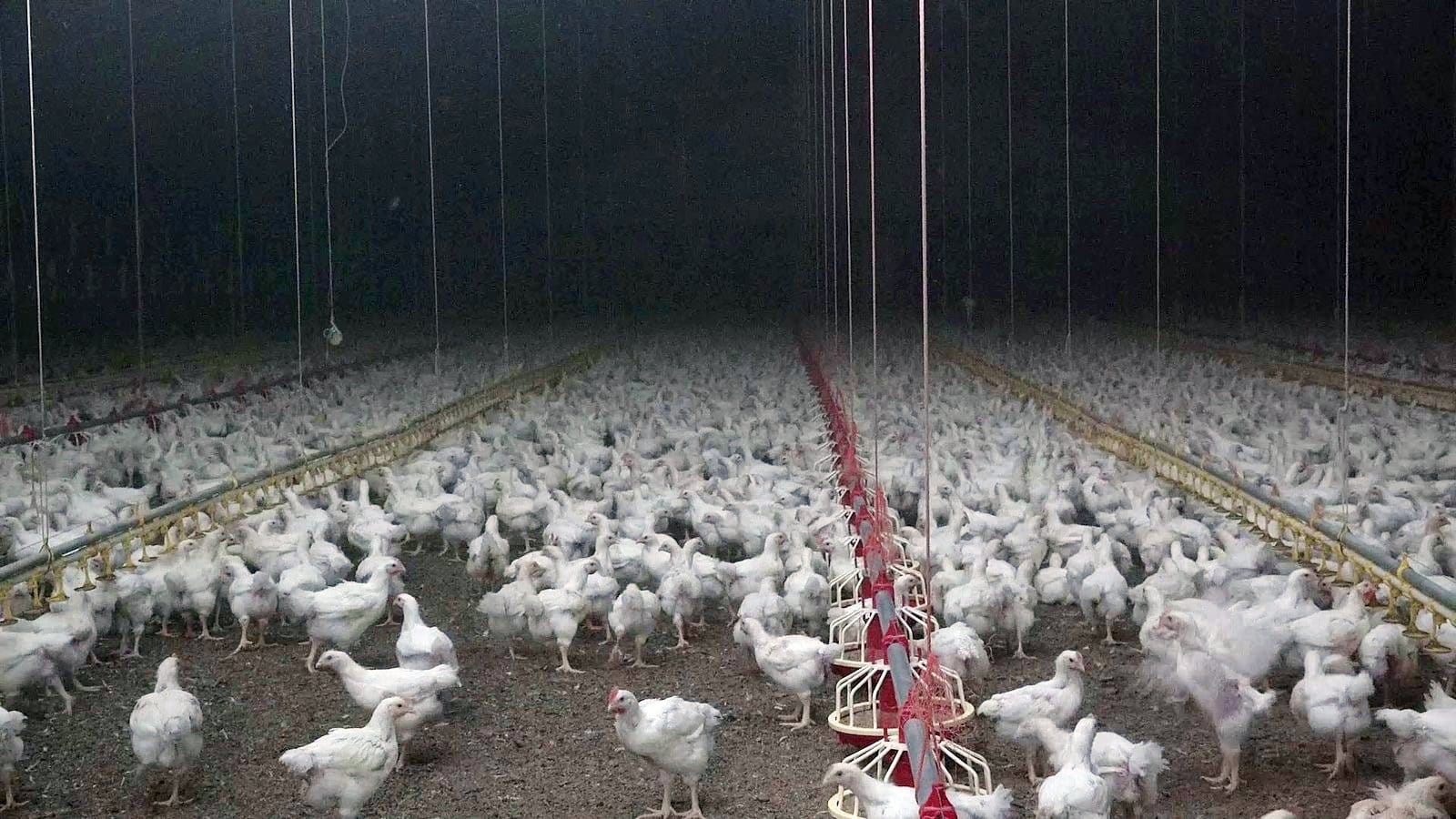
On the Beter Leven website, as well as in media articles and advertisements, the Dutch Society for the Protection of Animals (Dierenbescherming) informs consumers that Beter Leven broilers are, by definition, raised in barns with a covered run, allowing the animals to go outside and enjoy fresh air. The run is emphasized as a crucial requirement for obtaining a Beter Leven star rating and is portrayed as a significant enhancement in animal welfare. Each year, more than 80 million broiler chickens are slaughtered under the Beter Leven quality mark.[1] Ongehoord found that most star-rated broilers never had access to a run.
4 out of 5 broiler farmers have an exemption
Figures obtained from the Dutch Society for the Protection of Animals (Dierenbescherming) by the agricultural trade journal Boerderij reveal that in 2024, only 100 out of the 482 Dutch Beter Leven broiler farms will have a covered run. The Dutch Society for the Protection of Animals (Dierenbescherming) is granting broiler farmers widespread exemptions for the free-range system, allowing them to sell star-rated broilers that have not had access to a run for several years. Nearly 4 out of 5 Beter Leven broiler farmers currently hold such an exemption. At the end of last year, the Dutch Society for the Protection of Animals (Dierenbescherming) decided to extend the transitional arrangement for building an outdoor run until January 1, 2027.[2] Consumers are not made aware of this, yet they pay a premium for Beter Leven chicken meat that does not fulfill the quality mark's promises. Both the broiler industry and the Dutch Society for the Protection of Animals (Dierenbescherming) profit from this situation. The industry sees its revenues rise, and the Beter Leven foundation receives increased funding for the use of its quality mark. The more animals are slaughtered under the quality mark, the more money flows to the foundation.[3] The figures in the agricultural trade journal Boerderij are dated March 2, 2024, and speak for themselves. Nevertheless, the Dutch Society for the Protection of Animals (Dierenbescherming) continues to mislead consumers regarding the free-range access for star chicks. Following criticism of the Beter Leven quality mark in the AD newspaper, the Dutch Society for the Protection of Animals (Dierenbescherming) published a response on the Beter Leven promotional website on March 14, 2024. The covered outdoor run for broilers is presented here as an example of a significant improvement in chicken welfare: “Completely replacing broiler chickens in supermarkets with chickens that are stronger, grow slower, have more space and a covered run is the best example we have.”[4]
Exemptions for prohibited electric water baths
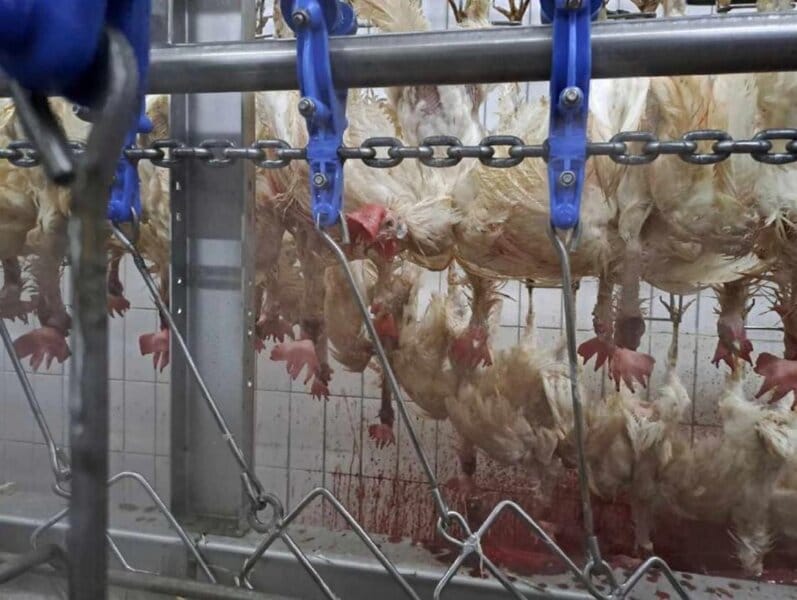
In 2021, Ongehoord revealed that a Beter Leven chicken slaughterhouse had been granted exemptions for years to stun chickens in an "electric water bath," which is prohibited by the quality mark. Slaughterer W. van der Meer sold chicken meat with 1, 2, and 3 Beter Leven stars. The water bath method is cheaper for slaughterhouses than the gas stunning required by the quality mark. In 2016, the Dutch Society for the Protection of Animals (Dierenbescherming) announced that water bath stunning would be banned for its quality mark in mid-2017. Hanging chickens from slaughter shackles causes stress and pain; being hung upside down leads to breathing difficulties, and there is a significant risk of failed stunning. All of this is also evident in the images that Ongehoord saw at W. van der Meer made.[5] Since 2017, Beter Leven slaughterhouses were supposed to stun chickens with CO2 gas, a more expensive method. At the request of the participating slaughterhouses, the water bath ban was postponed, meaning that it did not take effect until 2020. However, this did not apply to chicken slaughterhouse W. van der Meer. Information that Ongehoord requested from the Animal Protection Society during 2020 and 2021 showed that W. van der Meer repeatedly received new exemptions.[6] The Animal Protection Society blamed the permit issuer. The slaughterhouse has indicated and substantiated that the permit application for CO2 stunning has been significantly delayed due to unexpected additional or changing requirements from the municipality within the permit process, according to the Animal Protection Association.[7] This came as a great surprise to the municipality of Waadhoeke, which in turn announced in the media that the permit had already been issued in 2020.[8] W. van der Meer did not have gas stunning until February 2022. At this time, however, the gas installation was still in a testing phase, and the water bath was still in use as the standard stunning method.[9] Inspection documents requested by the Netherlands Food and Consumer Product Safety Authority (NVWA) showed that Beter Leven slaughterhouse W. van der Meer continued to use the water bath until at least August 2022.
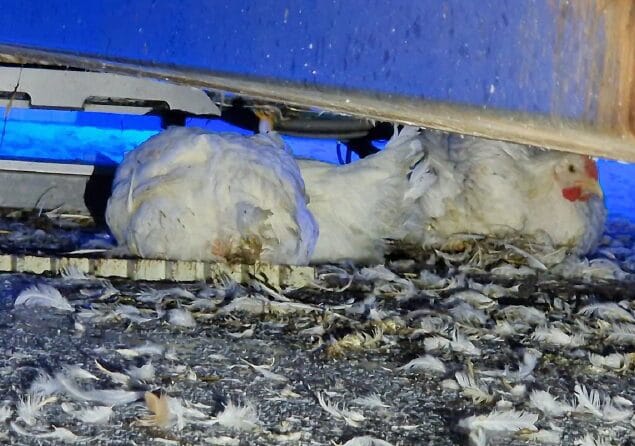
Sick, injured and dead star chicks in a barn without outdoor access at Coolen Kip
In August 2024, Ongehoord inspected the Beter Leven barn at Coolen Kip on Baarloseweg in Helden. Coolen is one of many broiler farmers allowed to keep star-rated chicks without a covered run. These chicks spend their 56-day "better" life in a closed barn without fresh air. Their meat is sold in supermarkets with a Beter Leven star, often at a premium price due to the quality mark.
Ongehoord's investigation revealed serious health and safety risks in Coolen's Beter Leven barn. The investigation team filmed chicks trapped between the steel wires of the installation, with one chick suffering a broken leg. Many chicks had diarrhea, and there were dead animals in the barn. Slaughter reports obtained by Ongehoord indicated that many chicks at Coolen Kip develop leg problems. In June 2024, Coolen delivered 85,691 chicks to the Beter Leven Storteboom slaughterhouse, where foot dermatitis was diagnosed in 2,200 of the animals. Chicks with foot dermatitis experience painful skin lesions and irritation on their legs.
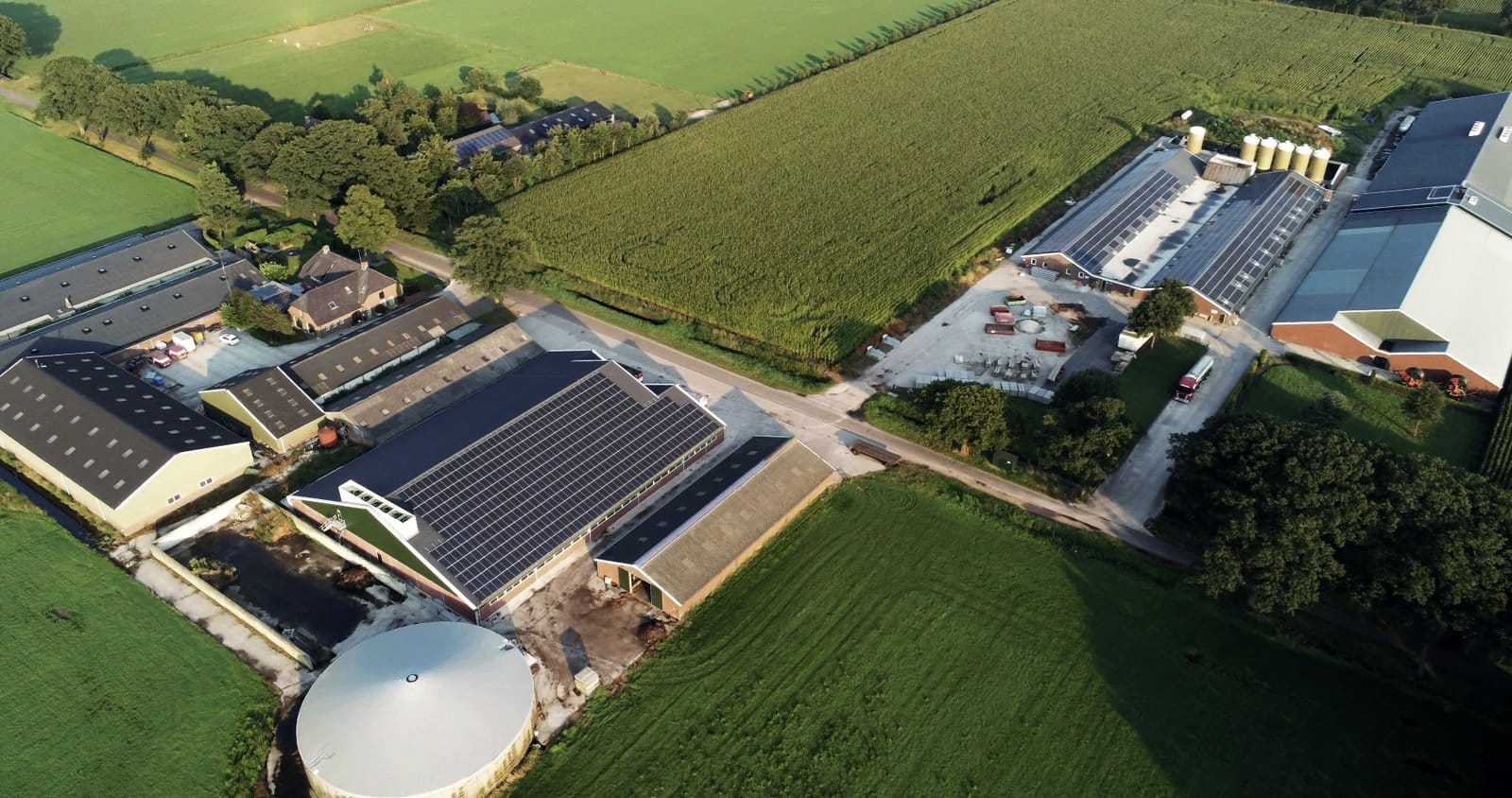
Beter Leven Mega Stables
The Dutch Society for the Protection of Animals (Dierenbescherming) has prohibited mega farms from receiving the Beter Leven label. Their public stance on mega farms is that:
"The large number of animals often means that less attention is paid to each individual animal, which can negatively impact animal welfare."
"More animals are 'at risk' during events like an animal disease outbreak, a fire, a ventilation failure, or contaminated feed, all of which can have serious consequences for food safety."
The Dutch Society for the Protection of Animals (Dierenbescherming) focuses on value through quality rather than quantity. As a result, scaling up is not desirable.
"The Dutch Society for the Protection of Animals (Dierenbescherming) commissioned Motivaction to conduct research on the opinions of the Dutch population and its supporters. This research shows a strong aversion to increasingly large barns and a lack of confidence that this would improve animal welfare." Allowing mega-stables to Beter Leven would therefore pose a significant risk of demolition, according to the Dutch Society for the Protection of Animals (Dierenbescherming).[10]
Animal protection actively participates in cheating scheme
Yet, behind the scenes of the Beter Leven quality mark, mega-farms—physical business locations where very large numbers of animals are kept—are allowed through an administrative loophole. Various barn buildings at these locations are registered with the government under separate UBNs (Unique Business Numbers), creating the illusion, on paper, that these are distinct, smaller locations. However, the environmental permits reveal that the different UBNs are part of the same large-scale operation, yet the Dutch Society for the Protection of Animals (Dierenbescherming) issues separate Beter Leven certificates for each UBN. In 2018, the criteria for the Beter Leven quality mark were revised, meaning that animal numbers no longer had to be counted per business location, but per UBN.[11]
The Dutch Society for the Protection of Animals (Dierenbescherming) advises livestock farmers with mega farms to split their businesses administratively. This information came to light in 2018 when laying hen farmer Eric Hubers, who is the former chairman of the Poultry Farming section of the Dutch Federation of Agriculture and Horticulture (LTO) and the current vice-chairman of the European poultry working group Copa-Cogeca, shared it during a livestock farming debate at Utrecht University.
Hubers explained that improvements in animal welfare within his business were inherently linked to scaling up; without this, he couldn't recover his investments. Hubers expanded to 160,000 laying hens, while the maximum allowed for Beter Leven is 120,000. Hubers revealed that “the Animal Protection Society recommended that he split his company administratively so he could continue to support the stars.”[12]
Pigs with abscesses and paralysis symptoms in Albers' Beter Leven mega-stable
In August 2024, Ongehoord inspected the Beter Leven mega-farm owned by pig fattener Albers. The company operates several pig farms at Boekelsebaan 12 in Landhorst. Directly across the street, at number 7, Albers has additional farms. According to the environmental permit, the farm buildings on both sides of the street belong to the same company, which can house a total of more than 11... 400 pigs can be kept.[13] For the Beter Leven quality mark, pig farmers are permitted to keep a maximum of 7,551 pigs for meat production at a single location. Albers has administratively divided its mega-farm into two smaller sites. The sections on either side of the street are registered under different UBNs (Universal Numbers), and each has its own Beter Leven certificate.
In Albers' mega-farm, Ongehoord filmed pigs living on concrete and slatted floors surrounded by their own feces. Many of these animals had large umbilical hernias or abscesses on their necks, injuries caused by vaccination needles. Some pigs showed signs of severe paralysis.
The pen enrichment included a chain with a ball and empty straw tubes, which does not satisfy the quality mark requirements. On its Beter Leven website, the Dutch Society for the Protection of Animals (Dierenbescherming) emphasizes the importance of cage enrichment: pigs are intelligent animals that require stimulation to alleviate boredom and frustration.[14]
In June 2024, Albers also made headlines due to a barn fire that affected part of his mega-barn. This incident resulted in the death of 500 pigs.[15]
Tip of the iceberg?
In 2021, Ongehoord recorded severely ill and injured pigs at the 2-star farm owned by Annechien ten Have (Beerta), who is a prominent figure for the Beter Leven quality mark. Mother pigs in the insemination and maternity wards were not given adequate pen enrichment. Ten Have managed 600 sows and 4,900 finishing pigs at her farm. When assessing the company size for Beter Leven, the number of sows can sometimes outweigh that of finishing pigs; the combination of 600 sows and 4,900 finishing pigs constitutes a mega-stable.[16] According to the environmental permit, Ten Have's sow and finishing pig barns were considered a single, closed pig farm. However, the documentation indicated that the reality of the Beter Leven quality mark involved two UBNs, each with separate Beter Leven certificates. In 2023, a fire erupted in the sow section of Ten Have's farm, resulting in the deaths of hundreds of animals.
At a pig farm owned by Martin Houben, one of the largest pig breeders in the Netherlands, Ongehoord filmed pigs exhibiting welfare and behavioral issues. The straw chute in the pens was empty. At this location on Ysselsteynseweg (Ysselsteyn), Houben raises 12,000 Beter Leven pigs for meat, which the Dutch Society for the Protection of Animals (Dierenbescherming) classifies as a mega-barn. On the adjacent property, Houben operates additional Beter Leven barns with a different UBN number. These barns house the Beter Leven mother pigs, who give birth to piglets for the first UBN. The sow stables and the pig stables each have their own Beter Leven certificate.[17]
The total number of mega farms certified with the Beter Leven welfare certification is unknown. The Dutch Society for the Protection of Animals (Dierenbescherming) keeps the list of Beter Leven farms confidential, which makes further investigation impossible.
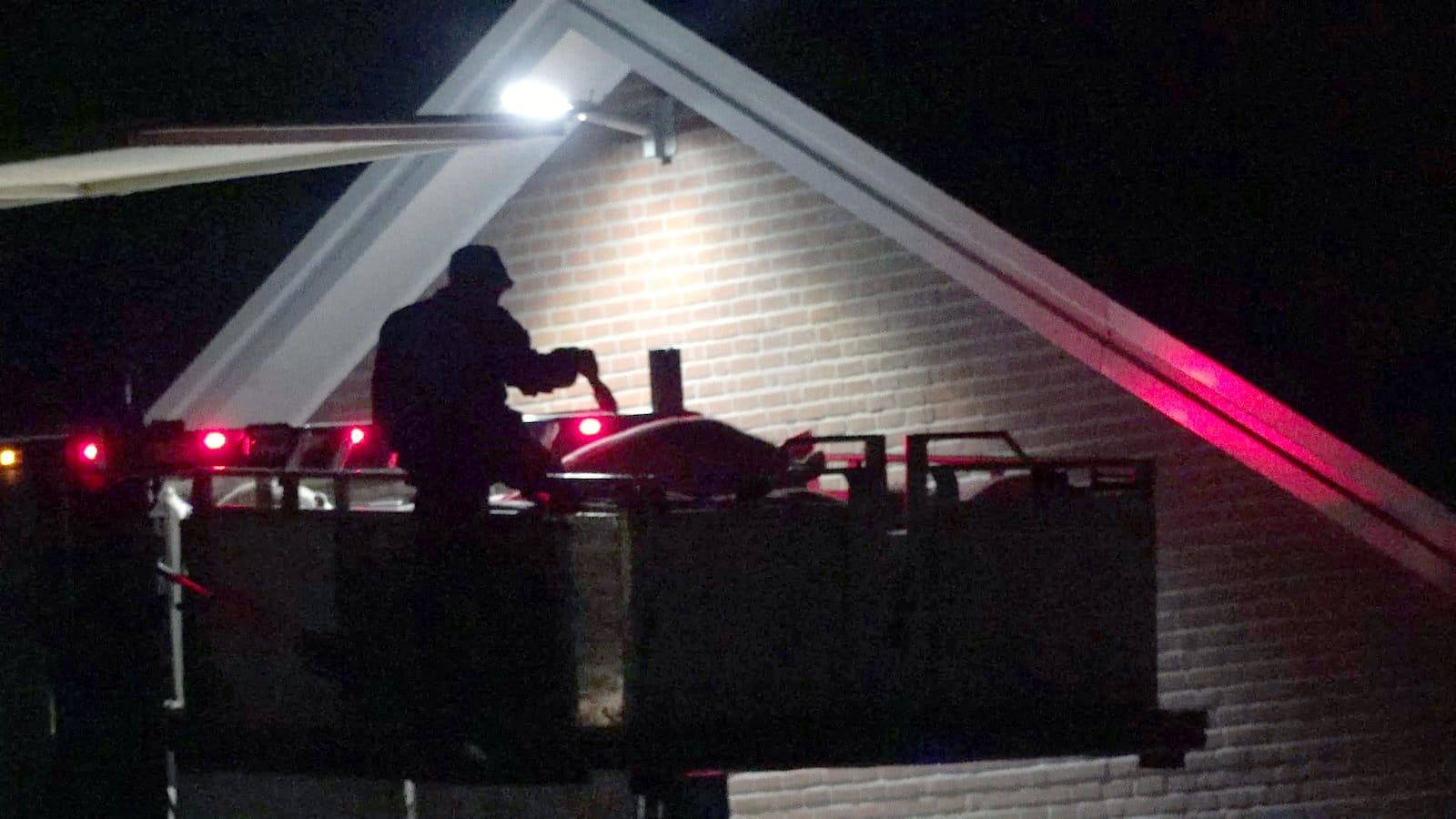
Structural violence against Beter Leven animals
The Dutch Society for the Protection of Animals (Dierenbescherming) claims that the welfare of animals with the Beter Leven label is guaranteed throughout the production chain. However, this is far from the truth.
Abuse during transport is inevitable
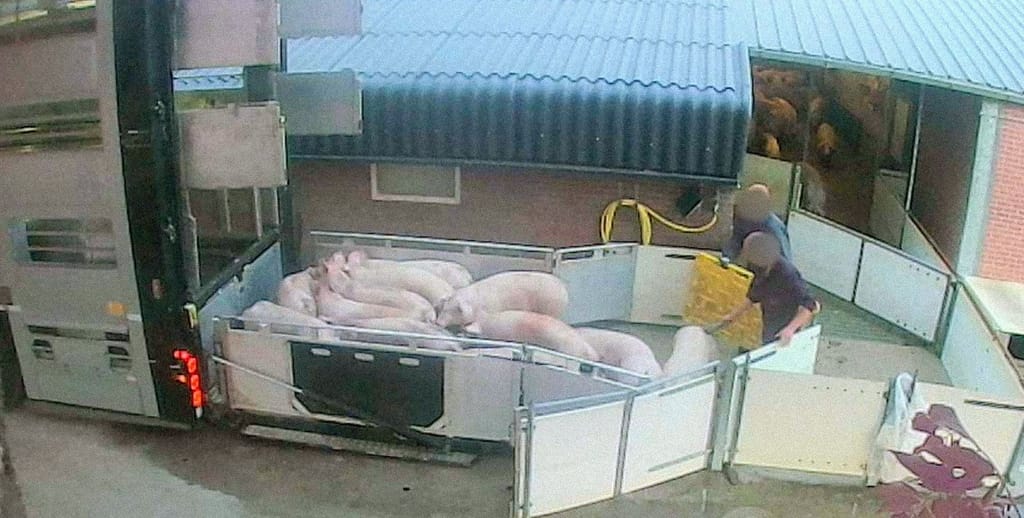
In August 2024, Ongehoord filmed pigs being loaded at the Albers mega-farm for transport to the slaughterhouse. The animals were systematically subjected to electric shocks and beaten with firecrackers. The use of electro-shock devices and other forms of abuse, such as hitting or kicking, is prohibited by law and under the Beter Leven quality mark. However, Ongehoord has consistently shown that transporting (Beter Leven) animals to slaughterhouses cannot occur without violence. In December 2022, Ongehoord released footage of Beter Leven pigs receiving electric shocks or being beaten and kicked during their final days. At the Martin Houben mega-farm, pigs were transported using electric shocks. At Annechien ten Have's mega-stable, pigs were struck by hand and with plastic firecrackers, and heavy driving boards were also used to hit the pigs.[18] Pigs encounter stressful situations during loading and unloading, including unfamiliar companions and people, new surroundings, loud noises, and slippery surfaces on loading ramps and trucks. Pigs naturally take their time to explore new environments carefully. However, in the industry, there is no time for this, and the animals must be moved as quickly as possible. As a result, violence during loading and unloading becomes unavoidable.
Inspection documents show failure of measures
In January 2020, Ongehoord revealed that pigs were routinely beaten with firecrackers and crowding boards upon their arrival at the Beter Leven Westfort slaughterhouse. The Animal Protection Association announced it would implement measures such as increased inspections, enhanced training for staff, and improved stable layouts.[19] Westfort itself asserted that it could eliminate the violence against animals by prohibiting firecrackers. From that point on, the pigs would be guided by waving flags.[20] Inspection reports from 2022 and 2023, which Ongehoord obtained from the Netherlands Food and Consumer Product Safety Authority (NVWA), indicate that the violence against animals has persisted. Instead of using flags, the flagpoles have been employed to strike pigs. Other abuses documented by Ongehoord at Westfort also remain unresolved. Issues with the stunning equipment continued to arise consistently in 2022 and 2023. Repeated malfunctions with the electric stunning rods forced pigs to endure multiple painful electric shocks. In 2023, NVWA inspectors made nearly daily observations regarding the mixing of groups of pigs upon their arrival at the slaughterhouse. Mixing pigs in waiting areas leads to stress and unrest and has been deemed a violation by the NVWA since 2023.[21] A prohibition on mixing groups of pigs was already included in the criteria for the Beter Leven quality mark in 2018.[23]
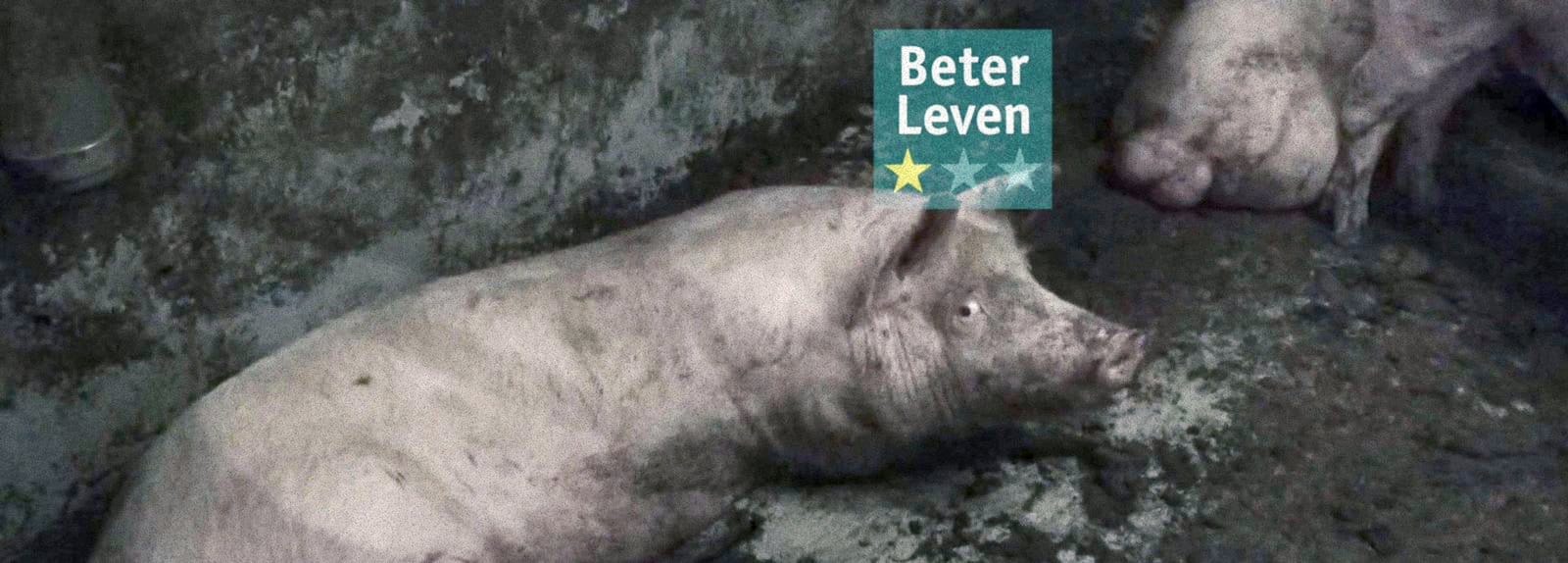
Unheard complaints about misleading advertising to the Advertising Code Committee
The Beter Leven label fails to meet its promises to consumers. This isn’t surprising. The livestock industry struggles to provide animals with a healthy and good life, as this conflicts with production goals.
Even if all Beter Leven criteria are strictly followed, welfare and health issues cannot be completely avoided. For instance, it is known that a covered run in a barn creates draughts, making chicks more susceptible to respiratory issues.[24] Straw chutes can lead to conflicts because only two pigs can use the chute at a time. The straw briquettes used to fill the tubes absorb moisture, turning into breeding grounds for bacteria and fungi.[25] Violence is inevitable during transport and in slaughterhouses, as animals instinctively resist the stressful and unnatural conditions. Quality marks like Beter Leven enhance the industry's image and business model, but they do not eliminate the severe suffering of animals.
"Johan Boonstra from Ongehoord states, 'It's bad enough that the Dutch Society for the Protection of Animals (Dierenbescherming) collaborates with a meat quality mark. But it's unforgivable that they ease consumers' concerns with falsehoods. The Dutch Society for the Protection of Animals (Dierenbescherming) does not deserve its name.'"
Ongehoord files a complaint with the Advertising Code Committee, asking them to declare that the Animal Protection Society must stop spreading misleading and incorrect information.
What can you do?
Share this investigation
Share this investigation with people around you.
Sources
25 sources
DB Annual Report 2022, p27.
Beter Leven: No Deception, But Steps on a Long Road (dierenbescherming.nl)
Research into chicken slaughterhouses (Ongehoord)
Criticism of the Beter Leven quality mark is unjustified (dierenbescherming.nl)
Animal welfare of hens during CO2 stunning (Wageningen University & Research)
Consultation Results - April 16 to June 30, 2019 / March 27 to May 8, 2020 (dierenbescherming.nl)
Beter Leven criteria, changes introduced in 2018 (dierenbescherming.nl)
Exemptions (voi.brabant.nl)
Pigs (dierenbescherming.nl)
500 pigs died in a fire in a pigsty (gelderlander.nl)
Westfort bans rattles after images Ongehoord (New Harvest)
Follow-up visit to Westfort pig slaughterhouse (Eyes on Animals)
Beter Leven Criteria, 2018 (Animal Protection)
Animal health damage often invisible in star chicks (Poultryweb)