Chapter 1 / 4
Exemptions frequently occur
Millions of star chicks are denied outdoor access
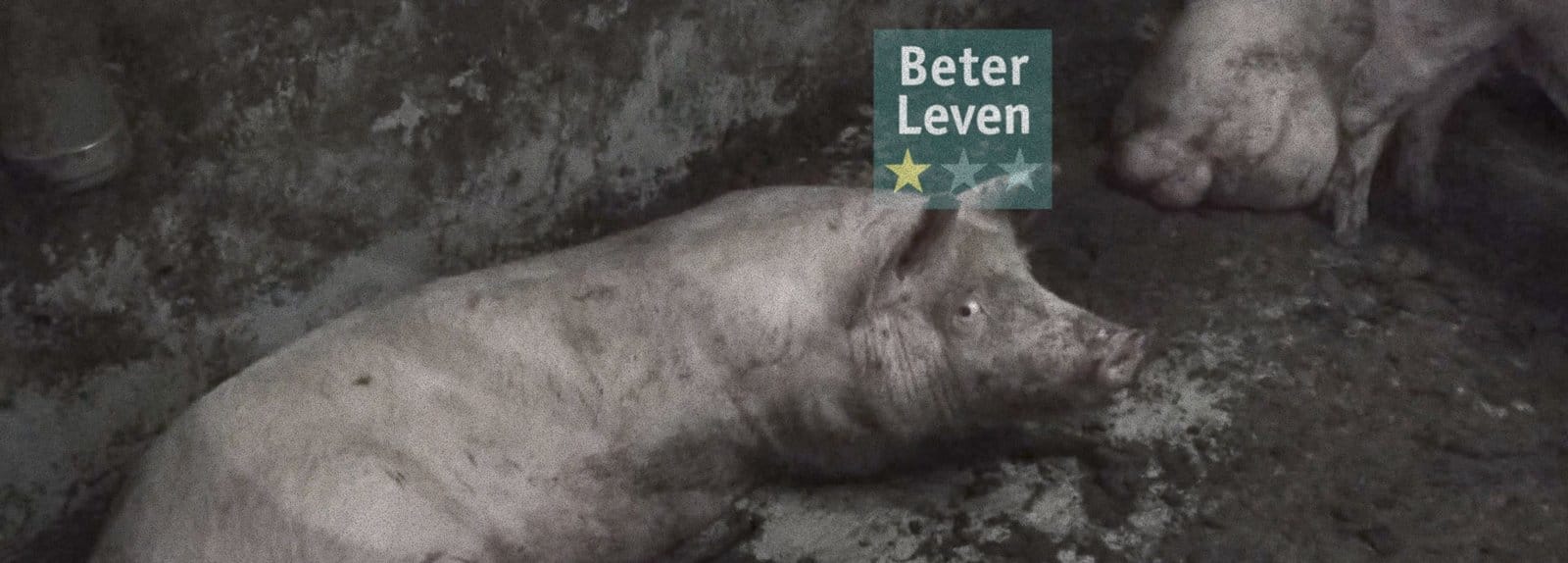
On the Beter Leven website, as well as in media articles and advertisements, the Dutch Society for the Protection of Animals (Dierenbescherming) informs consumers that Beter Leven broilers are, by definition, raised in barns with a covered run, allowing the animals to go outside and enjoy fresh air. The run is emphasized as a crucial requirement for obtaining a Beter Leven star rating and is portrayed as a significant enhancement in animal welfare. Each year, more than 80 million broiler chickens are slaughtered under the Beter Leven quality mark. [1] Ongehoord found that most star-rated broilers never had access to a run.
4 out of 5 broiler farmers have an exemption
Figures obtained from the Dutch Society for the Protection of Animals (Dierenbescherming) by the agricultural trade journal Boerderij reveal that in 2024, only 100 out of the 482 Dutch Beter Leven broiler farms will have a covered run. The Dutch Society for the Protection of Animals (Dierenbescherming) is granting broiler farmers widespread exemptions for the free-range system, allowing them to sell star-rated broilers that have not had access to a run for several years. Nearly 4 out of 5 Beter Leven broiler farmers currently hold such an exemption. At the end of last year, the Dutch Society for the Protection of Animals (Dierenbescherming) decided to extend the transitional arrangement for building an outdoor run until January 1, 2027. [2] Consumers are not made aware of this, yet they pay a premium for Beter Leven chicken meat that does not fulfill the quality mark's promises. Both the broiler industry and the Dutch Society for the Protection of Animals (Dierenbescherming) profit from this situation. The industry sees its revenues rise, and the Beter Leven foundation receives increased funding for the use of its quality mark. The more animals are slaughtered under the quality mark, the more money flows to the foundation. [3] The figures in the agricultural trade journal Boerderij are dated March 2, 2024, and speak for themselves. Nevertheless, the Dutch Society for the Protection of Animals (Dierenbescherming) continues to mislead consumers regarding the free-range access for star chicks. Following criticism of the Beter Leven quality mark in the AD newspaper, the Dutch Society for the Protection of Animals (Dierenbescherming) published a response on the Beter Leven promotional website on March 14, 2024. The covered outdoor run for broilers is presented here as an example of a significant improvement in chicken welfare: “Completely replacing broiler chickens in supermarkets with chickens that are stronger, grow slower, have more space and a covered run is the best example we have.” [4]
Exemptions for prohibited electric water baths
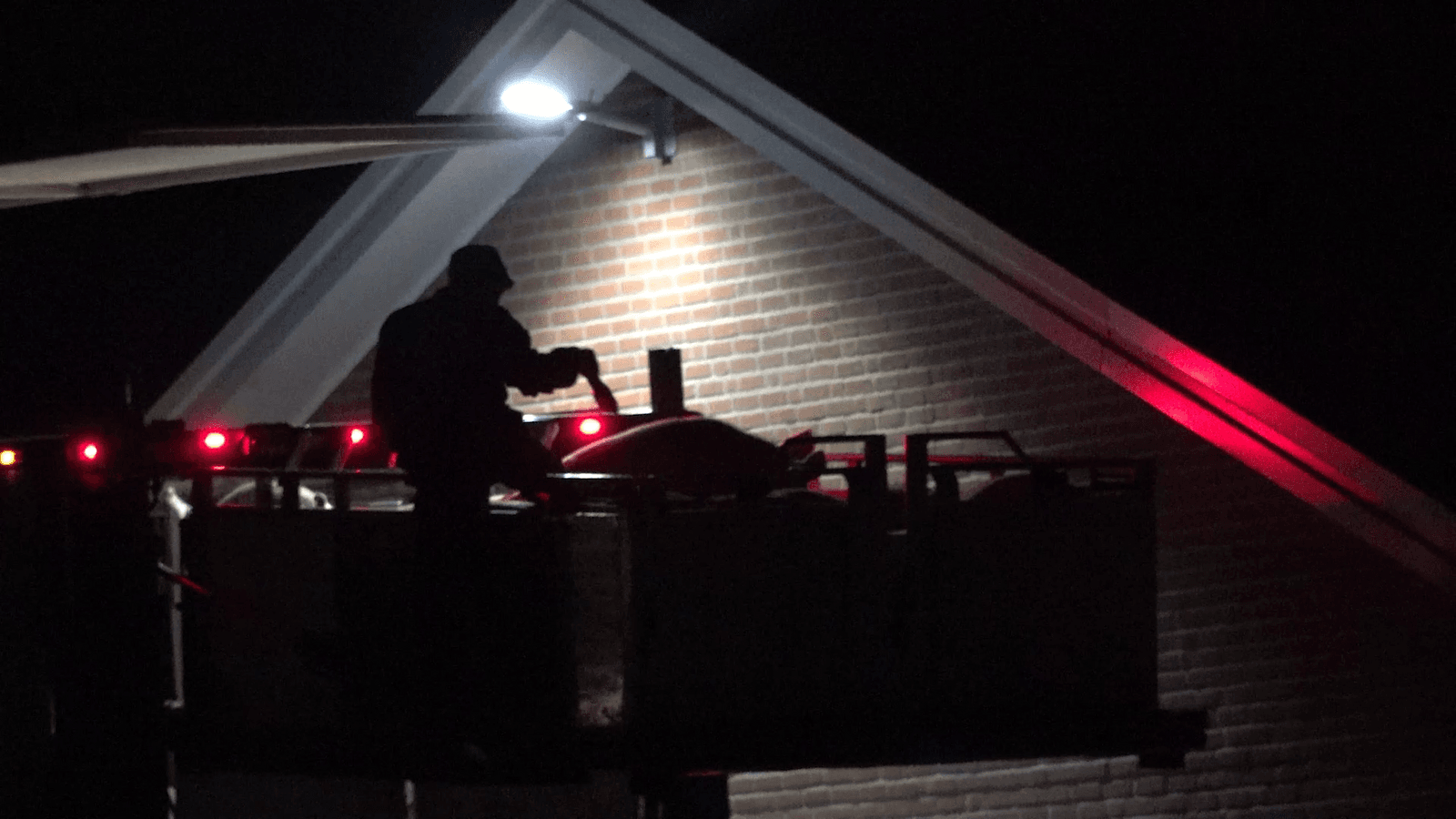
In 2021, Ongehoord revealed that a Beter Leven chicken slaughterhouse had been granted exemptions for years to stun chickens in an "electric water bath," which is prohibited by the quality mark. Slaughterer W. van der Meer sold chicken meat with 1, 2, and 3 Beter Leven stars. The water bath method is cheaper for slaughterhouses than the gas stunning required by the quality mark. In 2016, the Dutch Society for the Protection of Animals (Dierenbescherming) announced that water bath stunning would be banned for its quality mark in mid-2017. Hanging chickens from slaughter shackles causes stress and pain; being hung upside down leads to breathing difficulties, and there is a significant risk of failed stunning. All of this is also evident in the images that Ongehoord saw at W. van der Meer made. [5] Since 2017, Beter Leven slaughterhouses were supposed to stun chickens with CO2 gas, a more expensive method. At the request of the participating slaughterhouses, the water bath ban was postponed, meaning that it did not take effect until 2020. However, this did not apply to chicken slaughterhouse W. van der Meer. Information that Ongehoord requested from the Animal Protection Society during 2020 and 2021 showed that W. van der Meer repeatedly received new exemptions. [6] The Animal Protection Society blamed the permit issuer. The slaughterhouse has indicated and substantiated that the permit application for CO2 stunning has been significantly delayed due to unexpected additional or changing requirements from the municipality within the permit process, according to the Animal Protection Association. [7] This came as a great surprise to the municipality of Waadhoeke, which in turn announced in the media that the permit had already been issued in 2020. [8] W. van der Meer did not have gas stunning until February 2022. At this time, however, the gas installation was still in a testing phase, and the water bath was still in use as the standard stunning method. [9] Inspection documents requested by the Netherlands Food and Consumer Product Safety Authority (NVWA) showed that Beter Leven slaughterhouse W. van der Meer continued to use the water bath until at least August 2022.
Sick, injured and dead star chicks in a barn without outdoor access at Coolen Kip
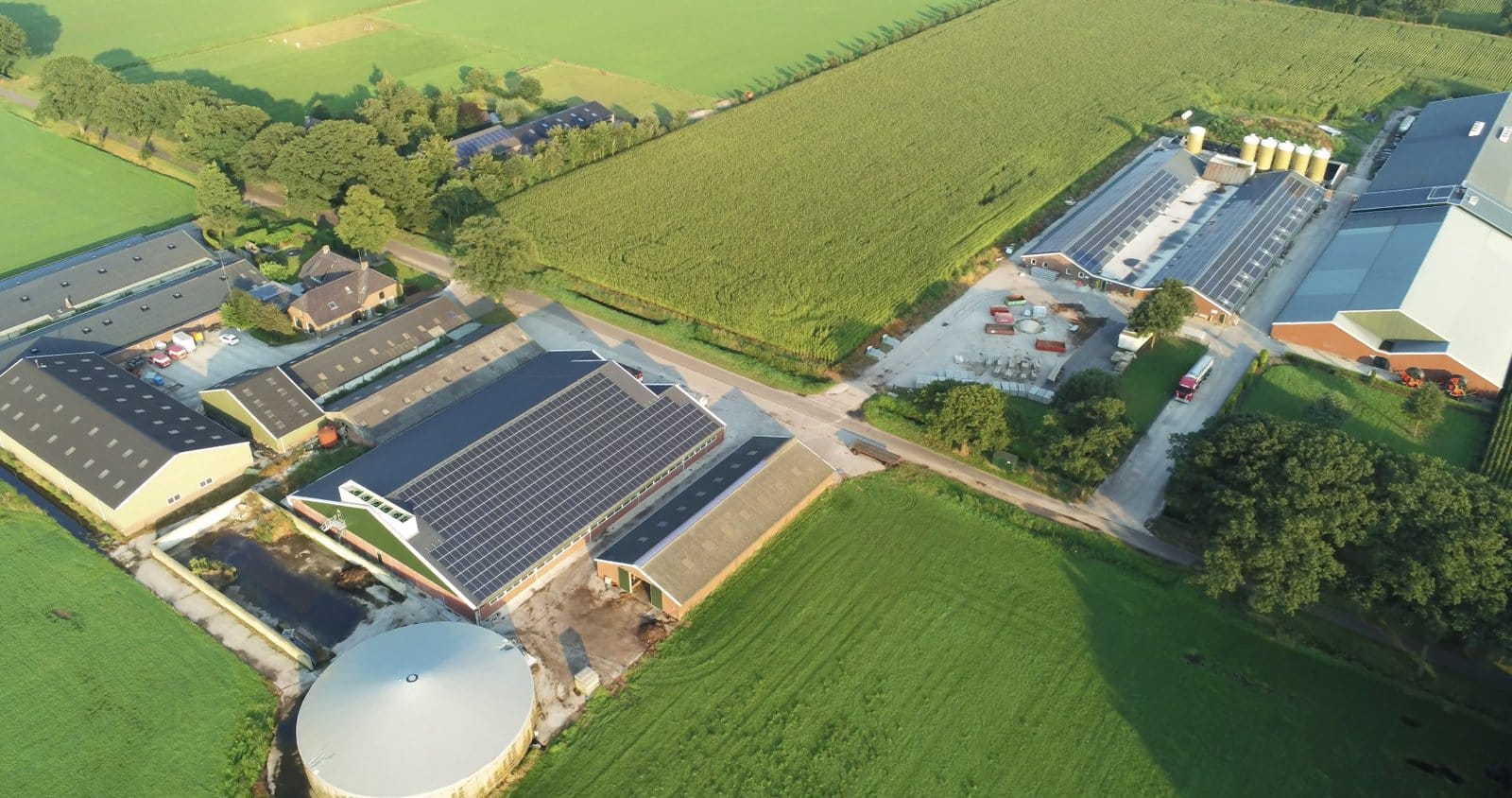
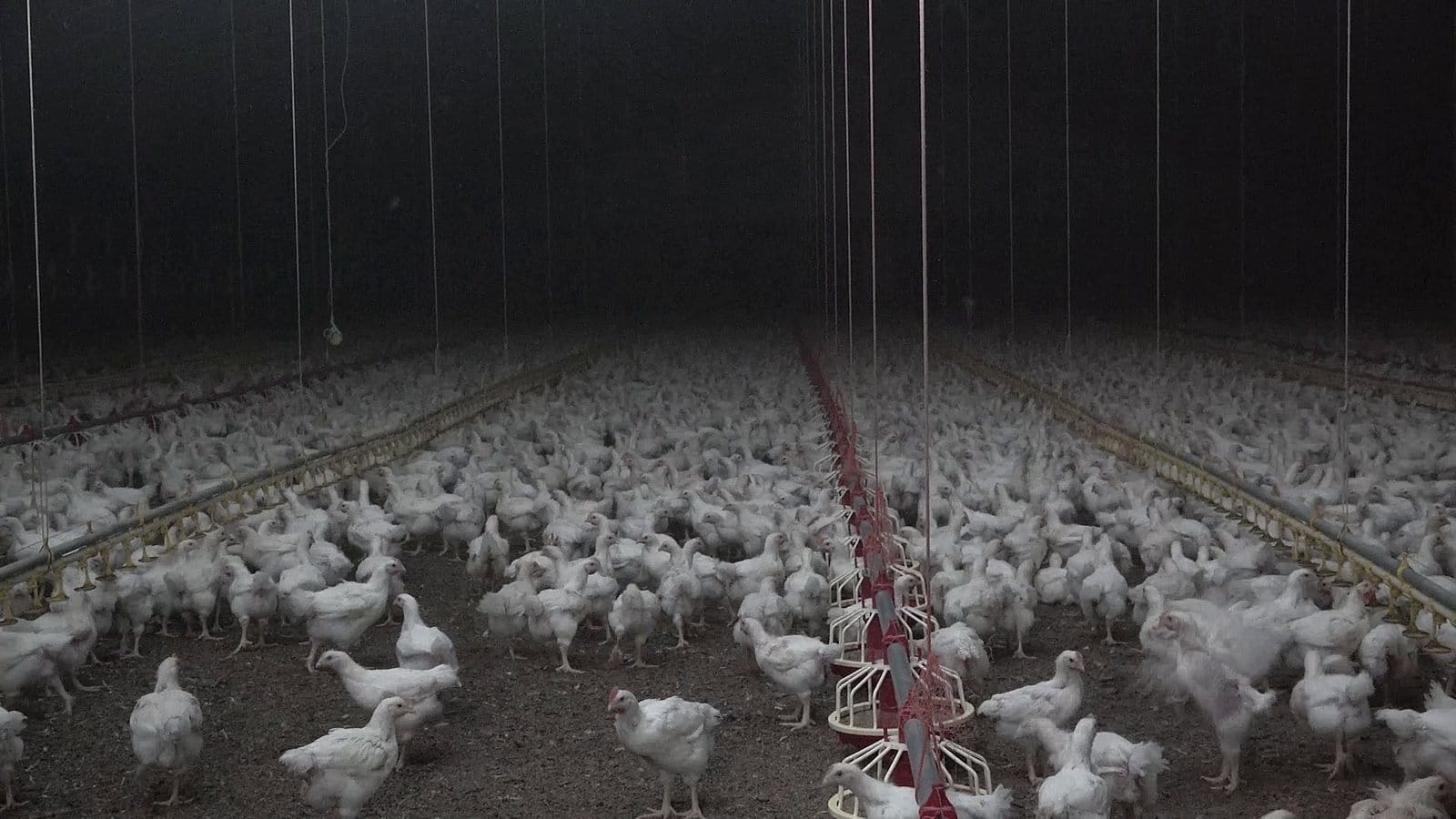
In August 2024, Ongehoord inspected the Beter Leven barn at Coolen Kip on Baarloseweg in Helden. Coolen is one of many broiler farmers allowed to keep star-rated chicks without a covered run. These chicks spend their 56-day "better" life in a closed barn without fresh air. Their meat is sold in supermarkets with a Beter Leven star, often at a premium price due to the quality mark.
Ongehoord's investigation revealed serious health and safety risks in Coolen's Beter Leven barn. The investigation team filmed chicks trapped between the steel wires of the installation, with one chick suffering a broken leg. Many chicks had diarrhea, and there were dead animals in the barn. Slaughter reports obtained by Ongehoord indicated that many chicks at Coolen Kip develop leg problems. In June 2024, Coolen delivered 85,691 chicks to the Beter Leven Storteboom slaughterhouse, where foot dermatitis was diagnosed in 2,200 of the animals. Chicks with foot dermatitis experience painful skin lesions and irritation on their legs.
Sources
- 1
DB Annual Report 2022, p27.
- 2
- 3
[Rates BLK 202](beterleven.dierenbescherm...ites/2/2023/12/Tarieven-SBLK-2024.pdf)
- 4
Beter Leven: No Deception, But Steps on a Long Road (dierenbescherming.nl)
- 5
Research into chicken slaughterhouses (Ongehoord)
- 6
- 7
Criticism of the Beter Leven quality mark is unjustified (dierenbescherming.nl)
- 8
- 9
Animal welfare of hens during CO2 stunning (Wageningen University & Research)