Chapter 1 / 4
The tree in
Natural life and the intelligence of the chicken
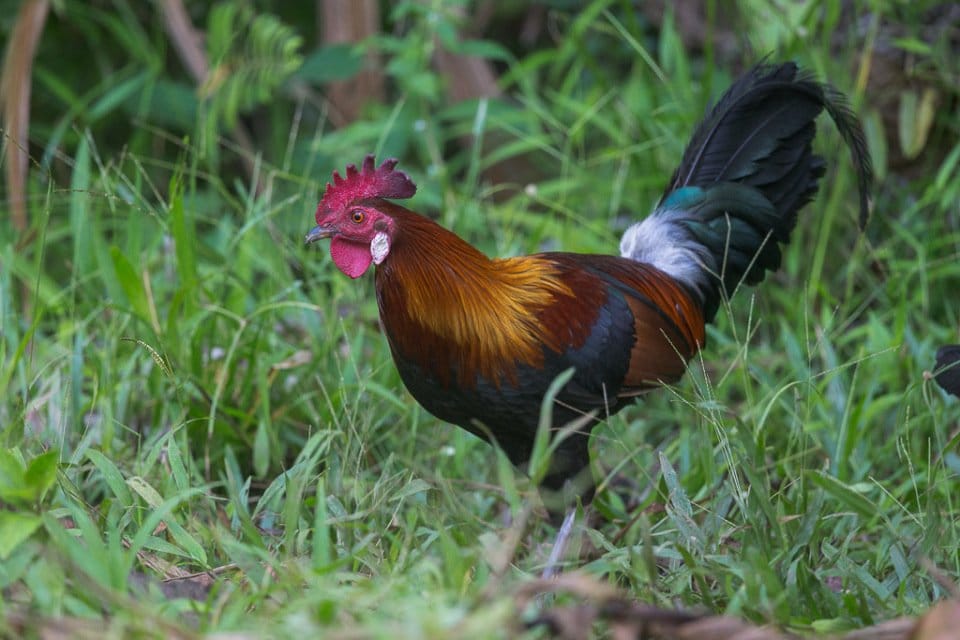
The modern domesticated chicken has evolved over thousands of years of selective breeding. Its wild ancestor is the Junglefowl (Gallus gallus), from which the chicken originated around 8,000 years ago. The Junglefowl, also known as the Red Junglefowl, is a tropical member of the pheasant family and is roughly the size of a bantam chicken. Found in the dense forests of India and Southeast Asia, the Junglefowl's vibrant feathers offer excellent camouflage among the red and brown leaves on the forest floor. While they can fly short distances, they mainly move on foot and prefer areas with dense vegetation for shelter and safety. Junglefowl are most active in the early morning, rest during the day, and become lively again in the late afternoon until dusk. Roosters crow at dawn to define their territory and establish their social ranking. In India, Junglefowl typically live in groups averaging 5 individuals, and their habitat spans about 50 hectares [1] .
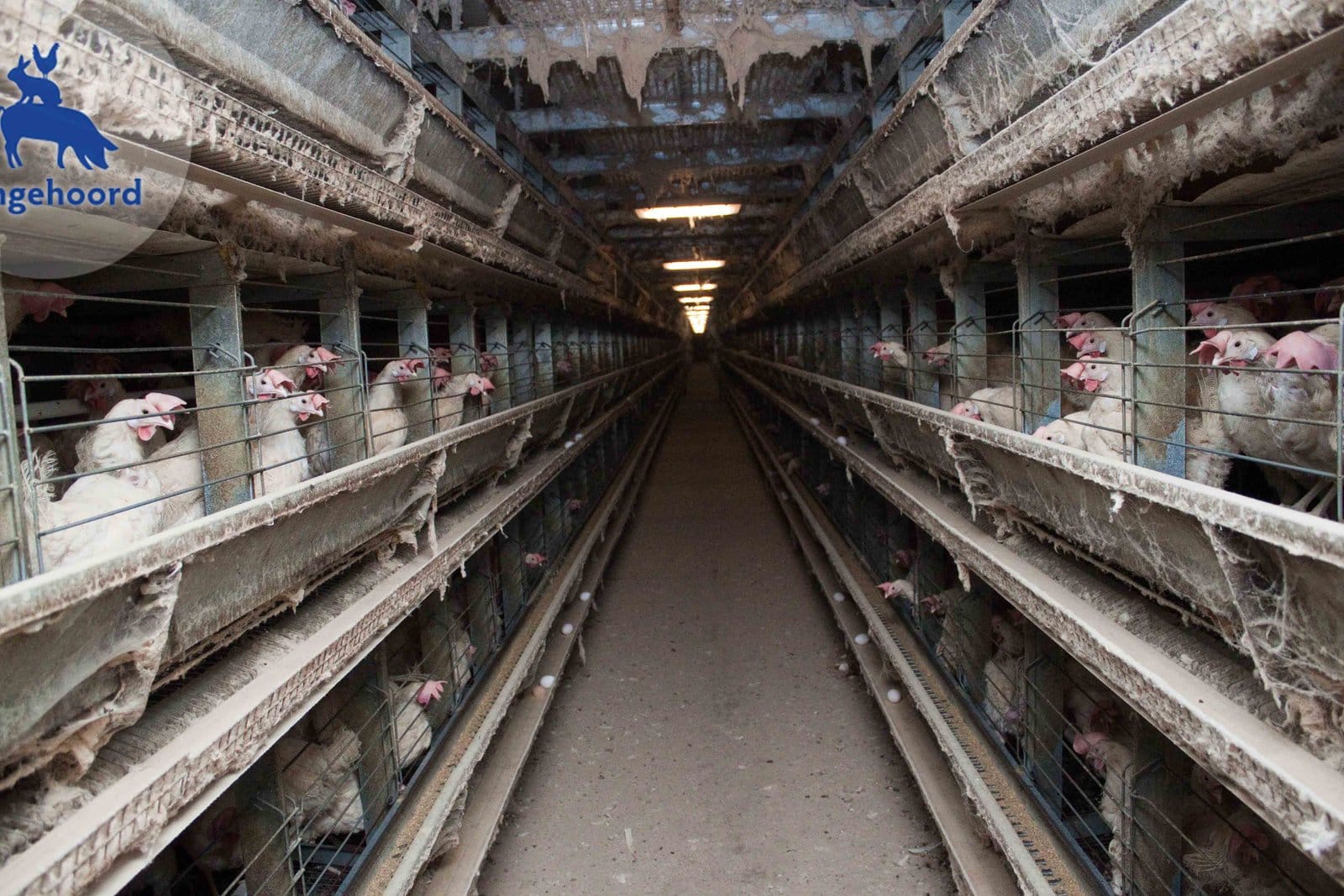
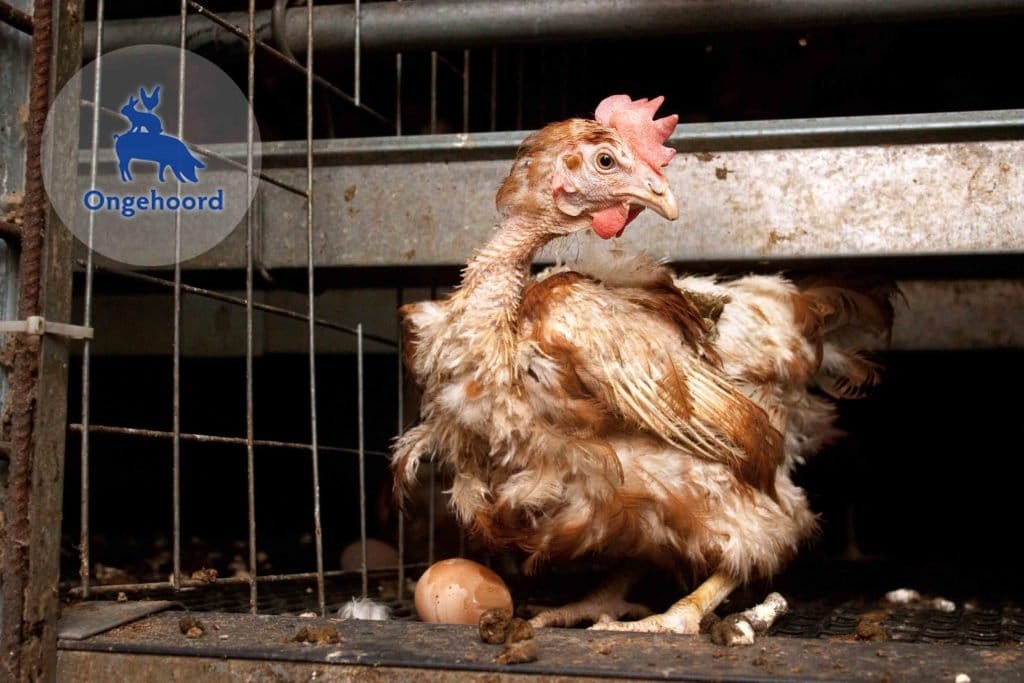
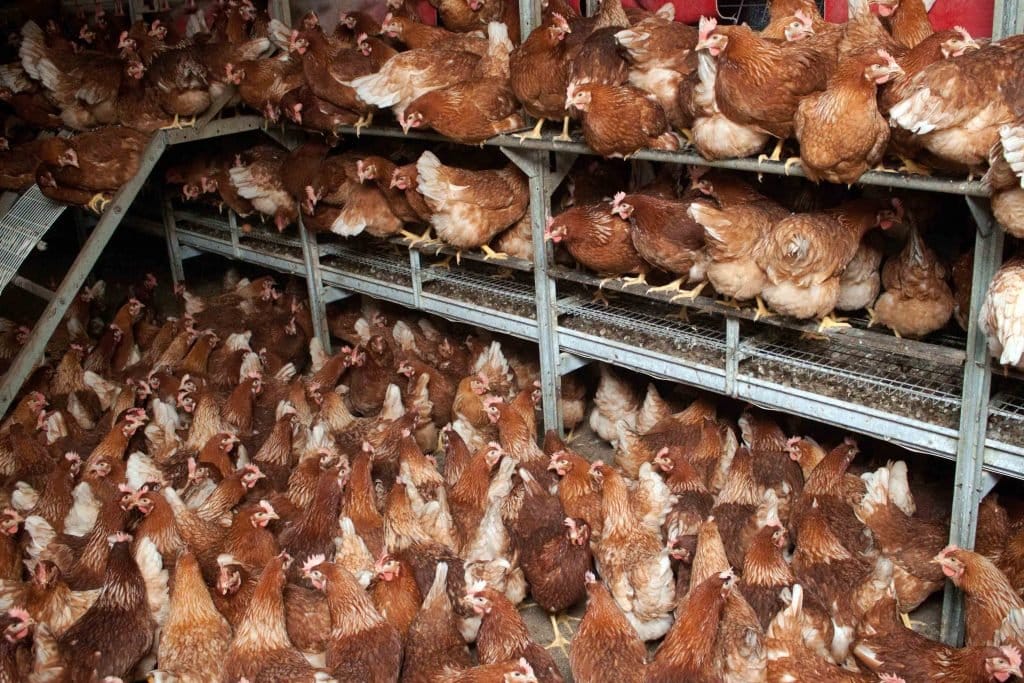
The modern chicken
Despite notable physiological differences, laying hens display behaviors akin to those of the Junglefowl, particularly when domesticated chickens are permitted to act naturally. When domesticated chickens are released into the wild, they tend to show behaviors very similar to those of Red Junglefowl [2] . Chickens possess a complex social structure. A flock typically comprises 4 to 30 individuals, usually featuring one dominant rooster alongside subordinate hens and roosters. The flock often roosts together in the same tree. The dominant rooster defends his territory but allows subordinate roosters to remain. He chases these roosters to the edges of his territory once they reach maturity. Hens also establish a pecking order, which is generally more stable than that of roosters. To ascertain the hierarchical position of a flock member, hens recognize each other's heads. Chickens can individually identify up to approximately 100 of their own species. Roosters communicate their status by crowing. Additionally, chickens observe the actions of other flock members to gauge the status of unfamiliar (stranger) chickens. Beyond hierarchical relationships, hens, in particular, form friendships with one another. This helps reduce stress and strengthens social bonds.
In natural conditions, a mother hen leaves the flock as soon as she is ready to lay her eggs. She remains on the nest for three weeks, leaving only briefly once a day to eat and drink. Although the embryos are still developing, they can already communicate with their mother using "clicking" sounds and beak clapping, which encourages her to return to the nest. If an embryo becomes too cold, it also makes a sound, prompting the hen to move the egg closer to her body. The embryo then produces a different sound to indicate that it is now warm. Because a chick communicates with its mother while still in the egg, it recognizes her call as soon as it hatches. The newly hatched chick begins to explore its surroundings and pecks at spherical objects. A hen teaches her chicks what is edible by calling and pecking at the ground. If the chicks peck at inedible items, their mother corrects them by intensively demonstrating the right behavior. For the first four days, the chicks stay close to their mother, which keeps them warm and safe. When it rains, the chicks take shelter under the hen's wings. The chicks learn from their mother how to take dust baths and roost. The hen also instructs the chicks on how to respond to danger. She has over 30 different sounds, which she uses to signal danger and whether it originates from the air or the ground. The chicks also learn from one another through play, which likely helps them understand how to react to aggression. As they grow older, the chicks venture further away from their mother. After six weeks, they can walk up to 20 meters away. At this age, the chicks also begin to establish a hierarchy. Dominance is determined through hopping (jumping towards something), threatening (standing upright with their head above another), jumping, kicking, and aggressive pecking. After eight to ten weeks, the chicks start foraging for food independently, but they still remain close to their mother and siblings. By eighteen weeks, the chicks integrate with the rest of the flock. Under natural conditions, chickens follow a consistent pattern of behavior that closely resembles that of their wild relative, the Junglefowl. In the morning, they search for food, around noon they take dust baths, and in the afternoon they groom their feathers. They may also take short naps in between. At the end of the afternoon, around dusk, they embark on a second foraging expedition. When night falls, they roost together. In the wild, chickens spend most of their active hours foraging for food and exploring their environment. Even when food is abundant, they continue to search for potentially better options. Interestingly, chickens can sleep and remain awake simultaneously. Because one eye is connected to one hemisphere of their brain and the other to the opposite hemisphere, they can sleep with one eye open, allowing them to stay vigilant against predators and other threats. In this phenomenon known as "unihemispheric slow-wave sleep" (USWS), only one hemisphere of the brain is asleep. [3]
As intelligent as dogs and primates?
Research indicates that chickens are far more intelligent than commonly believed. For instance, newborn chicks possess a numerical sense that allows them to recognize quantities up to 10. They can differentiate between a hole containing food and 10 other holes. [4] . In addition to their numerical skills, they also grasp geometric concepts. Chicks can complete the shape of an incomplete triangle and choose the correct 3D representation from various 2D images of a cube. [5] . Beyond their impressive spatial awareness, chickens have a sense of time and can anticipate future events. For example, researchers trained chickens to peck at a touchscreen for several minutes, which resulted in them receiving more food than if they had pecked at the food immediately [6] .
Chickens' ability to comprehend object permanence is remarkable. This means they understand that an object still exists even when it is no longer visible, such as when it has been removed. Human infants typically develop this understanding after 6 to 7 months. Young chicks have been observed remembering an object they saw through a small window and can locate it by navigating around obstacles [7] . Another impressive trait of chickens is their vision. Chickens possess 5 types of cones, while humans have only 3. This enables them to perceive UV light, which is invisible to humans. Consequently, they can see the sunrise an hour earlier than we do. Chickens' brains are structured similarly to human brains [8] . Areas responsible for cognitive functions, such as long-term memory and problem-solving abilities, exhibit significant similarities. In many ways, chickens' cognitive skills surpass those of dogs, cats, and even some primates. Emotionally, chickens also share similarities with humans. Chickens, like humans, can experience empathy towards their peers. For instance, hens respond strongly when their chicks or other chickens are stressed. [9] . Chickens also express emotions such as sadness, fear, anxiety, enthusiasm, frustration, friendship, and boredom [10] . Moreover, chickens can deceive others for their own benefit. For example, subordinate roosters, who typically cannot mate with hens in the flock, attract hens by pretending to have food, allowing them to breed regardless. [11] . We can conclude that chickens are social and intelligent beings, not as different from us as we might think.
Sources
- 1
Collias, N.E. et al. (1967) A field study of the Red Jungle Fowl in North-Central India. Condor 69 (4); p. 360-386
- 2
Dawkins, M.S. (1989) Time budgets in Red Junglefowl as baseline for the assessment of welfare in domestic fowl. Applied Animal Behavior Science 24; p. 77-80
- 3
Rattenborg, N.C. et al. (1999) Half-awake to the risk of predation. Nature 397; p. 397-398
- 4
Rugani, R et al. (2007) Rudimental numerical competence in 5-day-old domestic chicks (Gallus gallus): identification of ordinal position. Journal of Experimental Psychology: Animal Behavior Processes 33 (1); p.21-31
- 5
Regolin, L. et al. (1995) Perception of partly occluded objects by young chicks. Perception & Psychophysics 57 (7); p. 971-976
- 6
Marino, L. (2017) Thinking chickens: a review of cognition, emotion, and behavior in the domestic chicken. Animal Cognition. 20; p. 127-147
- 7
Shanahan, M. et al. (2013) Large-scale network organization in the avian forebrain: a connectivity matrix and theoretical analysis. Frontiers in Computational Neuroscience 7 (89); p. 1-17
- 8
Edgar, J.L. et al. (2011) Avian maternal response to chick distress. Proceedings Biological sciences 278 (1721); p. 3129-3134
- 9
Annie Pots (2012) Chicken. Animal Series. Reaktion Books LTD, ISBN 978-1-86189-858-6
- 10
Smith, C.K.L. et al. (2014) Brainy Bird. Scientific American (February); p. 60-65
- 11
RDA (2006) Natural behavior of laying hens and broilers. RDA Advisory Report 2006/06