Chapter 2 / 4
From farm to large stable
Organization of the modern egg industry
For centuries, chickens roamed freely in yards and were raised for both eggs and meat. After the Second World War, a clear distinction developed between laying hens, which are kept for eggs, and broiler chickens, which are raised for meat production. Laying breeds are specifically bred to maximize egg production, while broiler breeds are bred for rapid growth (the well-known "broiler chicken"). In 2016, there were over 46 million laying hens in the Netherlands [14] . Since 2004, the average number of laying hens per farm has been increasing, reaching 40,698 laying hens per farm in 2016 [15] . In total, there were 920 laying hen farms (36.5 million laying hens) and 150 so-called rearing farms (9.5 million laying hens) in 2016 [14] . Approximately two-thirds of these farms are located in the provinces of Gelderland, North Brabant, and Limburg. The 36.5 million laying hens produce around 11 billion eggs for consumption each year.
Hybrids
In modern poultry farming, farmers use hybrids, which are crossbreeds of different chicken breeds. These hybrids are created to boost egg production through the "heterosis effect." This effect means that the hybrid chicken performs better than the average of its parent breeds. The greatest benefits come from crossing very different breeds.
However, the genetic advantages of heterosis do not pass on effectively to the next generation. As a result, the benefits diminish with each generation. To maintain the maximum heterosis effect and achieve the highest egg production, breeders continually cross pure breeds (lines) to create new hybrids.
This intense focus on high egg production has consequences. Hybrids tend to wear out more quickly because the demands of laying so many eggs take a toll on their health. They produce more fragile eggs and often have poorer plumage.
Great-grandparent, grandparents and parents
As mentioned earlier, laying hens are hybrids derived from pure breeds. These pure breed lines serve as the great-grandparents and grandparents of the hybrids. When two different pure lines, A and B, are crossed, they create hybrids. In this case, the great-grandparents, grandparents, and parents are the pure lines A and B (Figure 1). The crossing of the parent stock results in a hybrid known as AB. This hybrid, made from purebred lines A and B, represents the ultimate laying hen.
Three major players control these purebred lines and cross them to produce hybrids. The two largest are the Dutch Hendrix Genetics, which includes the Isa, Babcock, Shaver, Hisex, Bovans, and DeKalb lines, and the German EW group, which features the Lohmann, Hy-line, and H&N lines. The third player is the French Grimaud group, known for the Novogen line. These companies also typically control the breeding operations that supply the ultimate parent stock. The hybrids are marketed under names like DeKalb white for white laying hens and Isa brown for brown laying hens.
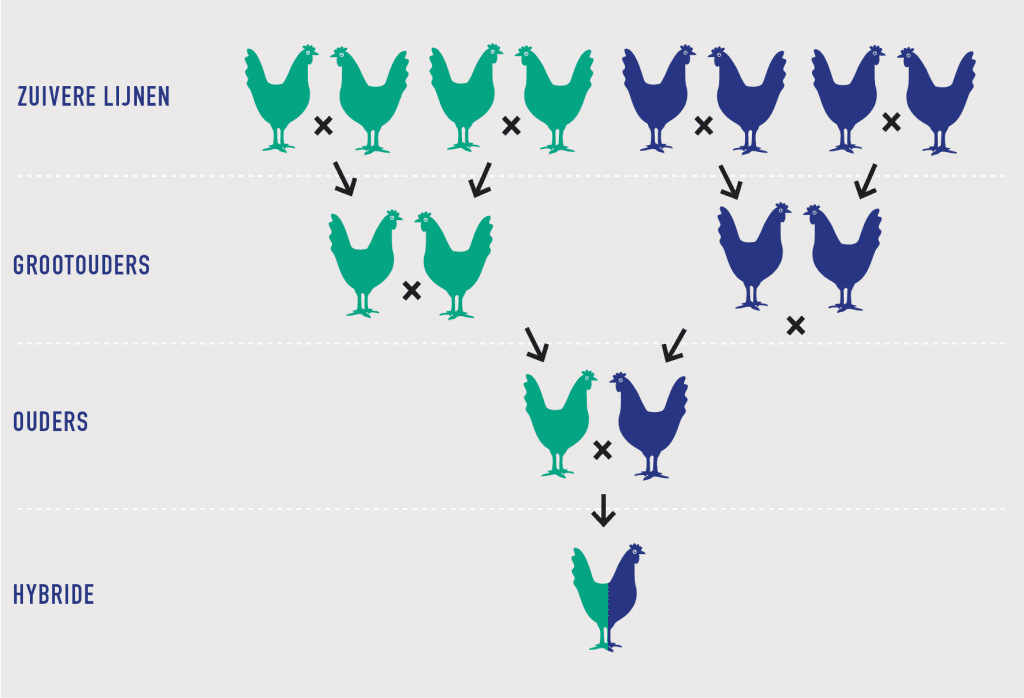
[Figure 1. The creation of a hybrid laying hen from purebred lines.
Propagation
In the Netherlands, there are around 40 breeding farms where parent stock is grouped together to lay fertilized eggs. Typically, there is one rooster for every eight hens. The breeding supply chain is dominated by a few large companies. For instance, ISACOM, which is part of Hendrix, operates 10 breeding farms and sources its parent stock from ISA, the laying hen division of Hendrix Genetics.
Dubbing
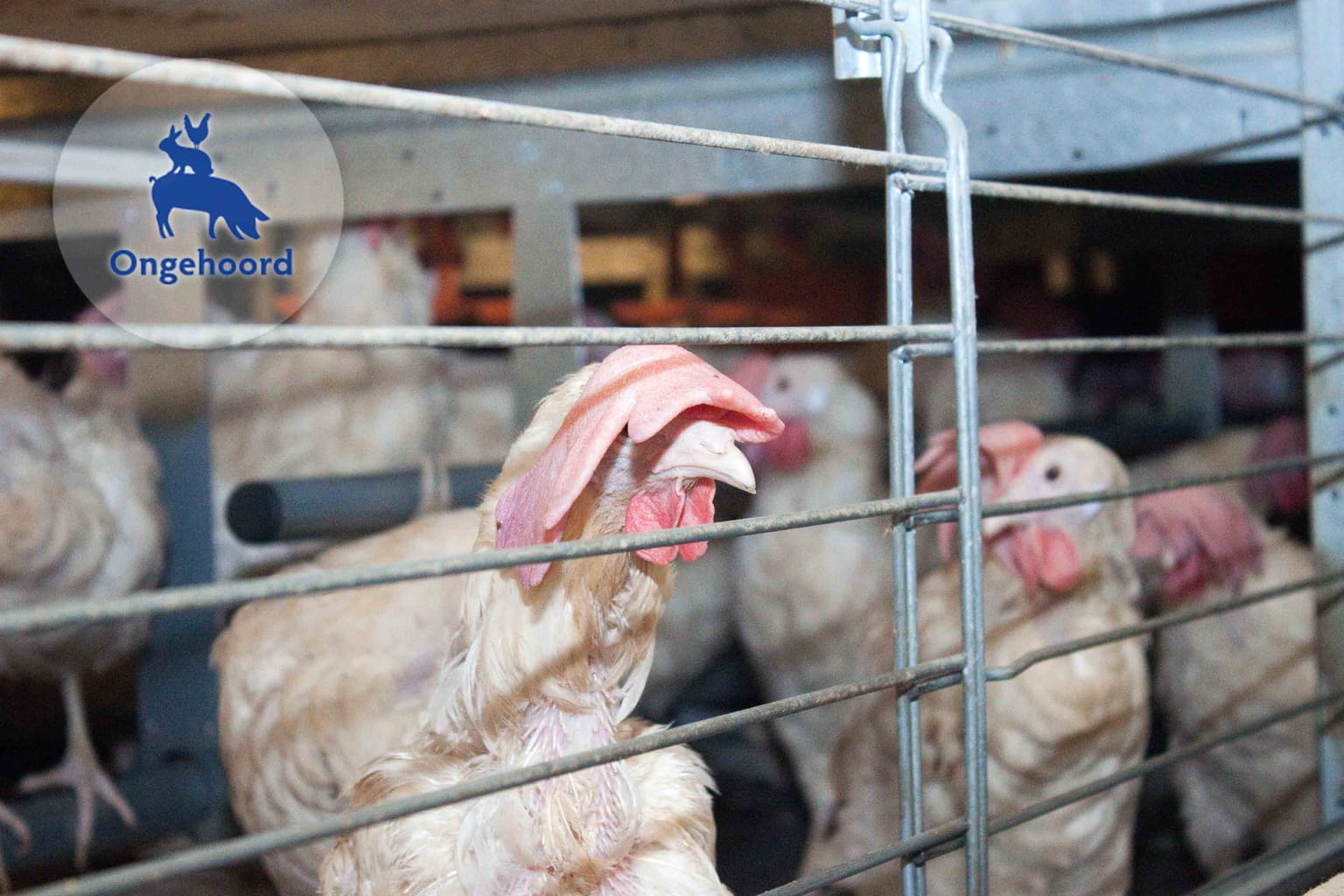
The combs of white breed chickens are clipped without anesthesia when they are still chicks. This procedure is known as comb dubbing. Research shows a positive correlation between comb size and egg production as well as egg weight. This indicates that birds with smaller combs tend to lay fewer and smaller eggs. [16] . In other words, the large combs are a result of selective breeding aimed at maximizing egg production. In brown breeds, the combs are much smaller, and this is not a concern. Consequently, dubbing the combs of brown breed roosters has been legally prohibited since 2015. However, in white breed roosters, the comb can grow so large that it obstructs their vision, making it difficult for them to mate and even to feed. Dubbing the comb is also used to identify sex errors. While research from WUR in 2011 indicates that there is no serious discomfort during comb clipping, "mild" discomfort cannot be completely ruled out since only externally observable parameters were studied. [17] .
Hatchery
The fertilized eggs, referred to as hatching eggs, are transported to a hatchery, where they are artificially incubated in an incubator. Chicks typically hatch between 19 and 22 days old, but for economic efficiency, the incubator is opened and emptied only once. This usually occurs on day 21, when most of the eggs have hatched. The chicks are then immediately sexed; this process involves separating the male and female chicks. The male chicks are promptly gassed or ground up alive, as they are economically worthless. Male chicks do not lay eggs and are also unsuitable for meat production due to their slower growth rate. This results in approximately 45 million "useless" male chicks being culled annually. [18] In hens, the tip of the beak is often immediately burned off using infrared radiation to prevent feather pecking. This is a very sensitive and painful procedure, as many nerves are concentrated in this area. [16] The newborn chicks also receive their first vaccinations. Afterward, the day-old chicks are transported to the rearing farm. The term "day-old chick" is actually misleading, as some chicks may already be two days old when the incubator is emptied. Hatched chicks still have enough nutrients in their egg yolk for about 72 hours, but they do not receive their first feed until after being transported to the rearing farm. This process takes 32 to 48 hours after the incubator is emptied. Consequently, chicks that hatch first may sometimes go without food for up to 96 hours, effectively "going hungry" for a day. [19]
Ready to lay
For the first 16 to 18 weeks, chickens live on a rearing farm. During this time, they get most of their vaccinations against common diseases. In total, they receive over 20 vaccinations for about 14 different diseases. Only the Newcastle Disease (NCD) vaccination is legally required. Organic laying hens also get these vaccinations. As laying hens produce more eggs, the vaccination costs per egg decrease, leading to a trend of increasing vaccinations. After this rearing period, the laying hens move to enriched cages or a free-range barn and start laying eggs at 19 weeks.
Egg production
A barn typically houses a single laying flock, which is a group of hens of the same age that are purchased together from a rearing farm. This setup allows for the quick filling of an empty barn and facilitates the process of emptying the barn when the laying hens are no longer producing enough eggs and are sent to the slaughterhouse. This practice enables thorough cleaning and disinfection of the barn, which is crucial due to the presence of numerous pathogens. After cleaning, a new laying flock can move into the barn. During their peak laying period, from 25 to 39 weeks of age, hens produce 6 to 7 eggs per week. Through selective breeding and the use of artificial light to extend the day length, laying hens can lay eggs throughout the year. The light duration is maintained at 14 to 16 hours, while the dark period ("night") lasts 8 to 10 hours. A continuous dark period of at least 8 hours is legally mandated. [20] After about 50 weeks of laying, mortality rates increase (laying hens may become ill or die) due to wear and tear, decreased resistance, and/or exhaustion, potentially reaching 8%. [21] After 60 to 70 weeks, egg production also declines, and in most instances, the hens are sent to the slaughterhouse because they are no longer economically viable. Occasionally, hens are kept for a second laying cycle. Typically, chickens molt (the process of replacing worn feathers) naturally each year, which can take several months. However, due to selective breeding and the artificial conditions in barns, the time before molting is extended from one year to over a year and a half. For a second laying cycle, hens must first molt before they can begin laying eggs again. To ensure this process happens uniformly and quickly, hen keepers induce molting by providing low light and less and/or leaner food for three to seven weeks. Notably, the second laying cycle is shorter than the first, and hens lay 10 to 30% fewer eggs than during the first cycle. [23] Therefore, in practice, laying hens are seldom kept for a second laying cycle. For instance, forced molting is not allowed for the Beter Leven quality mark. Laying hens typically live for about 19 to 21 months, or at most 31 months for a second laying cycle. By that time, they will have laid over 300 eggs, and this number continues to rise. Hendrix Genetics, for example, anticipates that 500 eggs per laying hen should be achievable by 2020. [24] In comparison, wild chickens lay about 10 to 20 eggs per year (Fig. 2). Through selective breeding and the use of artificial light to extend daylight hours, this figure has increased significantly. For instance, at the end of the 19th century, chickens laid 80 to 85 eggs per year, and by 1930, that number had already risen to 116. This figure has now tripled. ISA has bred a hen that laid 577 eggs in 588 days. [24]
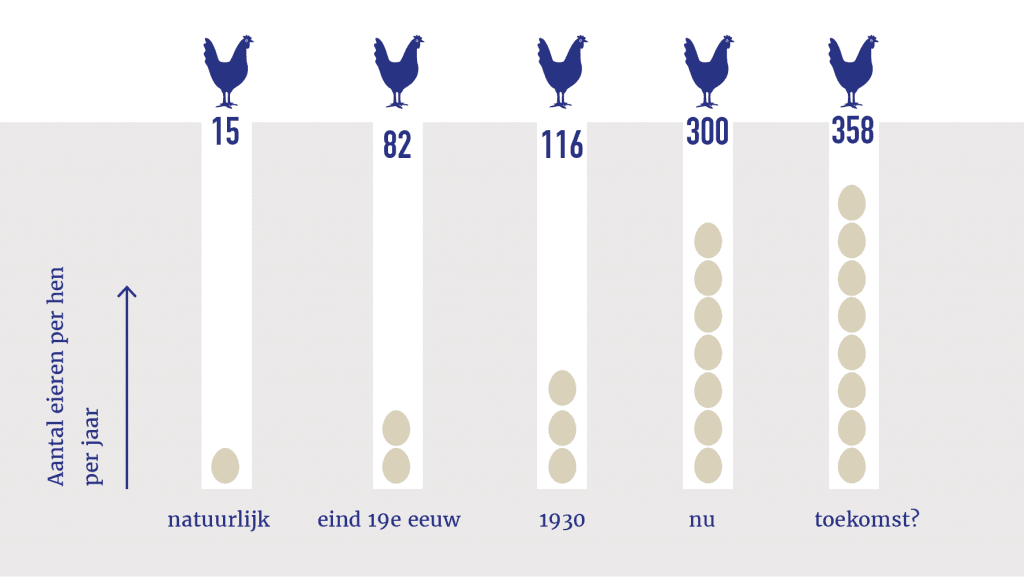
[Figure 2. Number of eggs per hen per year over time.] The productive lifespan is also expected to be extended further. It is projected that within 10 years, laying hens will be able to be kept for a hundred weeks, or nearly two years, before they are considered "deprecated." Interestingly, there is no significant difference in the "lifespan" of hens across various housing systems. Even organic, Kipster, or Rondeel hens do not live longer than a year and a half. The average lifespan of chickens varies greatly by breed. Hybrids often do not exceed three years, while some breeds can live up to 20 years. Most purebred chickens live around 10 years (Fig. 3).
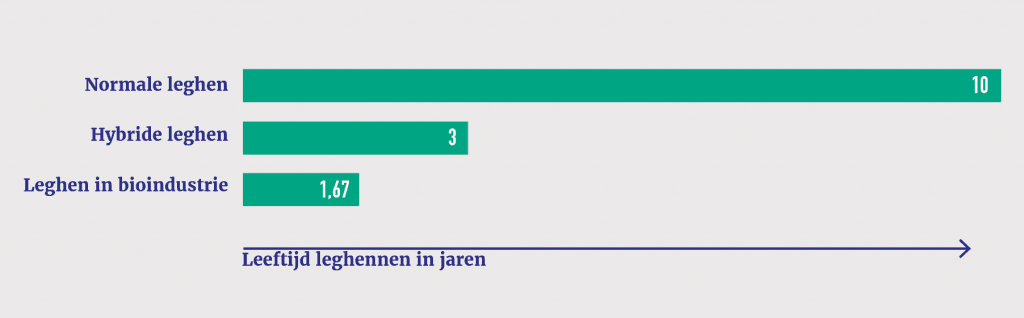
[Figure 3. Maximum age of a hybrid, a laying hen (hybrid) in factory farming, and a "normal" purebred chicken.] Since laying hens are completely "used up" by the time they are captured and sent to the slaughterhouse, they are only suitable for low-value applications. In other words, they are processed into soup, chicken nuggets, or animal feed.
Catching chickens
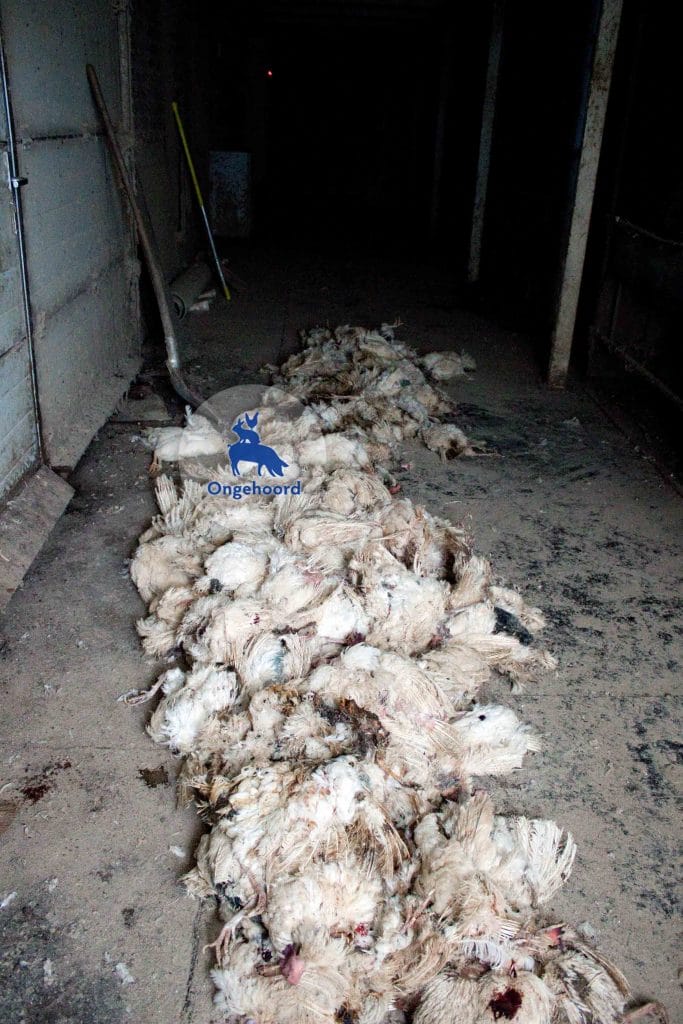
Catching laying hens presents significant welfare challenges. [25] Laying hens are quick and active animals during the day, making them difficult to capture in free-range housing systems like barns. This process can induce a lot of stress, leading to injuries as the hens may collide with each other and objects, which disqualifies them from being transported. To minimize stress, laying hens are typically caught in the dark while they are roosting and sleeping. Blue light is often used to keep the hens from waking up. However, some hens will inevitably wake and start moving, making them harder to catch and creating considerable unrest. [26] Laying hens are caught by hand. Usually, specialized companies (poultry service companies) provide catching teams. Although these companies are often certified, they typically do not include animal welfare training. Consequently, the injury rate during catching is higher with these teams compared to "in-house" staff (poultry farmers, neighbors, etc.). Other contributing factors to this increased rate include time pressure, routine work, and a lack of awareness that live animals are being handled (desensitization). [26] The low economic value of laying hens (currently less than 50 cents each) also means that they are not treated with the highest level of care. [25] Chickens are often grabbed by their legs and held upside down, dangling from the catcher's hand. A catcher may continue until they have three or four chickens in one hand. When they grab the next chicken, the ones already being held often hit the floor or coop. By the time they are removed, the laying hens are completely exhausted, with few feathers and muscles, and brittle bones (osteoporosis) due to the high calcium demand during laying. As a result, they are prone to injuries during catching, especially to their legs and wings. [25] The chickens are then literally crammed into plastic crates; often several at once, and this is done quickly and roughly to prevent those already inside from jumping out. Each crate holds 10-15 hens, each with less space than half an A4 sheet of paper. Hens weigh an average of 1.7-1.9 kg and are legally entitled to only 160 cm² per kg of chicken. [27] The entire catching process takes an average of 2.8 hours. [26]
Transport
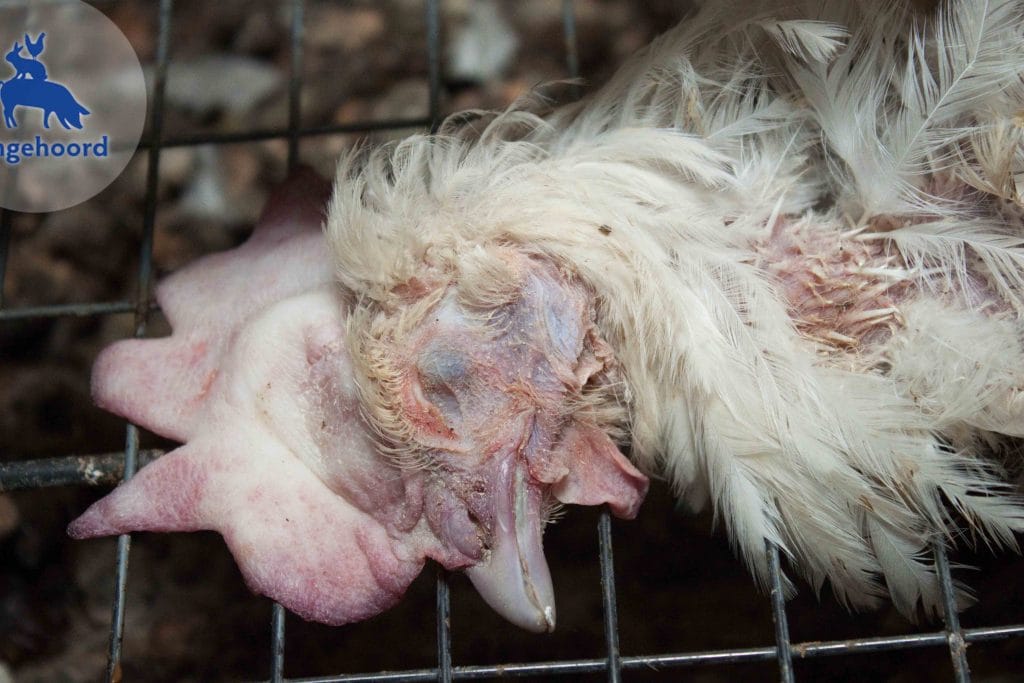
The hens are packed tightly into crates and transported to the slaughterhouse. Due to having few feathers and minimal muscle tissue after laying, they are highly vulnerable to cold stress during transport. For instance, research by Wageningen University & Research (WUR) has demonstrated that in winter, laying hens were transported outside their comfort zone of 10-25°C for about a third of the time. [26] The hens also faced significant temperature fluctuations; within just a few hours, the temperature could rise from around freezing (during transport) to 30°C (while waiting at the slaughterhouse). In the same investigation, the average transport time was an astonishing 10 hours (within the Netherlands). Of this duration, only a small fraction was spent driving (an average of 2 hours), while the trucks remained stationary for extended periods in the receiving area of the slaughterhouse (an average of 8 hours). Transport times can easily exceed 12 hours if slaughter occurs later in the day. Additionally, the hens have been fasting (without food) in the barn for a considerable time, leaving them without food and water for an extended period. On average, the hens studied went without food for a full 18 hours. There are only two slaughterhouses in the Netherlands that process laying hens. Consequently, a large number of these hens are shipped abroad, primarily to Poland, where they can be slaughtered at a lower cost. According to the Netherlands Food and Consumer Product Safety Authority (NVWA), 5.5 million laying hens were transported to Poland in 2015, accounting for approximately a quarter of the total number of hens slaughtered annually. Around 2.5 million laying hens were sent to countries such as Belgium, Germany, and France. In total, 14% of the chickens shipped went to slaughterhouses with a transport time exceeding four hours. [28] Males from the laying hen chain (such as parent stock) are always sent abroad, as there is no slaughterhouse in the Netherlands that processes these males due to their size. Transport times for these males are often much longer than the previously mentioned times for transport within the Netherlands. There is no legal maximum transport time. However, hens transported for over 12 hours must be provided with food and water. In practice, this is nearly impossible because the crates are stacked on top of and beside each other, making the inner crates inaccessible. Furthermore, there is minimal monitoring of this, as it occurs abroad. Legally, a 2% injury rate and a 0.5% mortality rate are allowed for the capture and transport of spent hens. This theoretically results in 0.5 million injured hens and 130,000 dead hens arriving at the slaughterhouse each year. The Netherlands Food and Consumer Product Safety Authority (NVWA) conducts (limited) inspections for injuries sustained during capture and transport and has already issued 112 fines in the first half of 2017 for exceeding the legally established tolerance limits. [29] However, inspections cease at the border.
Sources
- 14
- 15
- 16
Van Niekerk, T.G.C.M. et al. (2011) Interventions in poultry. Wageningen UR Livestock Research. Report 468. ISSN 1570-8616
- 17
Van Niekerk, T.G.C.M. et al. (2011) Pilot investigation on welfare aspects of comb dubbing in laying-breed cockerels. Wageningen UR Livestock Research. Report 469. ISSN 1570-8616
- 18
- 19
Decuypere, E. et al. (2007) The day-old chick: a crucial hinge between breeders and broilers. CEVA Animal Health Asia Pacific, hatchery expertise online 12
- 20
Regulation-Decree on Animal Keepers BWBR0035217; Article 2.75 Lighting
- 21
Van Niekerk, T.G.C.M. et al. (2012) Reducing mortality in laying hens. Wageningen UR Livestock Research.
- 23
Lohman Brown Classic. Management guide systems colony (2011)
- 25
EFSA (2011) Scientific opinion concerning the welfare if animals during transport. EFSA Journal 9 (1):1966
- 26
Van Niekerk, T.G.C.M. et al. (2014) Welfare of spent hens during capture and transport during the winter period. Wageningen UR Livestock Research. Livestock Research Report 758
- 28
Parliamentary questions on the treatment of laid-out hens