Research into Dutch poultry slaughterhouses
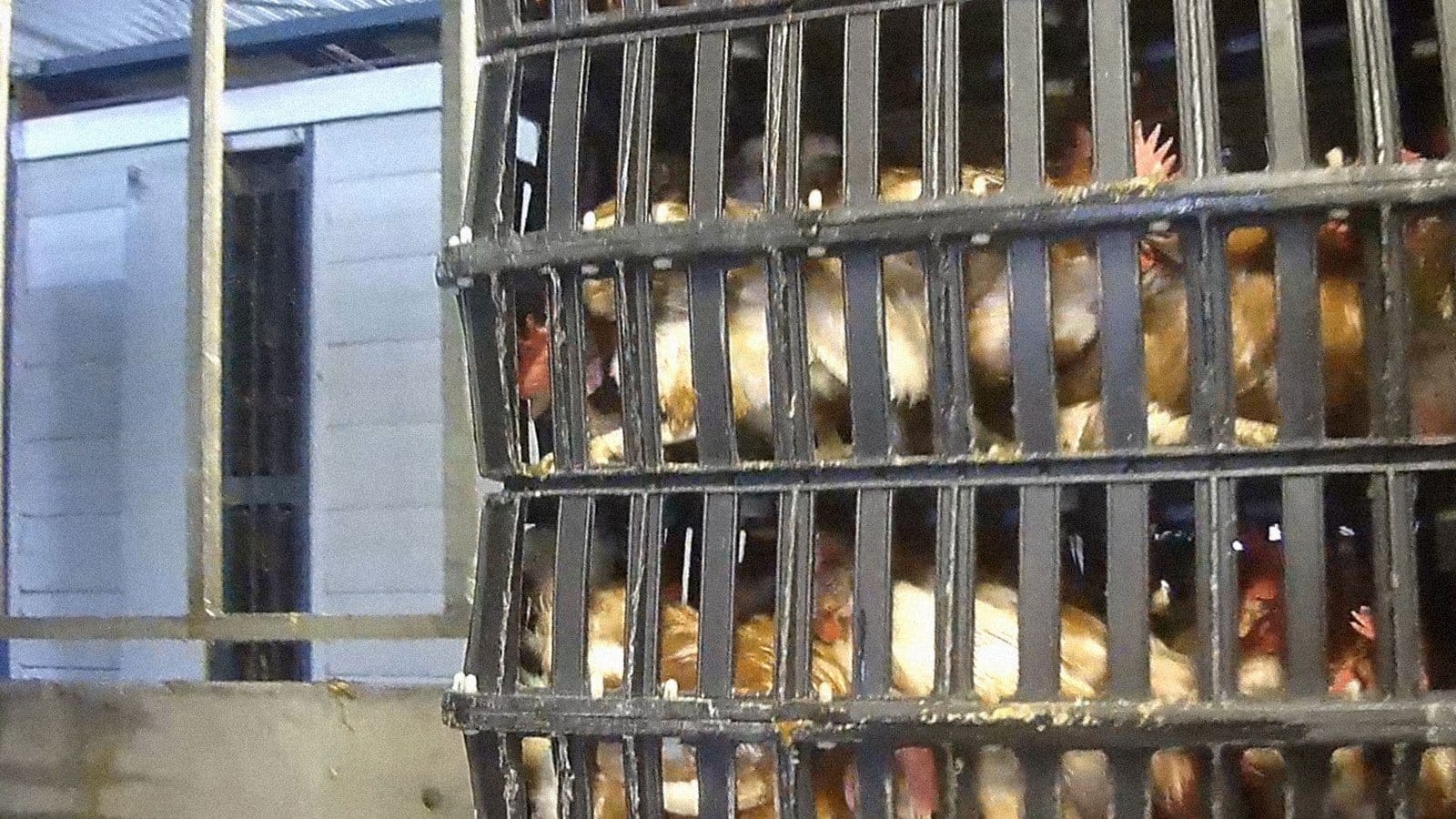
Ongehoord published a comprehensive investigation on chicken slaughterhouses in early 2020, following earlier studies on the living conditions of broiler chickens (2013) and laying hens (2017). Each year, over 605 million broiler chickens and nearly 18 million laying hens are slaughtered in Dutch facilities. [1] Chicken slaughter is linked to significant welfare issues, including injuries during capture and transport, limited movement, hunger, thirst, heat stress, painful stunning methods, and a large number of conscious animals being killed.
The Netherlands is home to fifteen large chicken slaughterhouses that focus on broiler chickens. Additionally, there is the Remkes slaughterhouse in Epe, which mainly handles spent broiler breeders, and the W. van der Meer slaughterhouse in Dronryp, which processes spent laying hens (hens that produce eggs for human consumption). Due to the limited capacity for slaughtering spent laying hens in the Netherlands, many of these hens are transported live to foreign slaughterhouses, especially in Belgium, where there are two facilities for laying hens. There is also a growing trend of slaughtering spent laying hens in Poland, leading to more animals facing welfare issues related to long-distance transport. [2]
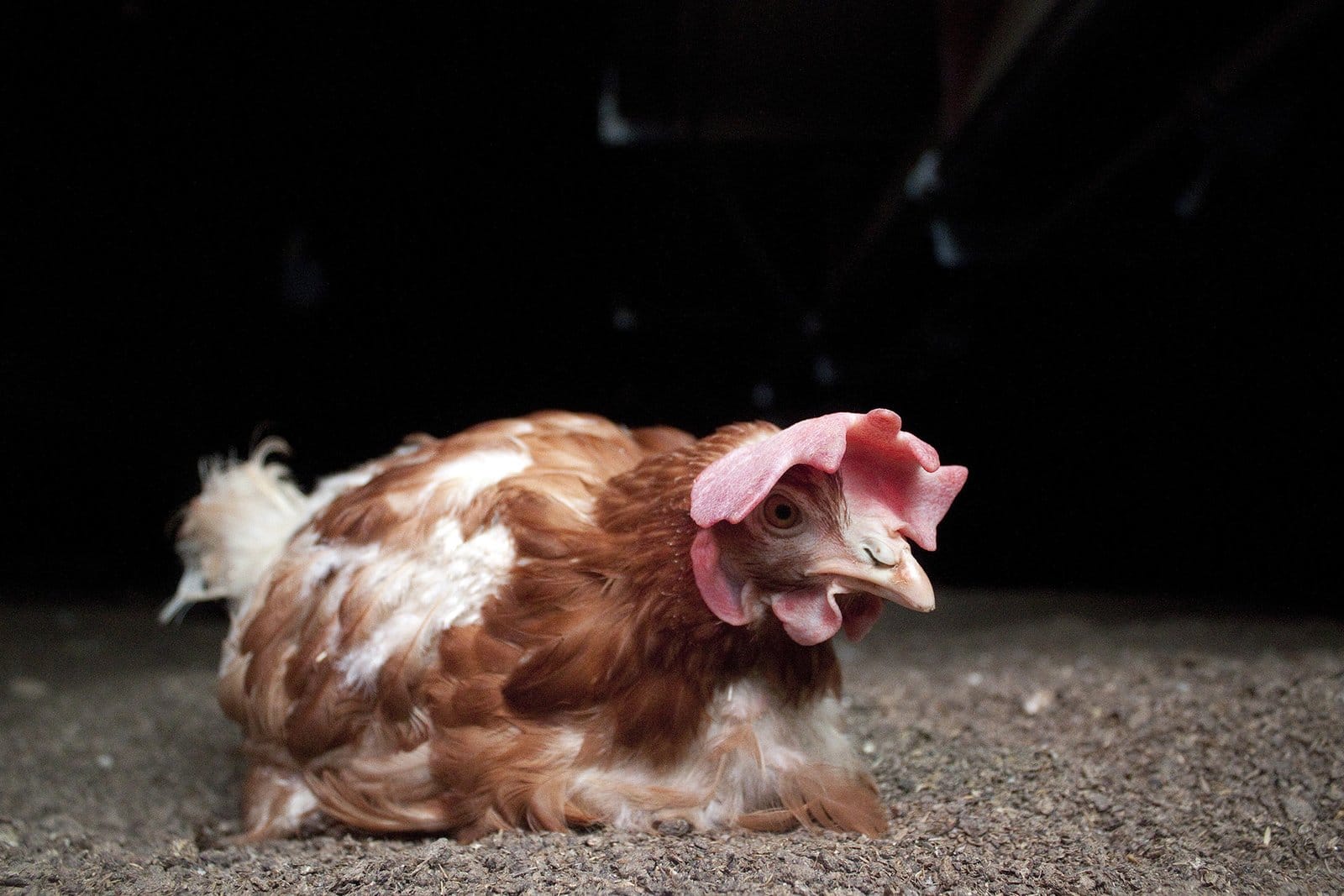
In addition to literature research, Ongehoord also conducted undercover investigations at W. van der Meer en sons BV. This company receives laying hens that have been "used up" in the egg industry. After eighteen months of laying eggs, the egg production of these hens declines, their health worsens, and they become unprofitable for the egg farmer. The hens are then sent to slaughterhouses as a "waste product" to be processed into inexpensive soup chickens. At W. van der Meer, around 28,000 laying hens are slaughtered each working day, including many animals with the organic EKO quality mark and the Beter Leven quality mark from the Dutch Society for the Protection of Animals (Dierenbescherming) (1, 2, and 3 stars). The company's annual production totals 6 million laying hens. [3]
2 locations
Sources
- 1
- 2
Van Niekerk et al (2015). Feed and water during transport of poultry. - Wageningen UR Livestock Research. Report 752; p. 4
- 3
Welfare issues in commercial rabbit farming. - RDA (1097)
- 4
Discomfort in rabbits, turkeys, ducks, sheep and goats. - Wageningen UR (2009)
- 5
Collias N.E. et al (1957) A field study of the red jungle fowl in North-Central India. Condor 69 (4); p. 363
- 6
J.L. Edgar et al (2011) Avian maternal response to chick distress. Proceedings Biological sciences 278 (1721); p. 3129-3134
- 7
Think of this when you eat Chicken! - The Island
- 8
Think of this when you eat Chicken! - The Island
- 9
Rattenborg N.C. et al (1999) Half-awake to the risk of predation. Nature 397; p. 397-398
- 10
Agrimatie - information about the agricultural sector. Technical results of laying hen farms.
- 11
Dossier: Preventing feather pecking. - Wageningen UR.
- 12
Marino L. (2017) Thinking chickens: a review of cognition, emotion, and behavior in the domestic chicken. Animal cognition 20; 127-147
- 13
Regolin L. et al. (1995) Perception of partly occluded objects by young chicks. Perception & Psychophysics 57 (7); 971-976
- 14
Shanahan M. (2013) Large-scale network organization in the avian forebrain: a connectivity matrix and theoretical analysis. Frontiers in Computational Neuroscience 7 (89); p. 1-17
- 15
- 16
Niekerk et al (2015) Food and water during transport of poultry. Wageningen UR Livestock Research. Report 752; p. 20
- 17
Niekerk et al (2014) Welfare of laid hens during capture and transport in the winter period. Wageningen UR Livestock Research. Report 758; p. 28
- 18
- 19
Gerritzen et al (2019 Injuries and damage to broiler chickens resulting from capture, transport and handling on the slaughter line. Wageningen Livestock Research. Report 1107; p. 17 and p. 29
- 20
EFSA Panel on Animal Health and Welfare (2011). Scientific Opinion Concerning the Welfare of Animals during Transport. EFSA Journal; p. 47
- 21
NVWA . K-PL-WLZ-WV-01 Appendix 7, Explanation of the capture injury count; p. 3
- 22
Niekerk et al. (2015) Feed and water during poultry transport. Wageningen UR Livestock Research. Report 752; p. 3
- 23
BuRO Advisory Report on Poultry Supply Chain Risks. March 28, 2018; p. 31
- 24
Niekerk et al. (2015) Feed and water during poultry transport. Wageningen UR Livestock Research. Report 752; p. 20
- 25
Niekerk et al. (2014) Welfare of spent hens during capture and transport during the winter period. Wageningen UR Livestock Research. Report 758; p. 39
- 26
Prevent heat stress in your chickens. ILVO, Poultry Desk.
- 27
Poultry sector sticks to its own heat protocol. Farm, June 2019.
- 28
At least 15,000 pigs and chickens died from heat last summer. NRC, September 2019.
- 29
EFSA Panel on Animal Health and Welfare (2019) Slaughter of animals: poultry. EFSA Journal; p35 and p. 38
- 30
EFSA Panel on Animal Health and Welfare (2019) Slaughter of animals: poultry. EFSA Journal; p. 38
- 31
BuRO Advisory Report on Poultry Supply Chain Risks. March 28, 2018; p. 44
- 32
Gerritzen, M.A. et al (2012) Multistage carbon dioxide gas stunning or broilers. Environment, well-being, and behavior, TBC Poultry Science TBC:1-10, DOI: 10.3382/ps.2012-02551
- 33
Gerritzen, M. et al. (2007) A note on behavior of poultry exposed to increasing carbon dioxide concentrations. Applied Animal Behavior Science 108; p. 179-185
- 34
- 35
Gerritzen. Stunning poultry needs to change. - Animal Welfare 2009.
- 36
EFSA Panel on Animal Health and Welfare (2019) Slaughter of animals: poultry. EFSA Journal; p. 38
- 37
EFSA Panel on Animal Health and Welfare (2019) Slaughter of animals: poultry. EFSA Journal; p. 41-44
- 38
Gerritzen. Stunning poultry needs to change. - Animal Welfare 2009.
- 39
EFSA Panel on Animal Health and Welfare (2019) Slaughter of animals: poultry. EFSA Journal; p. 44
- 40
Gerritzen. Stunning poultry needs to change. - Animal Welfare 2009.
- 41
EFSA Panel on Animal Health and Welfare (2012) Scientific Opinion on electrical requirements for waterbath equipment applicable for poultry. EFSA Journal; p. 31
- 42
Chickens poorly stunned. - Today, October 2006.
- 43
- 44
- 45
REGULATION (EC) No 1099/2009. Introductory text, point 6.
- 46
10 million chickens slaughtered without stunning. The Latest News, June 2017.
- 47
EFSA Panel on Animal Health and Welfare (2019) Slaughter of animals: poultry. EFSA Journal; p. 50
- 48
Slaughtering chickens. Resource WUR . First Volume, December 2006; p. 3
- 49
- 51
- 52
- 53
Kipster shows how Lidl's laying hens make way for new ones. Foodlog, January 2019.
- 54
Chicken cockerels on the slaughter hook. Farm, September 2017.
- 55
- 56
- 57
A firm belief in the organic laying hen in Dronryp. Leeuwarder Courant, January 2019.
- 58
- 59
BLK criteria for poultry slaughterhouses. 'Current version' (version 1.1, dated 01-06-2016); p. 2 and p. 2 footnote
- 60
BLK criteria for poultry slaughterhouses, additional decisions and interpretations - supplement to version 1.1, dated June 1, 2016; p. 3