Chapter 1 / 4
Natural chicken behavior
The modern laying hens and broilers trace their ancestry back to the Junglefowl, specifically the Red Junglefowl. These birds still live in Southeast Asia, typically in regions with low shrubs, dense jungles, or bamboo forests, where they can easily hide from predators. Since Junglefowl are quite shy, researchers have conducted only a limited number of investigations on their behavior in natural settings.
However, extensive research has been conducted on chickens in semi-natural conditions, such as the study by Collias (1996), who observed Junglefowl at the San Diego Zoo. Another notable study is by Dawkins (1989), who tracked the behavior of feral chickens over many generations. When domesticated chickens are released into the wild, they tend to display behavior that closely resembles that of the Red Junglefowl. [4]
Under (semi-)natural conditions, chickens typically live in groups of 4 to 30 individuals. The size of a group's home range is influenced by the availability of food and natural vegetation that can provide roosting spots and shelter from predators. According to Collias, a group of jungle fowl occupies a home range of 5 hectares. [5] Studies of feral chicken populations indicate home ranges of 0.5 hectares. For comparison, a laying hen in an enriched cage has slightly more space than an A4 sheet, while a free-range hen has just under two A4 sheets of space.
Within a flock of chickens, there is typically one dominant rooster that fertilizes the majority of the eggs. A strong hierarchy, known as the pecking order, exists among both roosters and hens. However, this hierarchy proves to be particularly stable among hens over successive years, unlike among roosters. Additionally, hens form friendships within the flock. These birds are capable of experiencing empathy towards one another. For instance, hens show significant reactions when their chicks are under stress. Researchers studying chicken behavior have noted physiological and behavioral changes in mother hens when their chicks were subjected to artificial gusts of wind. [6]
Chickens communicate in various ways using different vocalizations. German researcher Erich Bäumer dedicated years to studying chicken sounds and identified at least 30 distinct vocalizations. These include a soft cluck to indicate food availability, a loud cackle to announce egg-laying, cries of loneliness, and high-pitched "trr-trr" sounds from young chicks separated from their mothers. Chickens also produce anxious cackles when faced with danger and triumphant cackles once the threat has passed. [7]To establish and maintain a hierarchy within the flock, chickens need to recognize each other. They can individually identify about 100 of their own kind. When new birds join a flock, they disrupt the pecking order, leading to fights as the hierarchy is redefined. In conventional and organic poultry farming, where chickens are often housed with thousands of others, a natural pecking order cannot form.
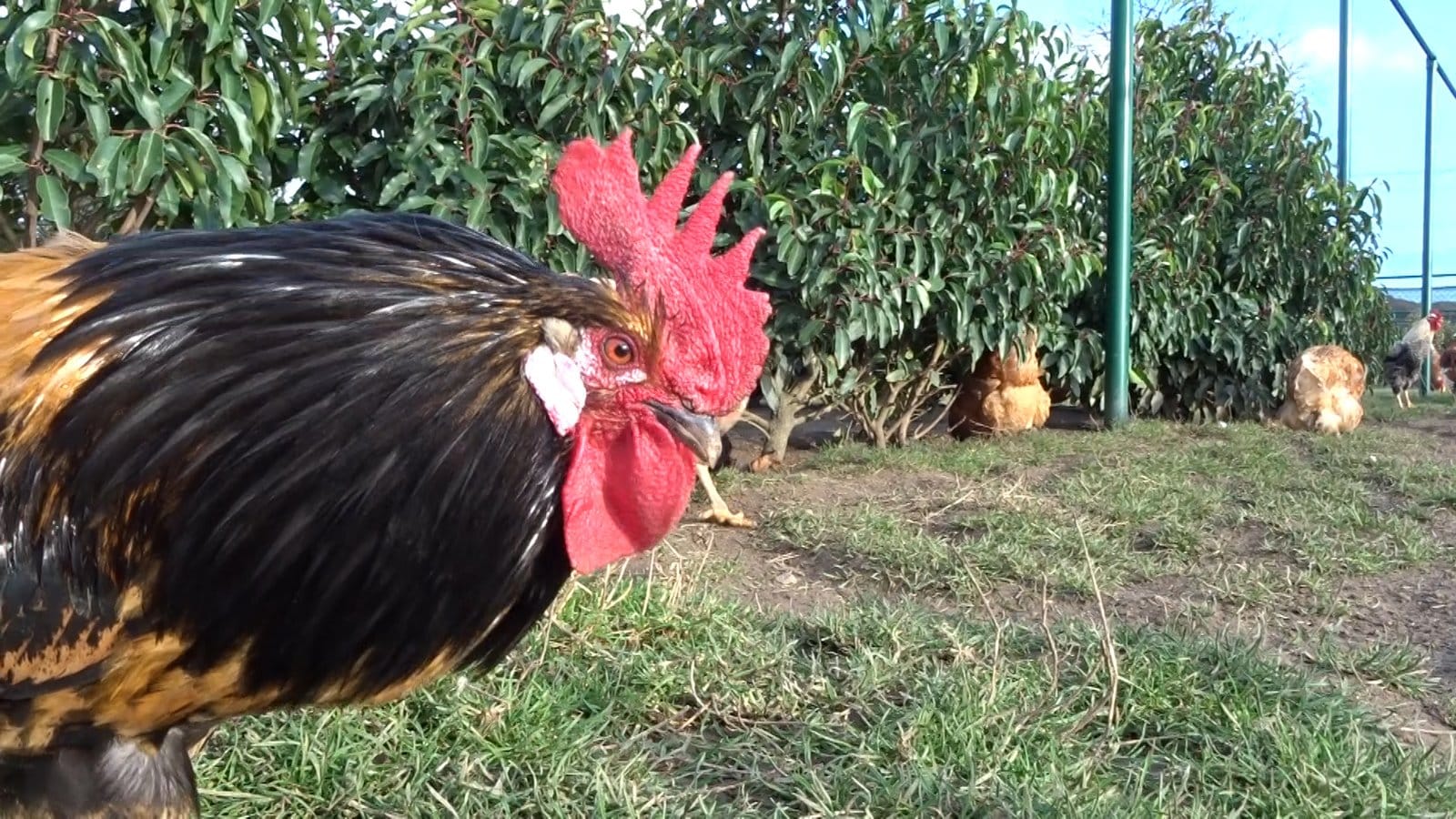
Chickens follow a consistent 24-hour routine: in the morning, they search for food; around noon, they take a dust bath and groom their feathers. Dust bathing helps eliminate excess fat and parasites (such as lice) and also aids in cooling them down on warmer days. Chickens are most comfortable in temperatures ranging from 12 to 25 degrees Celsius. When temperatures rise above this range, they become less active, hold their wings away from their bodies, breathe with their beaks open, and dust bathe to cool off. They also dislike cold temperatures, rain, and wind. Besides weather conditions, they actively seek shelter. Research has shown that chickens, even in outdoor housing systems with shelters, have a strong preference for sheltering among trees and natural vegetation. [8]
After preening their feathers, chickens dive into a second, lengthy foraging session. Most of their day revolves around searching for and eating food. While foraging, chickens typically scrape the ground with their feet and then peck at edible items. Under natural and semi-natural conditions, chickens spend 60 to 90% of their time foraging. Like many other animal species, foraging also allows chickens to explore their environment. This behavior is crucial for their survival, so the drive to forage remains strong, even in chickens raised in livestock farming.
When evening falls, chickens go to sleep. In the wild, chickens roost on branches in trees, where they are safe from predators. This is why domesticated laying hens use high perches in barns for sleeping. (Broilers can no longer sleep on perches due to their unbalanced body structure, a result of years of genetic selection.) Chickens have a unique ability to sleep and wake at the same time. One eye is linked to one hemisphere of their brain, while the other eye connects to the opposite hemisphere, allowing them to sleep with one eye open. One hemisphere sleeps while the other stays alert, helping them watch for predators and other dangers. [9]
Like most bird species, chickens have a specific breeding season. In natural conditions, a hen typically lays around ten eggs, which she then incubates. If the first clutch does not hatch, she may lay a second clutch. Each year, the hen lays a maximum of 20 eggs, which is significantly fewer than her counterparts in the egg industry, who are required to produce over 300 eggs annually. [10]
After about twenty days, the chicks hatch. The hen teaches them how to find food, select a good roosting spot, and take dust baths. She also shows her chicks how to respond to danger from predators. In risky situations, the birds either run for cover or freeze in place. Freezing is a response where they become paralyzed with fear. If a predator catches a hen that has frozen and appears dead, the predator often loses interest and abandons the attack.
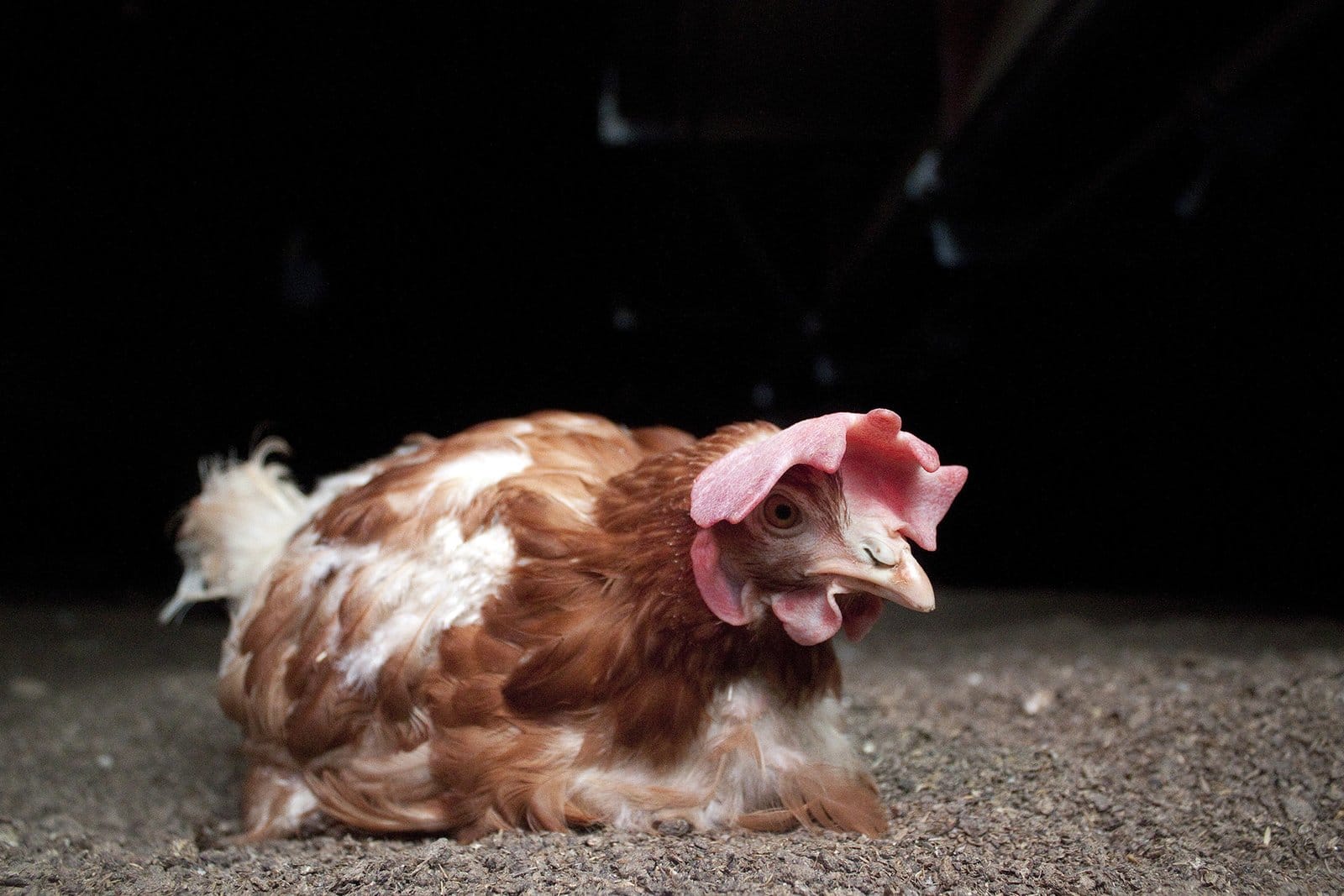
After the breeding season, as the days start to shorten, the molting period begins. During this time, chickens do not lay eggs. Molting is a natural process in birds where old feathers are replaced with new ones. Chickens lose feathers and may develop bald patches during this period. The baldness caused by molting is different from the baldness often seen in chickens raised in livestock farming due to feather pecking. Feather pecking, along with cannibalism and cloacal pecking, is a behavioral disorder that does not occur in chickens living in natural conditions. These behavioral issues are a common concern in poultry farming, including organic farms. [11]
Chickens are remarkably intelligent animals. For instance, researchers have trained chickens to peck at a touchscreen for several minutes, allowing them to receive more food than if they pecked at it immediately. [12] Chickens also possess the ability to understand object permanence. This means they recognize that an object continues to exist even when it is out of sight. Human infants typically do not develop this understanding until they are 6 to 7 months old. [13] The brain regions in chickens that are responsible for cognitive functions like long-term memory and problem-solving are very similar to those in the human brain. In some ways, chickens' cognitive abilities are more advanced than those of dogs, cats, and even some primates. [14]
Wild jungle fowl typically live for 2 to 3 years. With proper care in a suitable environment, domesticated laying hens can live up to 10 years. However, laying hens in the egg industry, whether from conventional or organic farms, are usually slaughtered at 19 to 21 months of age. Conventional broiler chickens, also known as meat chickens, are typically slaughtered at around 42 days old. Broilers with Beter Leven welfare certification from the Dutch Society for the Protection of Animals (Dierenbescherming) (1, 2, and 3 stars) are slaughtered at 56 days, while organic broilers are slaughtered at 81 days.
Other sources: RDA Advisory Report 2006/06. Natural behaviors of laying hens and broiler chickens; pp. 14-24 [15]
Sources
- 4
Discomfort in rabbits, turkeys, ducks, sheep and goats. - Wageningen UR (2009)
- 5
Collias N.E. et al (1957) A field study of the red jungle fowl in North-Central India. Condor 69 (4); p. 363
- 6
J.L. Edgar et al (2011) Avian maternal response to chick distress. Proceedings Biological sciences 278 (1721); p. 3129-3134
- 7
Think of this when you eat Chicken! - The Island
- 8
Think of this when you eat Chicken! - The Island
- 9
Rattenborg N.C. et al (1999) Half-awake to the risk of predation. Nature 397; p. 397-398
- 10
Agrimatie - information about the agricultural sector. Technical results of laying hen farms.
- 11
Dossier: Preventing feather pecking. - Wageningen UR.
- 12
Marino L. (2017) Thinking chickens: a review of cognition, emotion, and behavior in the domestic chicken. Animal cognition 20; 127-147
- 13
Regolin L. et al. (1995) Perception of partly occluded objects by young chicks. Perception & Psychophysics 57 (7); 971-976
- 14
Shanahan M. (2013) Large-scale network organization in the avian forebrain: a connectivity matrix and theoretical analysis. Frontiers in Computational Neuroscience 7 (89); p. 1-17
- 15