
Chapter 3 / 4
A troubled industry
Rabbits experience high levels of distress. This is primarily caused by husbandry conditions… The individual housing of does and cage floors are significant sources of distress in commercial rabbits. - Animal Sciences Group Report, “Discomfort in Rabbits, Turkeys, Ducks, Sheep, and Goats,” 2009
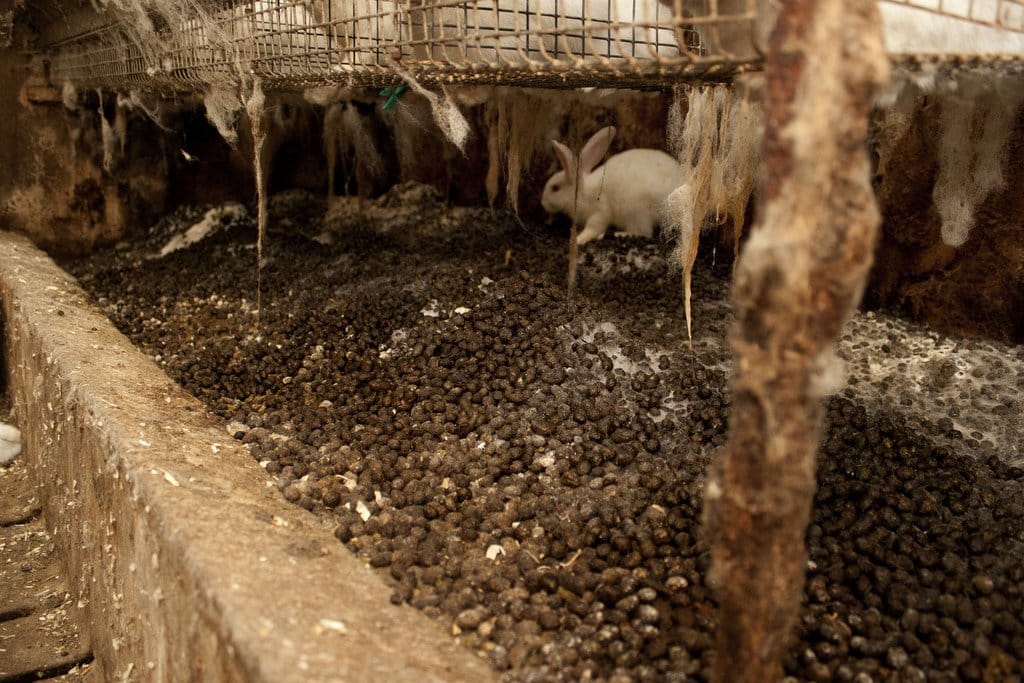
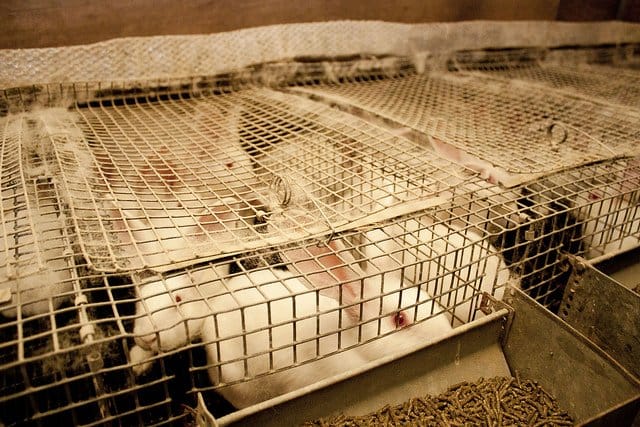
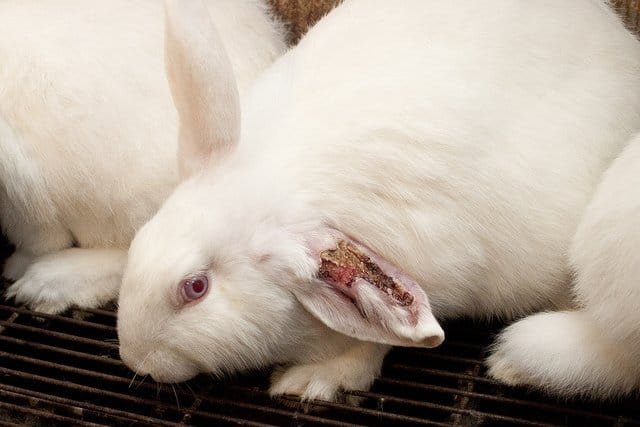
The investigation team found many diseases and behavioral issues among meat rabbits. Life for a meat rabbit is very different from that of a wild rabbit, as none of their natural needs are met. This leads to significant frustration and boredom, which can result in self-harmful behavior. Diseases are common because of the poor living conditions. An average mega farm has 900 does and several thousand meat rabbits. When a rabbit gets sick, it’s impossible to provide enough care and attention to each individual animal. As a result, the investigation team discovered sick, injured, or dead rabbits in the cages at every location visited.
Stereotypical behavior
Rabbits are usually kept in wire cages. These cages are often too low and small, forcing the animals to live in close quarters. This setup prevents rabbits from engaging in their natural behaviors like hopping, standing on their hind legs, running, lying down, and gnawing. As a result, they experience boredom, frustration, and stress, which can lead to stereotypical behavior. Stereotypical behavior involves repeating the same body movements or actions. Common examples include gnawing on wire mesh, biting each other's ears, eating hair, or shaking their heads side to side.
Rabbits are naturally social animals, but only meat rabbits are typically housed in groups. Does, or mother rabbits, are usually kept alone or with their young, never with other adults. This loneliness can also trigger stereotypical behavior. In many stables, the investigation team found some cage enrichment, like a small block of wood. However, rabbits have also been observed in cages where they chew on the wire or get injured by other rabbits.
Leg disorders
Rabbits kept in wire cages frequently suffer from foot injuries. Common issues include bald patches, calluses, and wounds. Meat rabbits experience these problems less often because they are slaughtered after three months, and these conditions typically develop later. Sometimes, farmers place plastic mats in the does' cages, but research shows that this measure does not effectively prevent foot pad disease.
Digestive disorders
Many rabbits experience digestive problems from viral infections or intestinal inflammation. One reason for this is their diet, which is designed for rapid growth. Intestinal inflammation often occurs in young meat rabbits after weaning and in does. A common issue is diarrhea, which may signal intestinal inflammation but can also result from stress.
Respiratory diseases
Many of the barns investigated were dusty and filled with cobwebs. Poor air quality makes it hard for rabbits to breathe and raises their risk of infections. This issue is particularly serious for does and older meat rabbits, contributing significantly to their mortality.
Mortality
The mortality rate in rabbit farming is alarmingly high. The industry often uses euphemisms like "failure" and "replacement" to downplay this issue. One in five young rabbits dies before reaching the slaughter age of three months. Twelve percent of these youngsters die before weaning, often because rabbit owners break their necks to avoid higher costs later on.
In the industry, does are immediately inseminated—made pregnant—after giving birth to their litter and while still nursing. This practice leaves them weak, leading to deaths from disease, low-energy feed, or euthanasia due to insufficient offspring production.