Chapter 2 / 4
The life of a rabbit in the industry
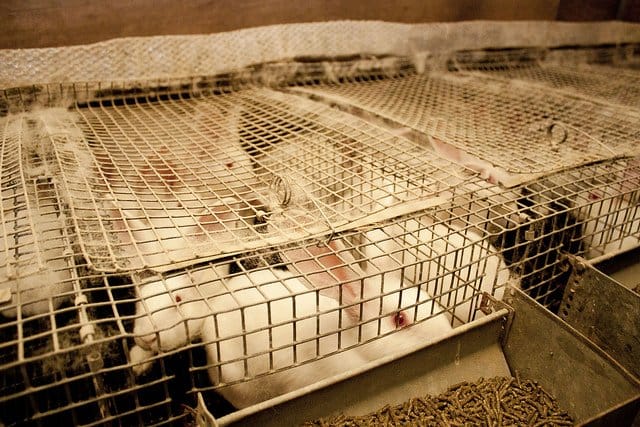
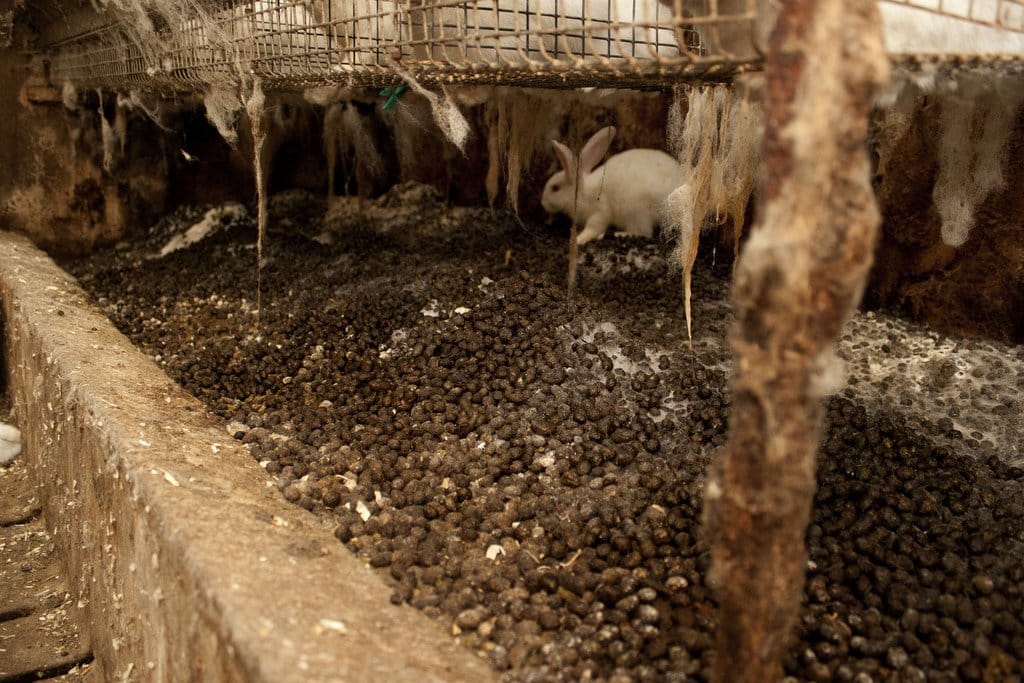
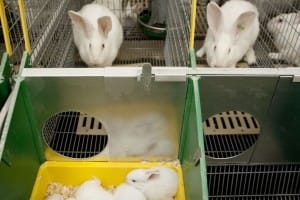
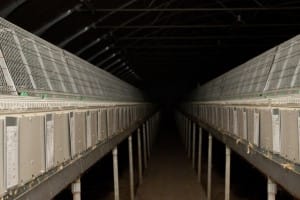
The lives of meat rabbits are very different from those of pet rabbits and wild rabbits. In the Dutch meat industry, all 300,000 rabbits are kept in wire cages. They never get to eat fresh grass or dig burrows. The investigation team observed rabbits grazing on the fur of a dead rabbit, treating it as if it were grass. Living rabbits also tried to burrow into the bodies of dead animals. Newborn rabbits often lose their siblings quickly. Rabbit farmers kill the smallest babies, known as day-old rabbits, by breaking their necks. This practice ensures that all litters are the same size.
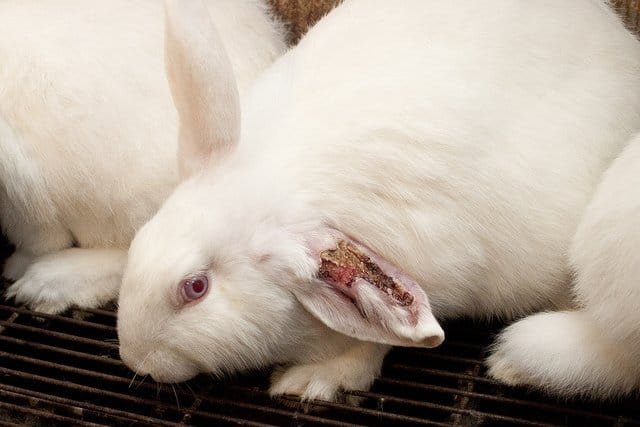
Rabbits stay with their mothers for about a month. After that, they are taken away and fattened. A rabbit in the meat industry has a one in five chance of dying early from disease, wounds, or infections, but they are always transported to the slaughterhouse after 11 weeks. A mother rabbit, called a doe, lives alone in a wire cage with her young. Doe rabbits often suffer from illness and exhibit stereotypical behavior because they live much longer in these cages. A doe is usually euthanized after a year, or sooner if she doesn’t have enough young or becomes ill. If a doe survives a year in the industry, she will have 7 to 8 litters, averaging 10 babies each.
Shortly after giving birth, a doe is impregnated again. She is separated from her young for one or two days by closing the nest box flap, which is intended to make her "willing" to mate. This separation causes stress for both the mother and her babies. Most doe rabbits are impregnated through artificial insemination. They are often placed head-down in a piece of PVC tubing and inseminated with an insemination straw or gun. Rabbits experience spontaneous ovulation; an egg is released only when they mate with a ram. To stimulate ovulation during insemination, they are given an injection. The does remain pregnant for about one month.
Transport
When rabbits reach slaughter age, farmers place them in crates and load them onto trucks for transport to the slaughterhouse. Since there are no rabbit slaughterhouses in the Netherlands, most rabbits are sent to Belgium or France. This results in long transport times, especially as the truck must stop at several breeding farms to fill up. The transportation process is stressful for the rabbits and can lead to injuries. The industry acknowledges that there is limited knowledge about the best practices for transporting rabbits.
Slaughter
When the rabbits arrive at the slaughterhouse, they must be unloaded again, which adds to their stress. After unloading, the industry electrocutes the rabbits and hangs them by their heels using hooks. Next, workers stab the rabbits in the neck to bleed them out.