Chapter 1 / 4
The natural life of a rabbit
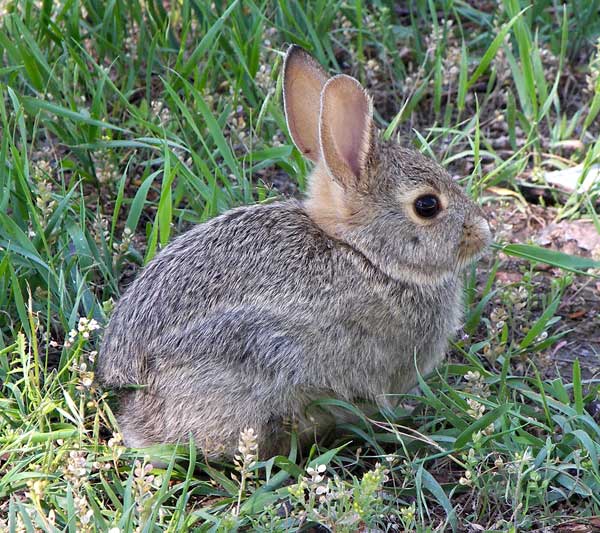
One of the most common mammals in the Netherlands is the rabbit. These animals are not only a joy to watch but also play a vital role in the Dutch landscape. Without rabbits, the dunes and the Veluwe would look very different. As strict vegetarians, rabbits are the smallest grazers in the Netherlands. They eat a wide variety of plant foods, including grasses, herbs, tubers, tree bark, and crops. This grazing helps keep vegetation short, allowing many other animals and plants, including protected species, to thrive. Abandoned rabbit burrows also provide popular nesting sites for various birds.
Rabbits, ruminants? Did you know that rabbits have the habit of eating their own droppings? This is because digesting grasses is hard on the stomach. A cow has four stomachs for it. Rabbits cleverly deal with this by simply eating everything twice...
In the wild, rabbits live in groups, making them social animals. These groups typically have more females, known as doers, than males, called rattles. Rabbits also maintain a strict hierarchy. Alpha males may even bite baby rabbits to death if they are uncertain whether the young ones are their own offspring.
Communication, living groups and dissemination
Rabbits are quiet animals. They warn each other of danger by stamping their hind legs on the ground. The only sound they make is a squeal, which happens when they feel scared or injured. When rabbits run, their tails flip up, revealing a white underside. This helps other rabbits in the group keep track of each other, especially in low light.
In a rabbit's territory, the burrow serves as the central point. Rabbits usually stay close to their burrow; the farther they wander, the more timid they become. They dig impressive tunnels that can reach up to 3 meters deep and 40 meters long, complete with nurseries.
Rabbits reproduce quickly, which is why there are so many proverbs about them. They become fertile at a young age and can start reproducing after just four months. Although they remain fertile throughout the year, most young rabbits are born between February and August. A female rabbit, or doe, can have three to seven litters each year. Interestingly, she terminates about 60% of her pregnancies. After giving birth, she is mated again right away. Factors like her status and food availability also affect her ability to carry a pregnancy to term.
After a pregnancy lasting 28 to 32 days, a mother rabbit gives birth to three to twelve young. The nursery is located at the end of long tunnels and is lined with soft materials like moss and hair that the mother pulls from her own abdomen. She spends only five minutes a day nursing her young. To protect them from other rabbits and predators, she closes the entrance to the burrow each time she leaves.
Wild rabbits can live up to nine years, but this is rare. They are popular prey for birds, foxes, and humans. Since 1990, the rabbit population in the Netherlands has been struggling. In 1952, bacteriologist P. A. Delille introduced the rabbit disease myxomatosis in Europe to eliminate rabbits from his backyard. This disease still affects the rabbit population across Europe today. In other regions, this bacterium was deliberately spread to control rabbit plagues. Another disease used for this purpose is Viral Hemorrhagic Syndrome (VHS).
These two diseases have drastically reduced the rabbit population in the Netherlands. In 2007, the Mammal Society recommended to the Minister of Agriculture, Nature and Food Quality that rabbits be listed as a protected species. However, this recommendation was not acted upon because the population was showing slight increases, and hunting animals on the red list is prohibited.