Chapter 3 / 4
An unhealthy industry
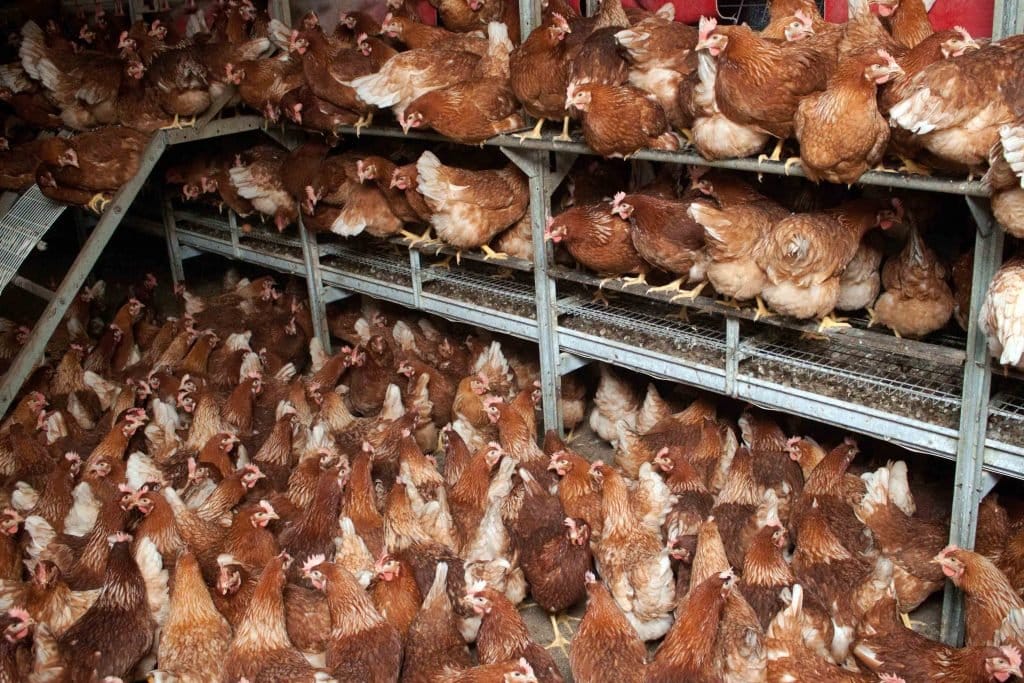
Broilers face many diseases and behavioral issues. These problems stem from their rapid growth and the unnatural conditions in the barn. The high stocking density causes significant stress for the chickens, making them more vulnerable to pathogens.
Footpad lesions
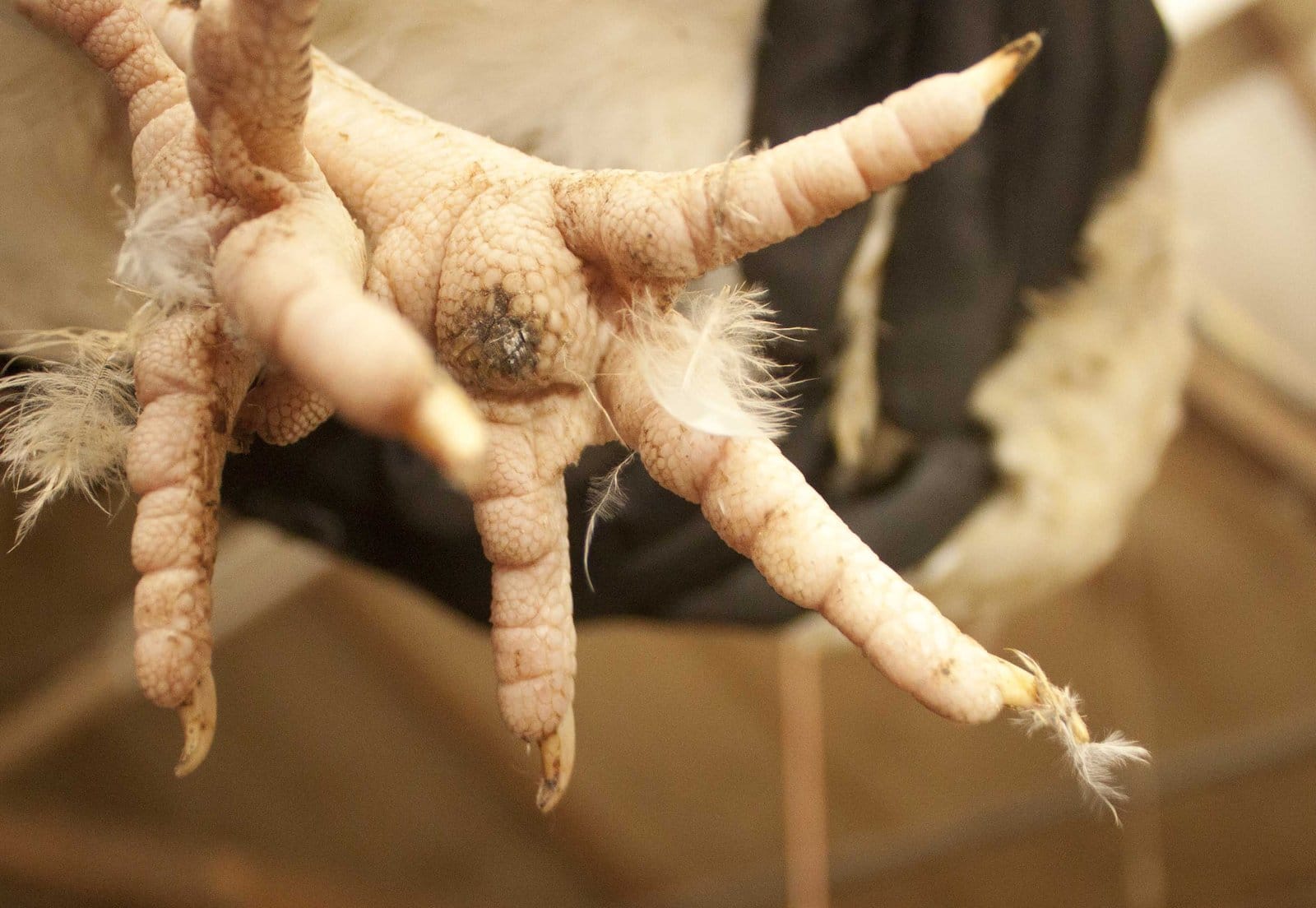
 The most common issue for broilers is footpad lesions, which affect the skin on the soles of their feet. It starts with skin discoloration and tissue growth. This can lead to swelling, damage to deeper skin layers, and inflammation. Up to two out of three chickens experience mild to severe footpad lesions. These infections are painful, causing broilers to move around less in the barn and eat less due to the discomfort. Chickens often live in their own feces, and the ammonia in the waste can harm the skin of their claws. If the lesions burst, they can become infected. The litter is mainly responsible for this condition; when it is damp, the risk of footpad lesions increases. The number of birds per square meter also matters; fewer chickens in a barn allow the litter to dry out. Interestingly, the rate of footpad lesions is much higher in organic barns compared to conventional barns.
Burning heels (heel dermatitis) and chest blisters
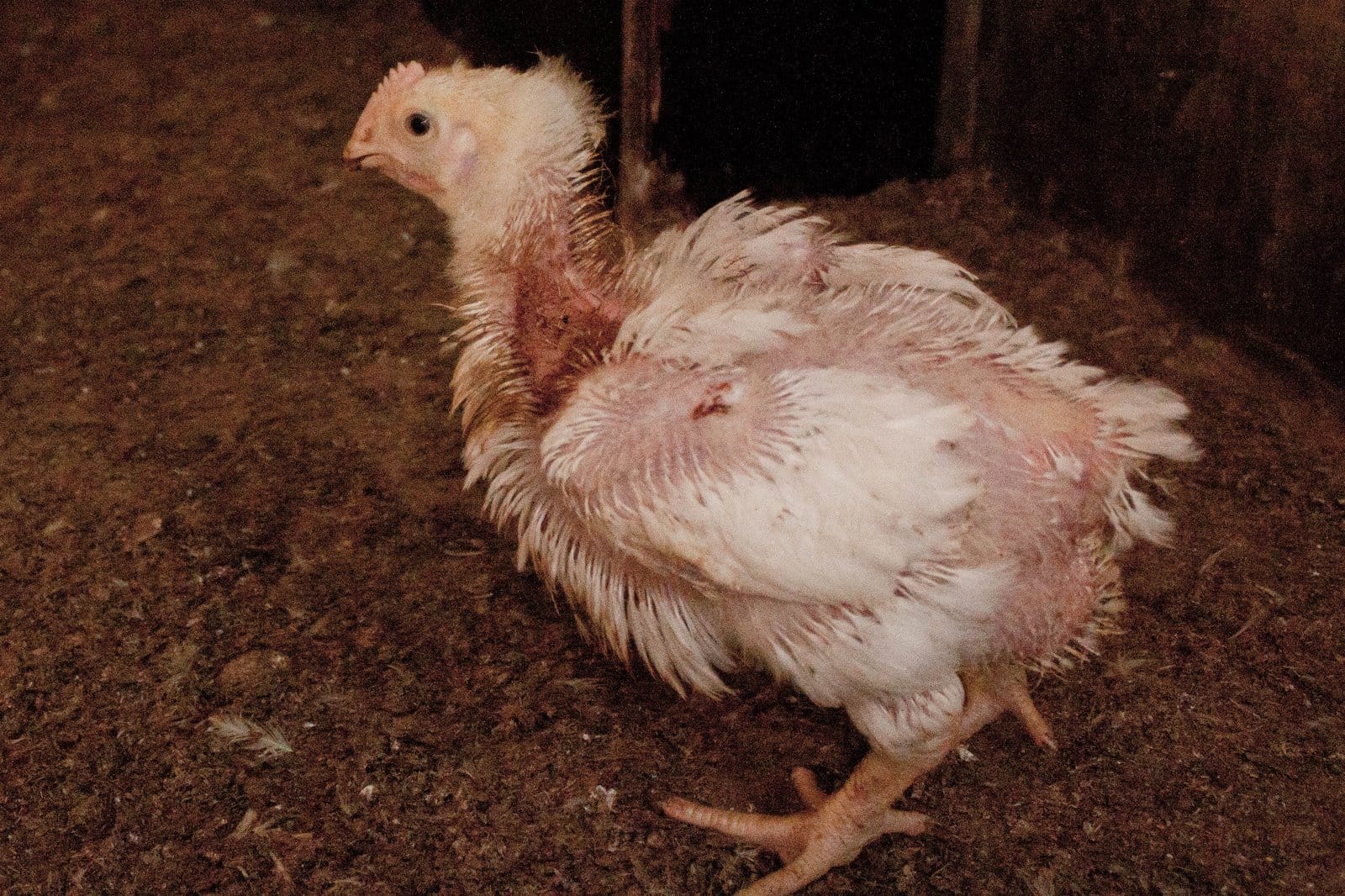
As chicks grow, they find it harder to move. They often lie on their hocks and chest in the wet litter, which leads to irritation on their hocks, resulting in footpad blisters. These blisters are common, affecting more than 10% of chicks. Chicks experience rapid growth in their pectoral muscles, causing them to tilt forward. This tilt leads to irritation on their chest, known as breast blisters. Both footpad blisters and breast blisters are symptoms of the same disease as footpad lesions, and they frequently occur together.
Irritated eyes and airways
The chicks are packed closely together in a barn. Their manure isn't removed, so they end up walking on each other's droppings. This leads to high ammonia levels in the barn, causing the chicks to suffer from irritated eyes and respiratory issues. Ongehoord's investigation often captures footage of chicks struggling to breathe.
Twisted neck, stargazers and lameness
Some chicks with brain inflammation may raise their heads, a condition known as stargazer, or lower their heads to the side, referred to as rotary neck. A bacterial infection can also lead to lameness in chicks. In response, the industry typically administers large doses of antibiotics to prevent and treat these diseases.
Paralysis and reduced mobility
As many as 90% of broiler chickens show abnormal movements by the time they reach slaughter age. Several factors contribute to this issue. In addition to dermatitis and bacterial infections, bone abnormalities can also restrict the movement of broilers. The skeleton of a broiler can't keep up with its rapid muscle growth, leading to bone fractures and deformities. Another painful condition is spondylolisthesis, where a vertebra becomes dislocated. When a broiler becomes less mobile, the risk of blisters on the soles of its feet, hocks, and breasts increases. This reduced mobility prevents broilers from engaging in their natural behaviors. For instance, dust bathing is crucial for the well-being of chickens. In conventional farming, dust bathing is nearly impossible because the manure layer where the chickens rest isn't suitable for it. Even on farms with better litter, older chickens often still avoid dust bathing due to their limited mobility.