Chapter 1 / 4
Wild Chickens
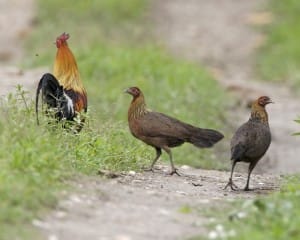 The modern domesticated chicken has been shaped by thousands of years of breeding. Its wild relative, the Junglefowl (Gallus gallus), originates from Asia. Although there are notable physiological differences, broiler chickens display behaviors that resemble those of the Junglefowl.
Gaming behavior
Chickens naturally live in groups. When a mother hen is ready to lay her eggs, she leaves the group. She stays on her nest for about three weeks, only leaving briefly each day to eat and drink. While the embryos are developing, they can produce calls that encourage their mother to return to the nest. If an embryo gets too cold, it communicates with its mother. When the hen moves the egg closer to her body, the embryo can call out to signal that it is now warm. Because a chick hears its mother’s call while still in the egg, it recognizes her voice as soon as it hatches.
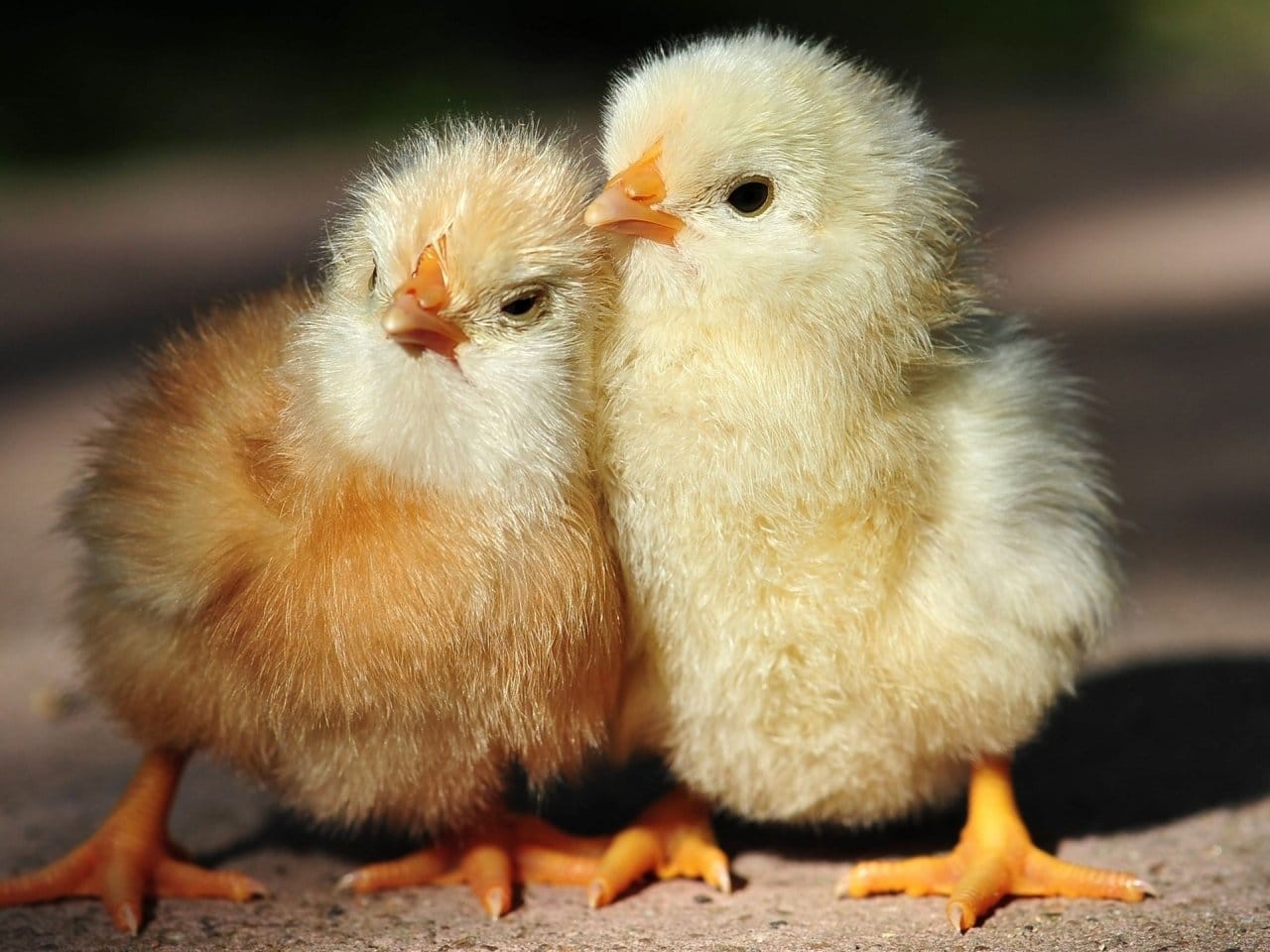
Once hatched, the chick starts to explore its surroundings and pecks at round objects. The hen teaches her young what to eat by calling and pecking at the ground. If the chicks peck at things that aren't edible, their mother corrects them by demonstrating the right behavior more intensively.
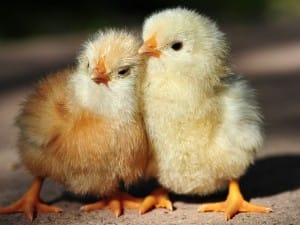
For the first four days, the chicks stay close to their mother for warmth and protection. When it rains, they shelter under her wings. The hen teaches them to take dust baths and roost. She also shows them how to react to danger, using over 20 different sounds to indicate threats from the air or the ground. The chicks learn from each other through play, which helps them understand how to respond to aggression.
As the chicks grow, they start to venture further from their mother. By six weeks old, they can walk up to 20 meters away. At this age, they also begin to establish a hierarchy, showing dominance through behaviors like hopping, threatening, jumping, kicking, and aggressive pecking. After eight to ten weeks, the chicks forage for food on their own but still stay close to their mother and siblings. By 18 weeks, they join the rest of the flock.
Friendship ties
Chickens have a complex social structure. A flock typically includes 4 to 30 individuals, featuring a dominant rooster along with subordinate hens and roosters. The flock roosts together in the same tree. The dominant rooster protects his territory but allows subordinate roosters to stay nearby. Once these roosters reach young adulthood, he chases them to the edges of his territory.
Hens have their own pecking order, which tends to be more stable than that of roosters. Chickens recognize each other's heads to determine their hierarchical positions. They can individually identify up to 200 other chickens. Roosters also communicate their rank by crowing. Additionally, chickens watch the behavior of flock members to assess the position of unfamiliar chickens.
Beyond dominance relationships, hens, in particular, form friendships. These friendships help reduce stress and strengthen social bonds within the flock.
Under natural conditions, chickens follow a predictable behavior pattern. In the morning, they search for food. Around noon, they enjoy a dust bath. In the afternoon, they groom their feathers. After foraging again, the chickens roost together in the evening. Overall, chickens spend most of the day looking for food and exploring their environment.
Intelligent
Investigations show that chickens are much smarter than most people think. For instance, newborn chicks can count up to 10. They can tell the difference between 10 holes and the one that has food. Chickens also have a sense of time. Researchers taught them to peck at a touchscreen for 6 to 7.5 minutes to earn more food than if they pecked right away.
One particularly impressive skill is their understanding of object permanence. This means they realize that an object still exists even when it’s out of sight. Human babies only develop this understanding after 6 to 7 months. In experiments, young chicks remembered an object they saw through a small window and could find it by navigating around obstacles.