Chapter 2 / 4
The life of a chicken in the industry
The meat you find in supermarkets labeled as chicken is actually broiler chicken. After just six weeks, or a maximum of 12 weeks for organic chickens, these chicks are sent to the slaughterhouse. During this brief period, the birds grow to a weight of 2 to 3 kilograms. This rapid growth is a result of extensive breeding for speed. The broiler sector aims to produce as much chicken meat as possible while using minimal feed and time, which helps maximize profits. To reach these goals, the broiler sector includes a network of highly specialized companies.
Breeding company
The breeding company crosses different chicken breeds to create specific genetic traits. Only three companies worldwide focus on broiler chicken genetics. The chickens on these breeding farms are known as great-grandparent chickens because they are the ancestors of the broiler chickens. The breeding company aims to produce male chickens that grow quickly and develop a lot of muscle, which means more meat. The hens also need to be "meaty," but their primary role is to lay many eggs so they can hatch a large number of broiler chickens.
For breeding, the males are kept alone in cages, while the females are housed in small groups or sometimes alone in cages. This setup prevents the chickens from displaying natural behaviors. The males, in particular, experience numerous physical problems due to their rapid growth. The chicks that hatch in the hatchery are referred to as grandparent chickens.
Rearers
At the rearer, grandparent chickens lay eggs that produce parent chickens. Parent chickens are the direct ancestors of broiler chickens. The rearer gets grandparent chickens from the breeding farm and crossbreeds them to supply parent chickens to the parent stockholder. Both the rearer and the parent stockholder aim to hatch millions of broiler chickens. The breeding farm provides small numbers of chickens with the right genetic traits, while rearers ensure these chickens produce a larger number of parent chickens. As a result, some companies combine rearing and propagation.
Parent stock owners or breeding companies
Breeder chicken farmers cross fast-growing males with prolific egg-laying hens to produce eggs that hatch into broiler chickens. However, breeder chickens often become too fat and heavy to reproduce. To manage this, breeder chicken farmers restrict their feed, especially during the breeding season. As a result, broiler chickens experience hunger and thirst.
In organic farming, a crossbreed of slower-growing hens, known as dwarf breeders, is used alongside regular males. The feed for these males is also restricted. Because of these unnatural conditions, males do not show typical courtship behavior. Consequently, the hens lose interest in the males. This situation leads to rough mating behavior from the males, partly due to their weight. The hens endure chronic stress, anxiety, and injuries.
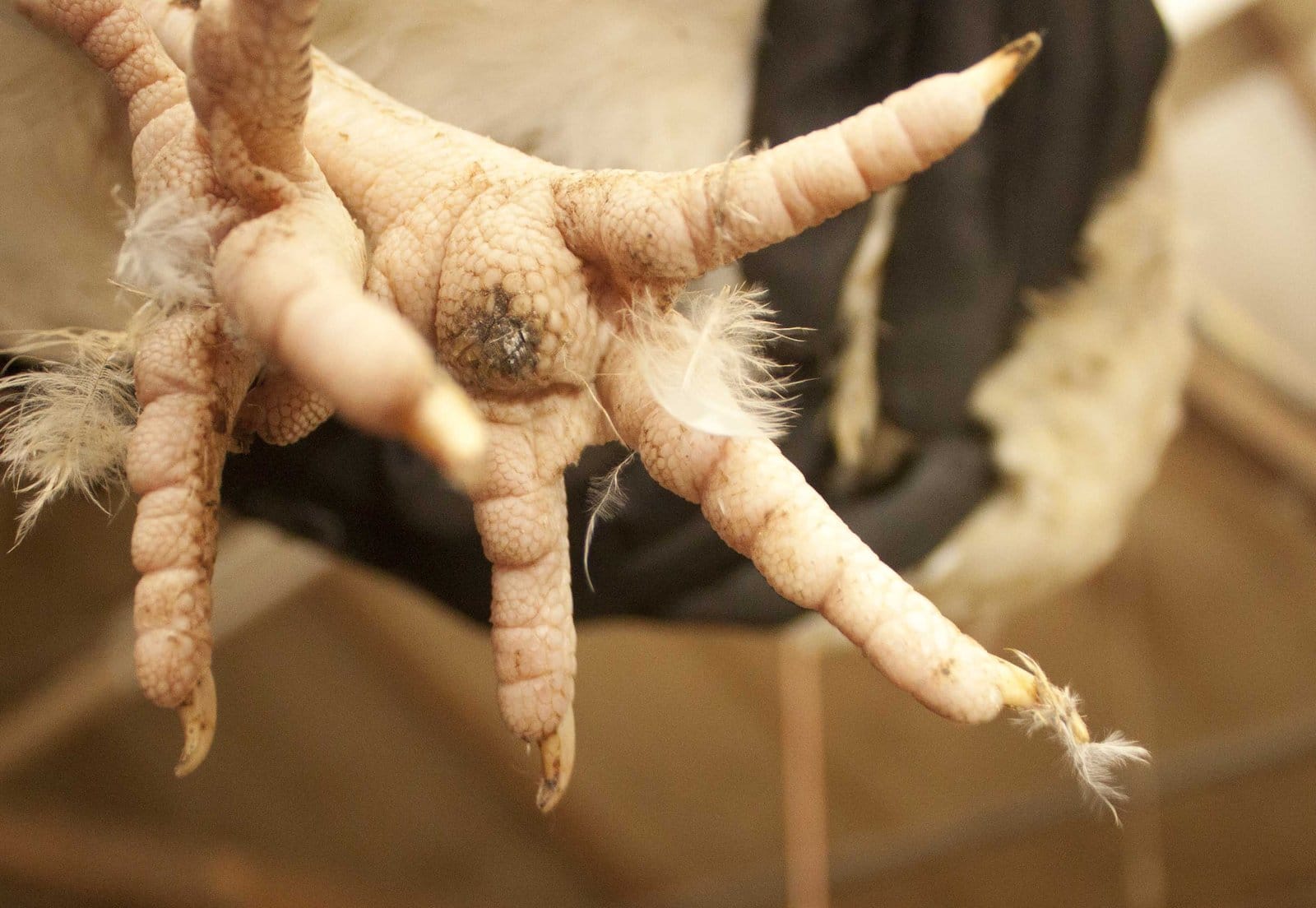
To prevent injuries, the industry burns off the spurs and hind toes of older males while they are still chicks. This treatment causes significant stress and pain.
Hatchery
At the hatchery, broiler chicks hatch from their eggs. The eggs are incubated in a brooder for 21.5 days. After this period, the brooders are emptied all at once. During incubation, there is no food or water available in the brooder. As a result, chicks that hatch early spend days in the dark without food or water. If a chick hasn't hatched after 21 days, the industry discards it, shell and all. In patio barns, the hatchery is combined with the broiler farm, so chicks hatch in the same barn where they are also fattened.
Broiler farmers
At broiler farms, farmers aim to bring chicks to slaughter weight as quickly as possible. In just 40 days, these birds grow to weigh 2.2 kilos. In the organic industry, broiler chickens take 80 days to reach a weight of 2.6 kilograms. Unfortunately, about one in 25 animals dies before reaching this age.
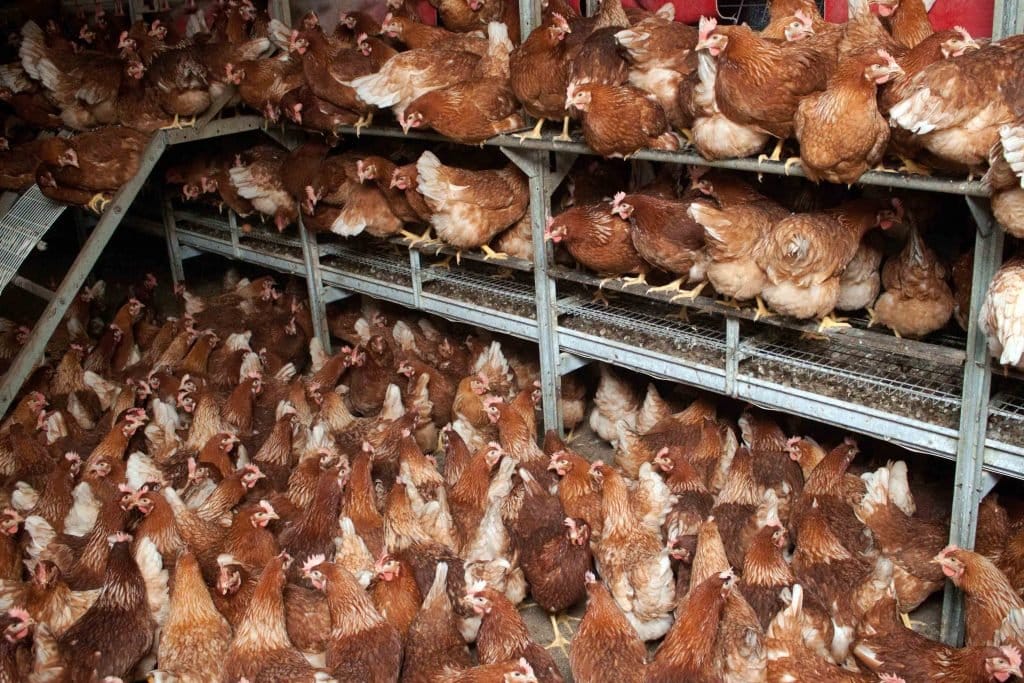
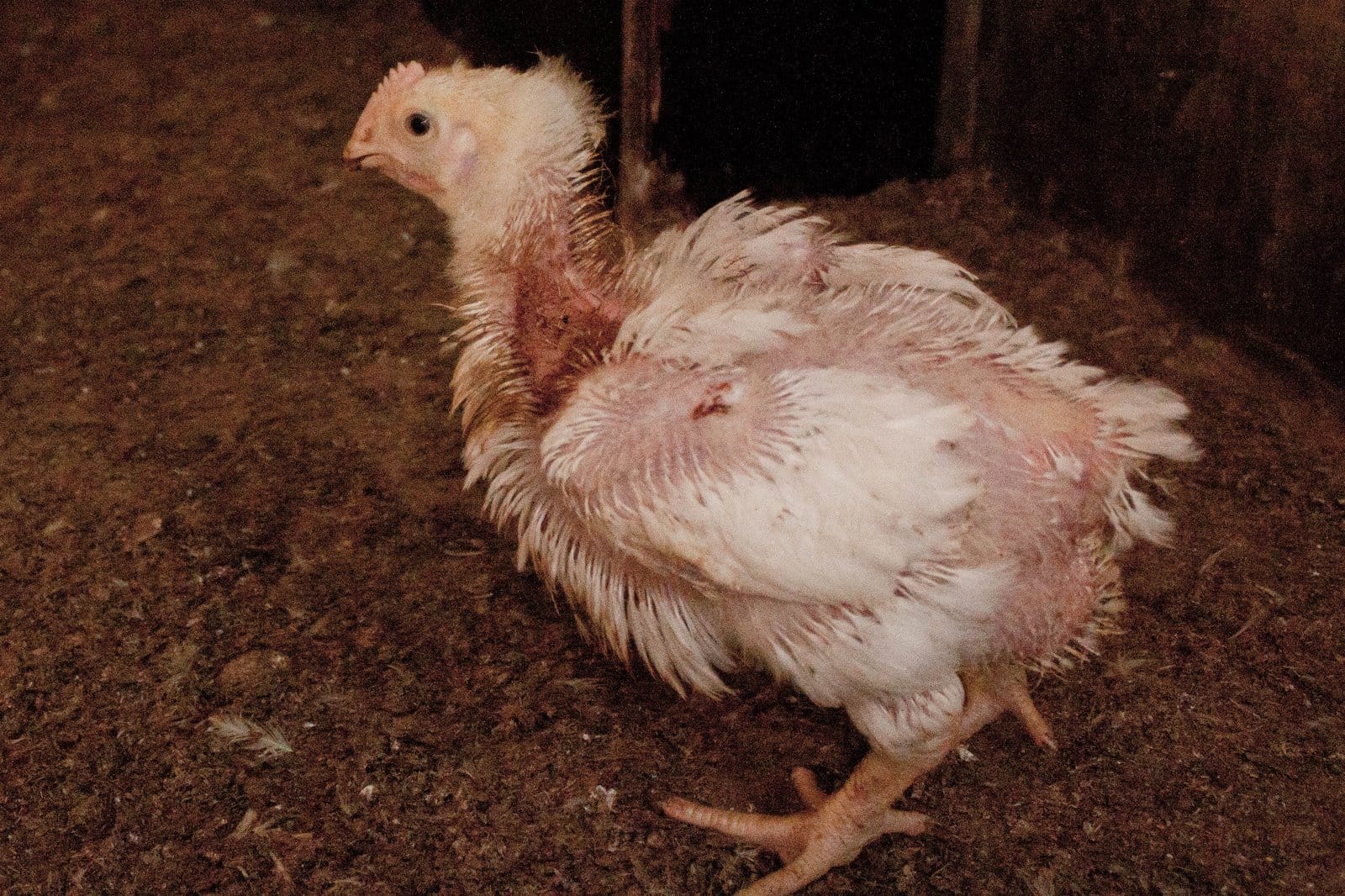
Inside large barns, 20 birds are kept per square meter, with thousands of chicks living in each space. The birds often end up eating their own feces, and the barns are dusty with a strong smell of ammonia. Dead animals frequently remain in the barn, decomposing among the living. Without windows, the chickens have no way of knowing if it's day or night. Traditionally, the light in the barn was kept on constantly. Nowadays, farmers simulate multiple "nights" within a 24-hour period, which helps improve meat yield. However, because broiler chickens are bred to grow quickly on minimal feed, serious welfare issues arise. You can learn more about these diseases and welfare problems in the article "A Sick Industry."
Once the chicks reach their slaughter weight, the barn is emptied. This process occurs in the dark to keep the chickens calmer. Catchers usually grab several birds by their legs in each hand and lift them upside down. The chicks are packed tightly in crates and loaded onto trucks. During this handling, about 8% of the chicks suffer broken or bruised wings, breasts, or legs. It's no surprise that many chicks arrive at the slaughterhouse paralyzed with fear.
The slaughterhouse
When chicks arrive at the slaughterhouse, they are stunned. The most controversial method of stunning is the water bath method. In this approach, a mild voltage is applied to a bath of water, and the chickens are dipped headfirst into it. Although this method was banned as of January 1, 2012, some slaughterhouses continued to use it into early 2013. Most slaughterhouses now stun chickens by applying an electric shock directly to their heads or by using CO₂. After stunning, workers hang the chicks upside down by their legs from a kind of cable car. Then, they mechanically cut open the young animals' throats, causing them to bleed to death.