Chapter 3 / 3
Belgian rabbit industry
Besides Konzo, there are around fourteen other professional rabbit breeders in Belgium, mainly located in Flanders. With Belgian and Flemish laws regarding park housing, the industry asserts that it is a leader in animal welfare. Park cages have been required for meat rabbits (aged 5 weeks to slaughter) since 2016, and starting in 2025, they will also be required for female rabbits. Through subsidy programs, the industry can transfer a substantial portion of the costs associated with transitioning to "animal-friendly park housing" to the taxpayer. [16]
However, professional literature indicates that park cages do not ensure a good life for rabbits. The filmed abuses at Konzo are not isolated incidents.
Diseases and mortality
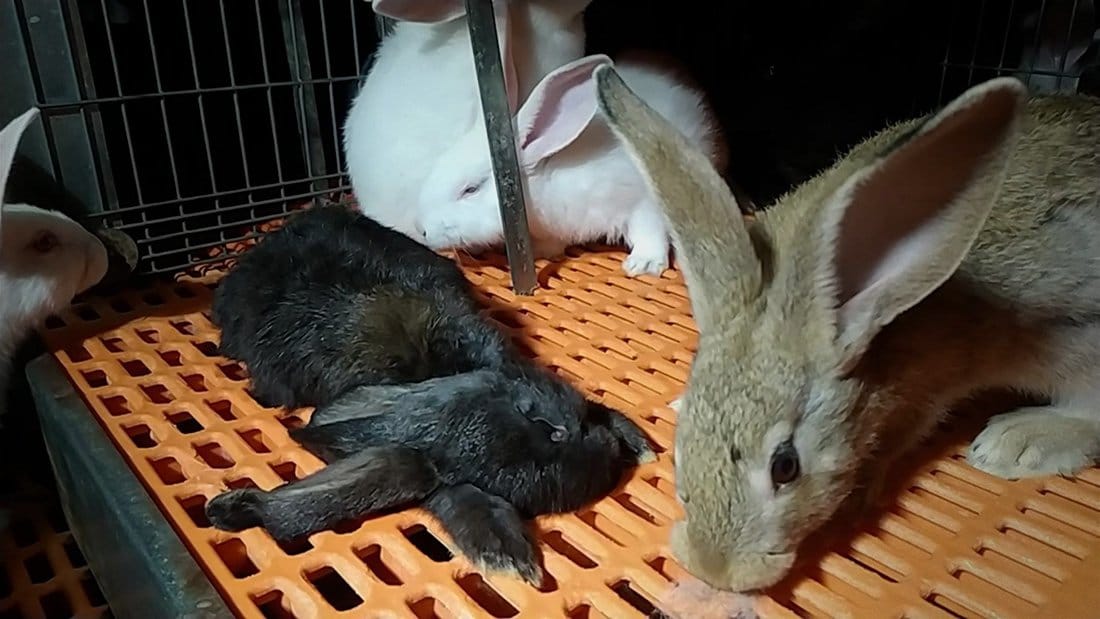
The more animal-friendly plastic cage floors in parks have, in practice, introduced new hygiene issues. The plastic floors become contaminated more rapidly than the old wire floors because manure does not drain properly through the holes. Additionally, plastic grids are prone to damage from rabbits gnawing on them. Pathogens build up in these damaged areas, making it challenging to thoroughly clean and disinfect the cages. Due to inadequate hygiene in the park cages, serious rabbit diseases such as coccidiosis and potbelly disease spread more rapidly. [17]
Although every breeding farm has a veterinarian and the rabbits are not at risk from predators, hunters, agricultural machinery, food shortages, or adverse weather conditions, mortality rates in the Belgian rabbit sector remain alarmingly high, ranging from 20 to 25% of animals on breeding farms. The transition to park housing has not resulted in any improvement in this area. [18]
Aggression in mothers in groups
Currently, female rabbits are housed individually. Starting in 2025, the law will require keeping female rabbits in group enclosures. However, scientists are already warning about the risks associated with these group enclosures for female rabbits.
Although rabbits require social interaction with their peers, it is known that female rabbits in group enclosures can exhibit significant aggression, particularly during parturition and in the initial weeks following birth. This aggression arises from the limited space in an enclosure, which hinders the animals' ability to avoid one another. Fights can occur, resulting in injuries or even fatalities among the rabbits. [19] [20]
The ILVO agricultural institute explored options for semi-group housing, where mother rabbits give birth in individual farrowing cages and only move to group housing a few weeks later. ILVO notes that aggression issues remain unresolved with semi-group housing. In every experimental setup, the researchers still observed numerous injuries, both in mother rabbits and in their young. [21]
Conclusion: stop the rabbit industry
Contrary to the claims made by VLAM, the rabbit industry, and supermarkets, rabbits struggle to show natural behavior in park cages. The plastic floors stop them from digging burrows. Each meat rabbit has just 800 cm² of space in a park cage, which is about the size of one and a half A4 sheets of paper. Inside the cage, there’s only a short piece of PVC pipe for 30 rabbits, a far cry from the long underground tunnels that wild rabbits use for shelter. The artificial repeated insemination of mother rabbits is anything but "natural."
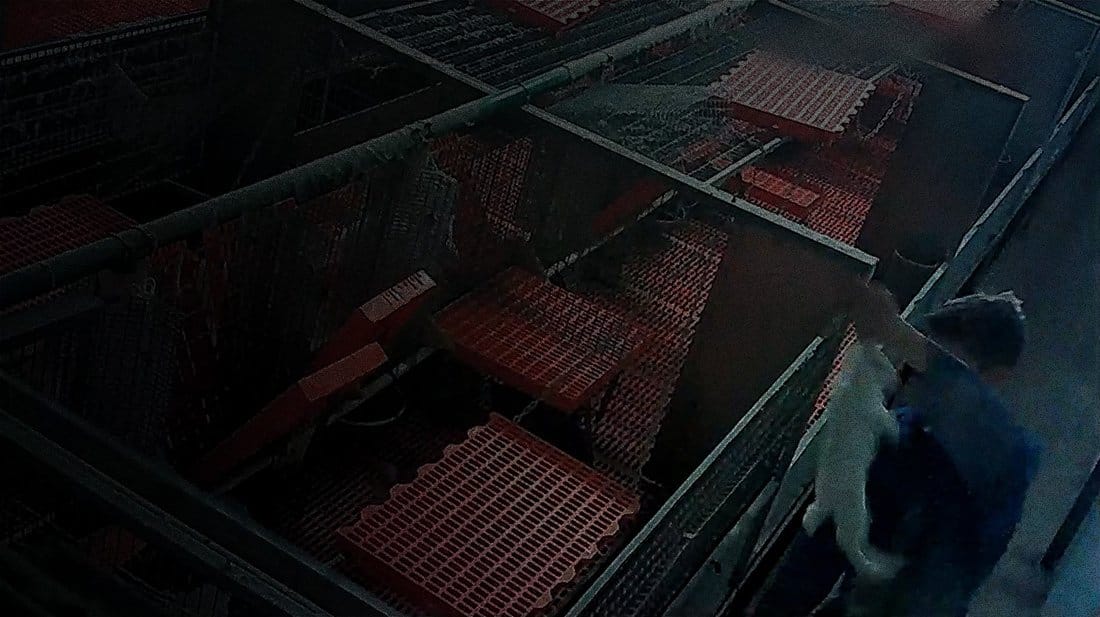
When it comes time for slaughter, capturing, loading, and transporting large groups of rabbits cannot be done humanely. Workers, often under pressure, have no choice but to forcibly pull the animals from their cages. Grabbing the rabbits by their sensitive body parts and throwing them leads to injuries and fractures.
Ongehoord's investigation shows that modern cages and stricter welfare regulations cannot eliminate animal suffering in the rabbit farming industry. Restructuring the rabbit sector is the only way to prevent this suffering.
What can you do?
Share this investigation with people around you.