
Chapter 1 / 3
Natural life
Wild rabbits like sandy, hilly areas filled with shrubs and bushes. These environments provide them with the perfect spots to dig burrows and find food. A family of rabbits lives together in a burrow, which is a complex system of underground tunnels and chambers where they nest and sleep. A burrow can reach depths of up to three meters, and the tunnels can stretch over 40 meters in total. Inside their burrows, rabbits feel safe from predators. Their territory around the burrow can range from 0.25 to 6 hectares.
Rabbits spend their days in burrows. At dusk and during the night, they come out to search for food. Their diet includes grasses, herbs, young shrub and tree shoots, and field crops. In winter, they eat bark instead.
A rabbit group typically includes two to ten adults, mostly females, along with their young. These groups have a clear hierarchy. Dominant rabbits get more food, better shelters, and preferred nesting sites. As the rabbits grow, they gradually establish this hierarchy, which helps reduce excessive aggression among them.
Young male rabbits and about half of the female rabbits leave their group before they reach adulthood. They then form new, stable groups. When a new group forms, they establish a hierarchy, which involves some fighting. However, after this initial aggression, there is usually little conflict. If a group becomes too large, aggression may return.
Wild rabbits breed from early February to late July, with the busiest months being April and May. A female rabbit can have four to six litters each year, averaging five young per litter. Pregnant mothers dig nursery tubes that are 1 to 2 meters long, leading to a separate nest chamber. Inside this chamber, they build a nest using grass, moss, and their own hair. To keep the young safe from the cold and predators, the mother plugs the entrance to the nursery tube with soil. She also marks the entrance with urine to discourage other rabbits from entering the nest chamber.
For the first 2 to 3 weeks after giving birth, the mother rabbit visits the nest once a day to nurse her young. If a baby rabbit crawls out of the nest, the mother does not carry it back. This isn't an issue for wild rabbits; if a baby rabbit crawls out, it will naturally roll back into the nest due to the downward slope of the nursery pipe. After each visit, the mother rabbit plugs the entrance with soil.
A rabbit can live as long as 9 years in the wild, but the average lifespan is only 2 years. As prey, rabbits face many natural predators, such as stoats, weasels, polecats, foxes, owls, hawks, and falcons. Other significant threats to wild rabbits include dogs, hunting, traffic, lawn mowers, and diseases.
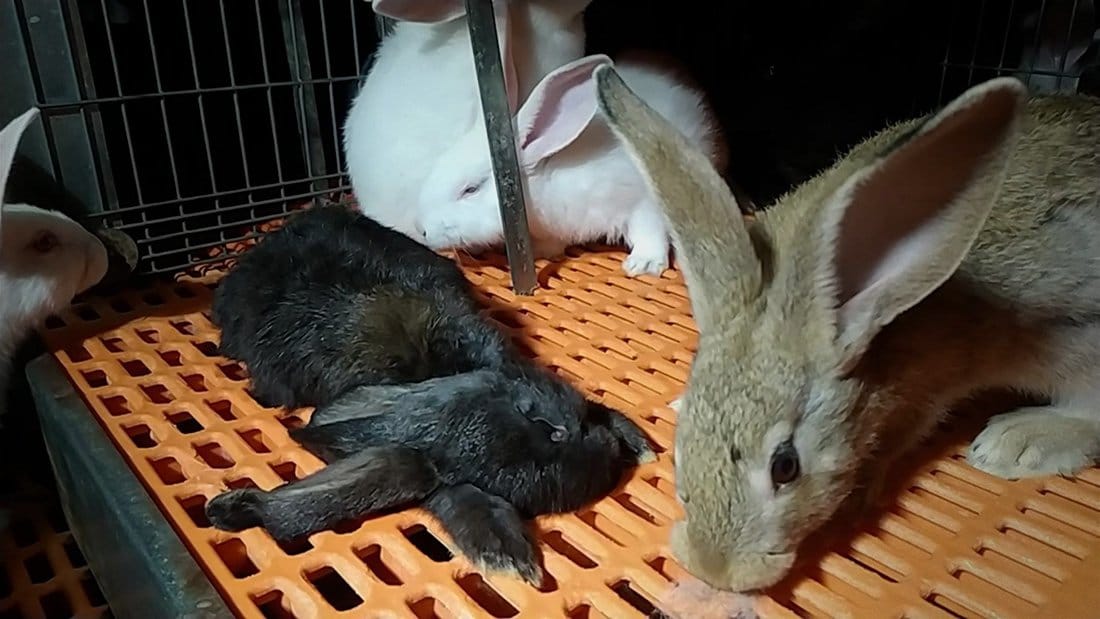
Rabbits can live up to twelve years in captivity. However, in the meat industry, they are slaughtered at just 10 weeks old.
Sources
- 1
Rabbit - Natuurpunt
- 2
[Rabbit](Waarnemingen.be waarnemingen.be/species/409) (waarnemingen.be)
- 3
Welfare issues in commercial rabbit farming. RDA (1097)
- 4
Discomfort in rabbits, turkeys, ducks, sheep and goats. Wageningen UR (2009)