Chapter 3 / 3
Research findings
Violence during loading and unloading is unavoidable
Why do livestock transporters exert so much force when herding cattle? To understand this, we need to consider the animals' natural needs and instincts. From the literature review (Natural Behavior of Cattle), we know that cattle are herd and prey animals. Transport is an unnatural and stressful situation for them, which they instinctively seek to avoid. [49] [50]
Separated from their herd, the animals face unfamiliar situations, including the truck, strange drivers, and loud noises like the clatter of metal truck doors and shouting from people. They may also encounter unfamiliar animals in the loading area or inside the truck, which they instinctively want to avoid. Additionally, cattle naturally seek an escape route, but that option is unavailable in a truck.
When the truck arrives at a collection point or slaughterhouse, the doors open, and the cattle face an unfamiliar environment. Their keen sense of smell picks up the scents of stressed animals nearby. Strangers approach and block their escape routes. The cattle must exit the truck using a demolition loading ramp. Because of their poor depth perception, they struggle to tell the slope of the ramp from a cliff. It can take a long time before the first cattle dares to leave the truck.
Cattle transported through assembly points face stressful conditions multiple times. These animals have strong memories and recall every negative experience. At each stop, their stress increases, making them more reluctant to enter and exit trucks. Even young calves have well-developed memories. In tests where a calf received a shock from a stun gun, the calf could recognize the person who administered the shock for several days afterward.
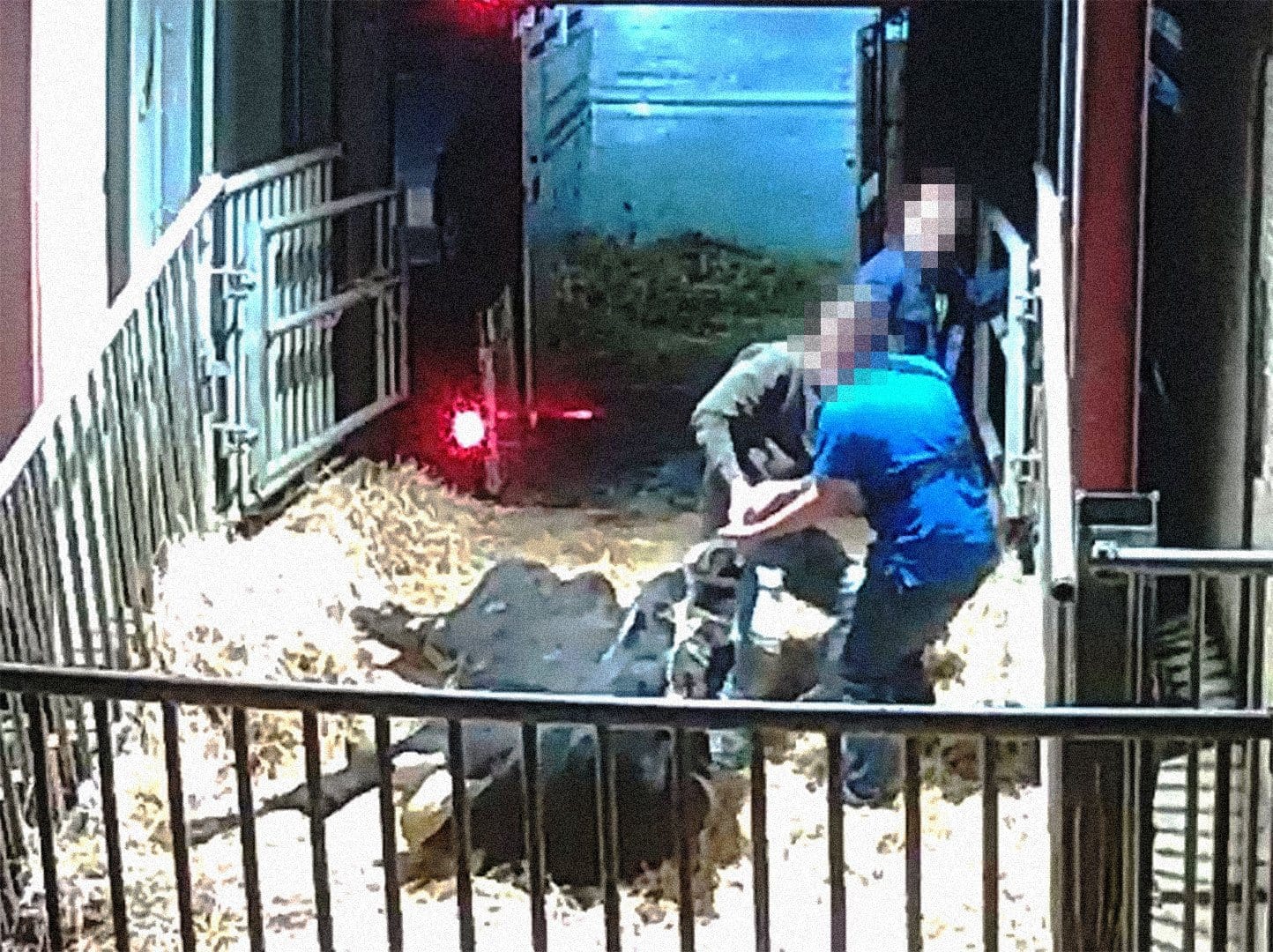
Cattle do not willingly get loaded and unloaded. When faced with unfamiliar and stressful situations, they instinctively freeze or struggle. They don’t have time to calmly assess what's happening; the truck needs to leave for the next customer, and the loading docks must be clear for the next transport. As a result, coercion and violence often occur during loading and unloading.
Transport of sick and injured animals is unavoidable
However, the images depict numerous cows that have been completely milked and are suffering from severe lameness or illness, rendering them unable to stand. [51]Transporting weak and sick cows to slaughter is a common practice. Farmers rely on healthy, fit cows for milk and income. Only when a cow becomes weak, sick, or injured, leading to a drop in milk production, is she sent for transport.
The Dutch BuRo report compiled data on the transport of cows that had completed milking from 2017 to 2020. During this time, an average of 423,850 cows that had finished milking were removed from Dutch dairy farms each year. BuRo estimates that 30 to 75% of cows (averaging between 127,155 and 317,887 animals) are slightly ill or injured, while between 0.05 to 5% (averaging from 212 to 21,193) of cows have serious abnormalities. [52]
The primary reason for the health issues that cows face in dairy farming is the production system: cows are selectively bred to produce increasingly larger quantities of milk. Production levels continue to rise each year. In 1910, cows produced around 2,500 kg of milk annually. Currently, the average annual production in the Netherlands and Belgium exceeds 9,000 kg per cow, which is about 30 liters per day. [53] [54] [55] High milk production takes a toll on the cow. All their energy is directed towards milk production, compromising other bodily functions that also need energy. As a result, the animals become very thin and have low resistance to disease. [56] Coupled with the unsanitary and unnatural living conditions on dairy farms, the average cow lives no longer than 6 years, while they can naturally live up to 20 years.
The top three health problems of dairy cows are lameness, udder disorders and fertility problems.
Approximately 25% of cows on dairy farms suffer from serious hoof issues and/or lameness. This statistic has remained consistent for the past 20 years. [57] Factors contributing to this problem include poor hygiene in barns, inappropriate surfaces like concrete slats, and contaminated barn floors, which expose the cows' hooves to manure and urine. Unsanitary and damp cubicles also negatively impact hoof health. The warm and moist environment of stables, combined with the presence of manure, creates an ideal breeding ground for bacteria. [59] [60] Cows with severe lameness produce up to 36% less milk, making them unprofitable. Consequently, lameness is a significant reason for sending these animals to slaughter. [61]
28.6% of cows suffer from mastitis, leading to painful swelling of their udders. [62] Cows develop mastitis due to exposure to bacteria present in the contaminated barns where they reside. Bacteria can also spread from cow to cow through milking facilities. Udder infections result in significant economic losses for livestock farmers and are a major reason for the early culling of cows. [63] [64]
Thirty percent of early culling of cows in the dairy industry is due to fertility issues. [65] A mother cow can be inseminated again seven weeks after giving birth. Often, the first insemination attempt is unsuccessful, leading to a second attempt. When inseminations continue to fail, the cow is culled because she only produces milk after giving birth (66).
Conclusion
Ongehoord's investigation clearly shows that there are no humane ways to transport animals. Modern climate-controlled vehicles, skilled drivers, and improved welfare measures do not alleviate animals' fear and reluctance to enter and exit unfamiliar environments and trucks. As a result, the use of force during loading and unloading becomes unavoidable.
Banning sticks and stun guns won't solve the problem. Instead, it often results in more hitting, kicking, or pulling on ears and tails. If the industry continues, animal transport will remain necessary, and unfortunately, animal cruelty will persist.
Selective breeding of cows for high milk production forms the backbone of the dairy industry. However, this focus on milk yield often harms cow health. Stricter inspections during transport won't address the root issue of weak and sick cows in the dairy industry. When fewer sick and injured animals reach slaughterhouses, it leads to more animals being euthanized or dying on dairy farms. Right now, over 12,000 mother cows die on Dutch dairy farms each year, resulting in a mortality rate of 0.8%.
Continuing to consume dairy and meat will lead to significant animal suffering.
Sources
- 49
- 50
- 51
- 52
BuRO advice on the transportability of milked dairy cows (2022) - p. 44, Table 12 (indicative numbers and percentage of culled, milked dairy cows, 2017-2020)
- 53
- 54
- 55
- 56
- 57
- 59
- 60
- 61
- 62
- 63
- 64
- 65
What can you do?
Share this investigation with people around you.