
Chapter 1 / 3
Cattle's natural behavior
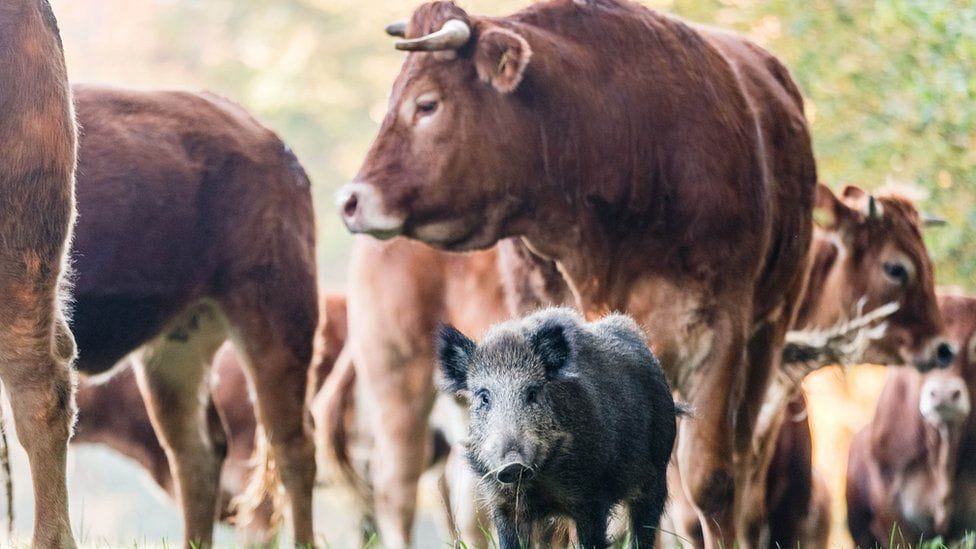
Experts from the Council for Animal Affairs (RDA) assert that farmed dairy cows and beef cattle share the same fundamental needs and behaviors as their wild counterparts. To understand their natural needs and behaviors, scientists observe groups of feral cattle. By comparing their natural living conditions with those found in the meat and dairy industry, we can effectively evaluate animal welfare within the industry. [4] [5]
The term "cattle" describes a group of ruminant mammals that includes cows, buffalo, and bison. In the wild, cattle typically form mixed groups of dozens to hundreds of animals. Within these large herds, they create smaller subgroups. Each subgroup has a stable hierarchy. Outside the mating season, mother cows and their calves stay separate from the bulls. Young bulls, aged 3 to 4 years, often form bachelor groups on the outskirts of the herd, while older bulls usually live alone.
Individual animals in herds form social relationships. A cow can recognize between 50 and 70 other cows. An individual's rank in the hierarchy is influenced by physical factors like age, body size, and horn size, along with personality traits such as temperament and self-confidence.
The hierarchy in a group is established through rank-order fights. Once this hierarchy is set, fighting happens infrequently. Cattle respect their relationships by keeping a physical distance from one another. This distance varies based on their relationship, ranging from a few decimeters to several meters. Researchers notice more conflicts when living space shrinks or group size grows.
In a group, some animals interact more closely than others, and family ties are a big factor in this. Mother cows in a herd tend to stay close to their offspring, even when those offspring are adults with their own calves. Cattle that played together as calves often develop lifelong friendships. They show their bond through positive interactions, like licking each other.
Cattle are naturally herd animals, but heavily pregnant cows often isolate themselves to give birth. They look for a sheltered nesting area among trees and shrubs. Newborn calves can walk within an hour, but they stay hidden in the nesting area for the first few days of their lives. After a few days, the new calf joins the herd.
Around two weeks old, calves start to play. They run, jump, kick, and engage in mock fights. Playtime is great for fitness and crucial for learning social skills. However, young calves also need plenty of rest. Until they reach five weeks, they spend 90% of their time lying down. This percentage drops to 75% when they are five to six months old.
In the wild, calves nurse from their mothers five to fourteen times a day during their first few days of life, with each nursing session lasting about eight minutes. After ten months, they still nurse about three times a day. Female calves can suckle for up to 14 months, while male calves typically stop suckling sooner. Between 10 and 11 months of age, male calves start to form groups with other young bulls in the herd. In contrast, female calves at that age tend to stay close to their mothers.
Cattle spend a lot of time grazing and ruminating. They like to ruminate while lying down, preferably under the shelter of trees and shrubs. To graze freely, they can walk up to 13 kilometers each day, depending on how grazing areas are spread out in their habitat. These walking distances are crucial for their leg and hoof health. To maintain healthy feet, cattle need to walk about 3 to 4 kilometers daily.
Like all prey animals, cattle experience fear as a strong emotion. They instinctively fear predators, including humans. Cattle tend to be cautious around anything new, unknown, or unpredictable. They take their time to carefully examine and explore unfamiliar objects, other cattle, or new environments. Their keen senses help them in this process.
Cattle have an impressive sense of smell. Bulls can detect when a female is in her fertile period. Mother cows recognize their calves by scent, and herd members can identify each other through their unique smells. When a cow experiences stress, other cattle can sense it through the pheromones and urine she releases.
Cattle have highly developed vision that differs from human perception. They can see a panoramic field of over 300°, which helps them spot predators. However, they do have blind spots behind them and just in front of their mouths. Cattle struggle with depth perception, causing them to react more dramatically to shadows than humans do. They tend to avoid shady areas, dark spaces, and slopes because they can't determine if these places are safe. Additionally, cattle have a strong need for a refuge zone, requiring enough space around them to flee if they sense danger. When cattle feel anxious or stressed, they need even more space to escape.
Cattle are prey animals, and they rely on their herd for safety. Being socially isolated or separated from the group is one of the most stressful and frightening experiences for these animals. In the wild, strong group cohesion is essential for their survival. Cattle in a group work together; while some graze, others stay alert to spot potential predators. When one animal feels stressed, the entire group experiences stress. Stressed cattle typically need at least half an hour to recover somewhat.
Even domesticated cattle experience fear as a strong emotion. These animals have excellent memories. They remember negative experiences with people, which affects their behavior. Young calves can easily tell the difference between those who treat them well and those who do not. Regular, friendly interactions with people can help reduce anxiety in calves as they grow. However, trials revealed that the benefits of consistent contact between calves and humans are less significant for calves that nurse from their mothers. Calves separated right after birth and without contact with their mothers showed less fear of humans. In contrast, calves that nursed from their mothers experienced more stress during human interactions.
Sources
- 4
- 5