Chapter 3 / 4
Images of capture and slaughter
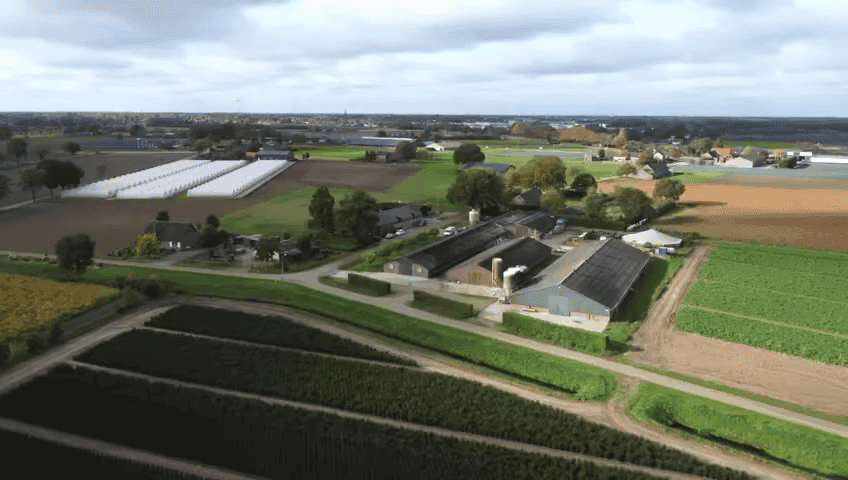
In December 2024, Ongehoord recorded the end-of-life process for turkeys at Sjroete Farm using a hidden camera. Ruud and Sabrina operate their own slaughterhouse on the farm, where they process 400 animals each week. They capture the turkeys from the barn and place them into steel containers. This process is very stressful for prey and flight animals like turkeys. Scientific research also indicates that capturing and confining poultry is an extremely stressful experience, putting birds at a high risk of injuries and broken wings. [13]
To reduce stress and prevent injuries in the animal industry, animal welfare experts suggest the following method: the catcher should grasp a turkey by the shoulder of one wing with one hand, while using the other hand to hold both legs. When lifting the turkey, the catcher must keep it close to their body. Only one bird should be carried at a time. [14] The most effective way to minimize stress for turkeys and other birds is, of course, to avoid handling or lifting them altogether.
Trapping turkeys at Sjroete Farm
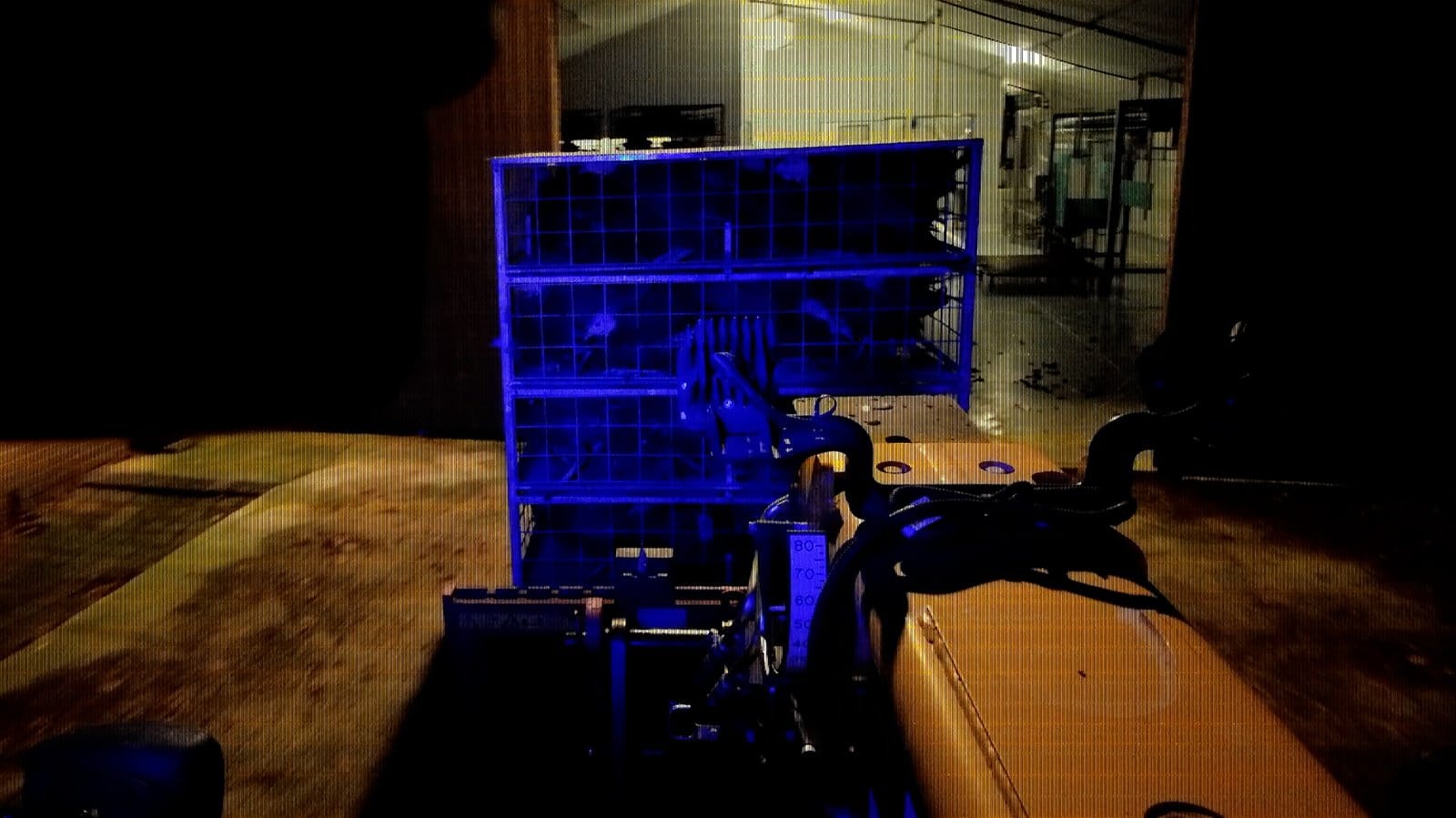
At Sjroete Farm, workers pick up turkeys by their wings, often grabbing two at a time. They place the turkeys in steel containers. Once full, these containers are transported to the slaughterhouse using a telehandler. This process causes a lot of shaking and jerking. Inside the slaughterhouse, workers stack the containers. The slaughter of the turkeys doesn't start until the next day. Afterward, the crates are moved back outside and driven one by one to the slaughter line.
At that point, the turkeys have already gone without food or water for over 12 hours. This duration exceeds that of turkeys transported by truck from the Netherlands to German slaughterhouses, which applies to most Dutch turkeys. Additionally, there is a legal requirement to provide water to animals traveling for more than 12 hours at least every 12 hours. [15]
Christmas turkeys are not allowed to roam freely
The footage from Ongehoord reveals that not all turkeys for slaughter come from free-range barns. Ruud and Sabrina also gather birds from a central barn that lacks outdoor access. In this barn, young turkeys can be kept for up to 11 weeks. These birds are placed in containers for slaughter without ever having been outside.
The Sjroete Farm website claims that the slow-growing black breed "Caringa Cartier" is chosen for animal welfare reasons. However, Ruud and Sabrina also fatten regular white turkeys in a different section of the central barn. We observe them catching the white birds and transporting them to the slaughterhouse in containers.
The slaughter
After the turkeys have spent the night in containers without food or water, the slaughter process begins. Ruud Bos removes the birds from the containers by their legs and hangs them upside down on the slaughter line. According to EFSA research, live hanging of slaughter birds, such as chickens and turkeys, is both stressful and painful. Suspending them from the hooks exerts pressure on their legs, leading to discomfort. Turkeys, in particular, can experience significant suffering due to their heavy weight. Additionally, birds lack a diaphragm, which causes their organs to press against their lungs when they are in an inverted position. This is painful and makes breathing difficult. [16]
Bos ties a rubber band around the birds' wings to stop them from flapping in stress. Then, the birds are lowered headfirst into an electrified water bath, where they are electrocuted to knock them unconscious. After that, their throats are slit open to let them bleed to death. The still-living turkeys in the containers at the slaughter line watch their companions go through the slaughter process up close.
Sources
- 13
- 14
- 15
REGULATION (EC) No 1/2005. Appendix 1, Chapter 3, Methods of Transport
- 16