
Chapter 1 / 4
Natural life
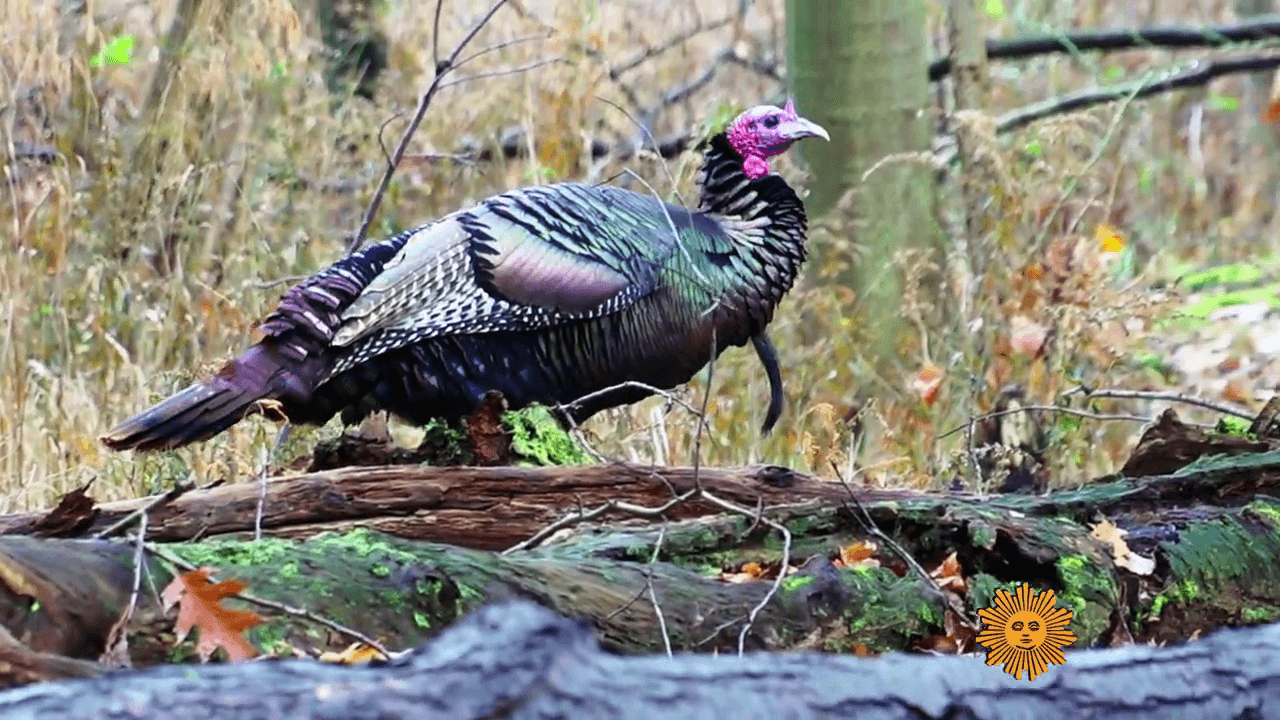
Wild turkeys come from South and Central America, where they inhabit pine and oak forests. Their habitat can range from 160 to over 800 hectares. [1] They spend most of their day searching for food like berries, leaves, grass, nuts, seeds, insects, and worms. Additionally, they dedicate a significant amount of time to dusting, basking in the sun, and grooming their feathers. Wild turkeys are capable of flight. They roost in trees to stay safe from predators. [2]
Turkeys are social animals that live in groups. Outside of the breeding season, males and females form separate groups. A female group consists of several hens and their young, allowing for a group size of up to 200 members. Despite this, turkeys can easily recognize one another. [3]
The breeding season for turkeys, like most birds, takes place in the spring. Male turkeys join female groups during this time but separate again after mating. A fertilized hen lays about ten eggs over two weeks. The chicks hatch in late May or early June and immediately follow their mother. The hen teaches her young how to find food. For the first three to four weeks, the chicks sleep on the ground under their mother's wings. Once they can fly, they roost in trees, just like the older turkeys.
Because turkeys are prey animals, they possess a strong instinct to fly. As flight animals, they are highly sensitive to stress, loud noises, and other stimuli that may startle them. [4] Wild turkeys typically live for about 3 to 5 years. [5]
Sources
- 1
Wild Turkey Habitat Management - NYSDEC
- 2
- 3
- 4
- 5