Chapter 4 / 4
Main reasons for transportation issues
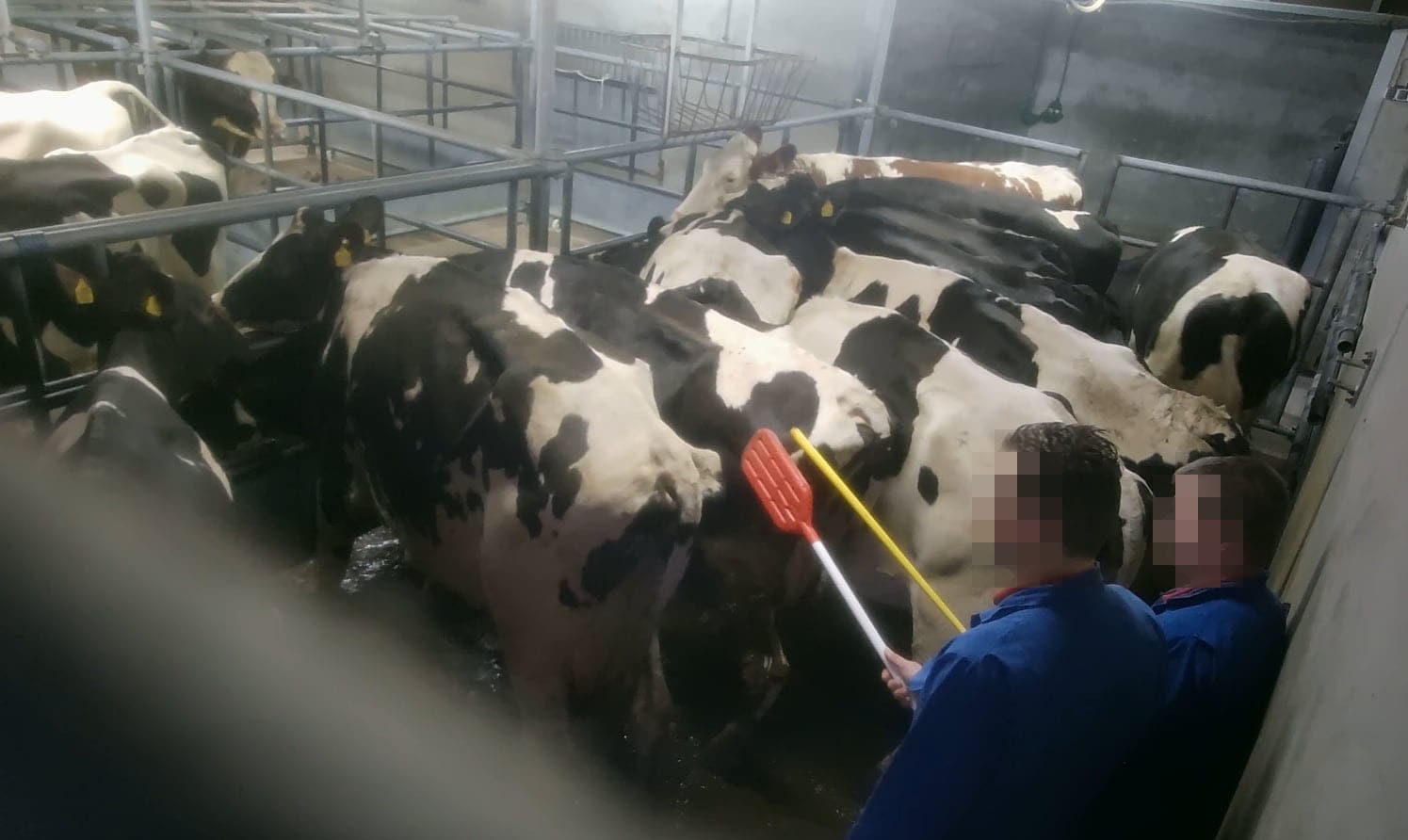
The debate about animal transport mainly centers on improving travel conditions. This includes shorter transport times, reducing heat stress, and enhancing supervision. The investigation by Ongehoord calls for a deeper discussion. They argue that violence against animals isn't solely due to travel conditions; rather, it stems from animals' natural fear of getting in and out of livestock trucks.
The issues related to transporting cows and calves are closely tied to the dairy industry's production system. Milking cows for dairy production harms their health and leads to the production of surplus calves. As long as the dairy industry operates this way, farmers will need to dispose of their exhausted cows and unwanted calves.
Transport and natural behaviors
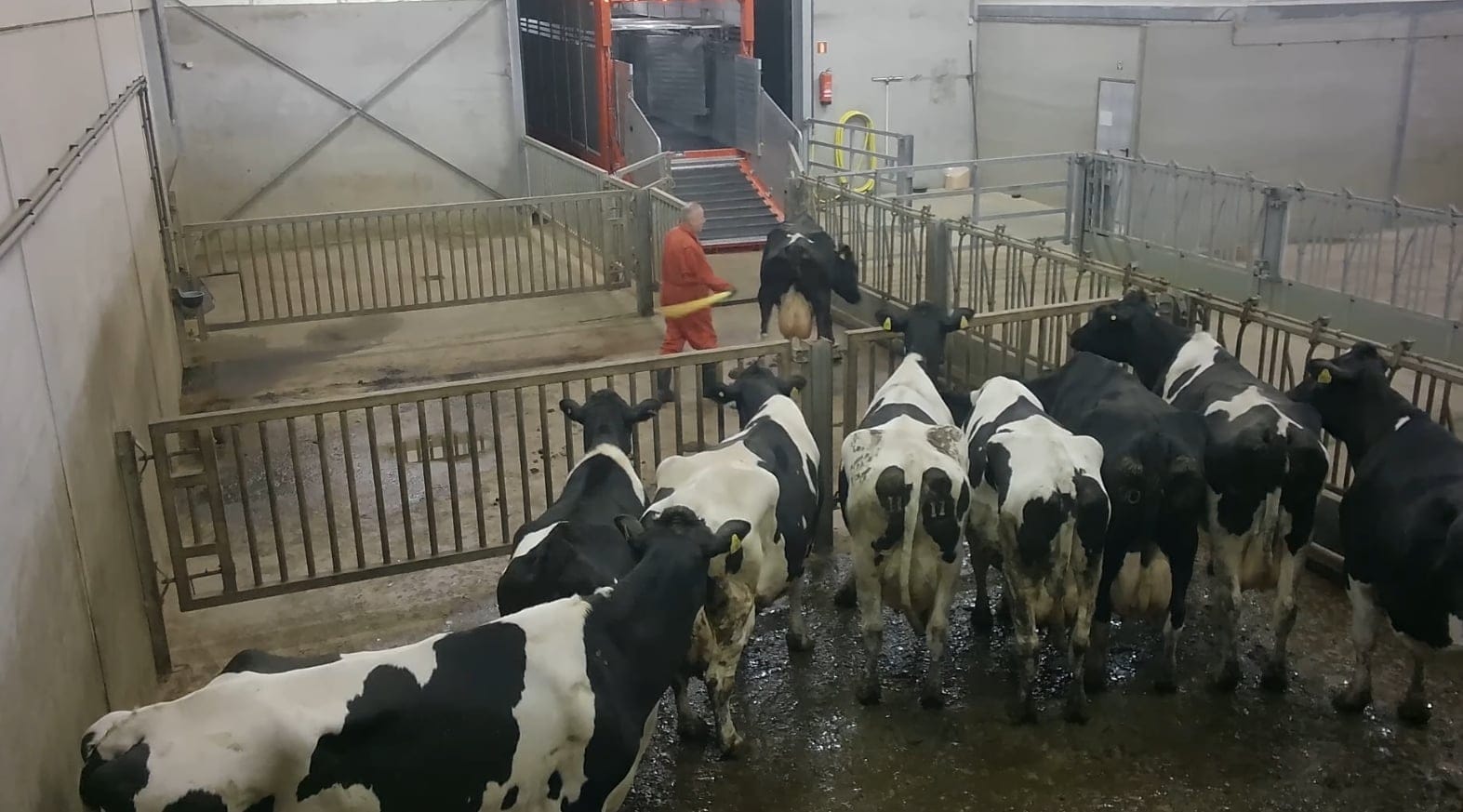
When loading cattle for transport, the industry forces them to act against their natural instincts. Cattle must enter and exit trucks using corridors, passageways, and loading ramps. This process is frightening for the animals because they have poor depth perception; they struggle to tell the difference between the slope of the loading ramp and a drop-off.
The presence of strangers, unfamiliar animals, loud noises, and bright lights adds to their stress, anxiety, and disorientation. Cattle need time to explore new environments and prefer having space around them to escape. When people enter their "flight zone," the animals feel threatened and want to flee. Additionally, animals transported through staging areas must repeatedly face the stressful conditions of loading and unloading.
For additional insights into the natural behavior of cattle and the challenges associated with loading and unloading, please refer to our 2023 publication "Cows and Calves." [51]Byproduct of the dairy industry: a million surplus calves
In the Netherlands, dairy farms keep one and a half million cows for milk production. Since cows only produce milk after giving birth, farmers artificially inseminate them every year. This leads to the birth of one and a half million calves annually, but only a third of these calves are meant to replace older dairy cows. Bull calves and surplus female calves hold no value for dairy farms; they are viewed as "waste products."
Housing and feeding calves can be costly, so dairy farmers quickly transport them to veal farms via collection points. The calves are just two weeks old when they are transported. Their small size allows many animals to fit in the truck, which helps keep costs down. Because veal yields are low, loading and unloading must happen quickly.
Milk production is at the expense of animal health
Cows have been selectively bred to produce more and more milk. However, this high milk production negatively impacts their health. The energy that cows have goes primarily into milk production, leaving less for other important bodily functions. As a result, dairy cows often face energy deficiencies, exhaustion, lameness, and mastitis, which is painful inflammation of the udder.
For additional details on the primary health concerns affecting dairy cows, please refer to our publication "Koetjes en kalfjes" (Cows and Calves), 2023. [52]The average cow in the dairy industry typically lives no longer than 6 years, whereas these animals can naturally live up to 20 years. In recent decades, the industry has made efforts to extend the lifespan of cows. Currently, cows live 280 days longer than those from 25 years ago. [53] This improvement benefits the economic outcomes and public perception of the sector, but it does not necessarily mean that the animals are healthier. The GD (Animal Health Service) has found that the 'aging' of cows is linked to a rising number of mastitis cases. [54] Helma Lodders, a BBB member and chair of the interest group Vee&Logistiek, acknowledges that a longer lifespan in dairy cows is correlated with an increase in lameness. [55]
Each year, around 30% of the Dutch dairy herd is removed from the industry. [56] Slightly more than 3% of cows either die or are culled on the dairy farm. [57] Most cows that cannot produce any more milk are sent to slaughter. By the end of their "career," dairy cows are rarely in good condition; reduced milk production or unsuccessful inseminations are often associated with their poor health. As a result, transporting weak, lame, and sick animals is unavoidable.
According to known welfare issues in dairy cows, BuRo estimates that around 37,000 cows culled each year are at high risk of (increased) lameness during transport. [58] This is a staggering figure, but not entirely surprising: research indicates that 28% of all dairy cows in the Netherlands are lame, which equates to 420,000 cows. Factors contributing to lameness in dairy cows include poor hygiene in barns and unsuitable surfaces like concrete slats and contaminated barn floors, which expose the animals' hooves to manure and urine. Unsanitary and damp cubicles also harm hooves. The humid and warm barn environment, combined with the presence of manure, creates a breeding ground for bacteria. Additionally, the poor body condition of dairy cows and a higher lactation number (the number of times a cow has calved) further elevate the risk of lameness. Severely lame cows produce less milk and are thus no longer profitable. Lameness is therefore a significant reason for transporting animals to slaughter. [59]
Conclusion
In recent years, Ongehoord has repeatedly captured footage of abuses during live animal transport. This includes lame and sick animals that should never have been transported, as well as the use of excessive force to move them. It's clear that these abuses are widespread and deeply ingrained. Animals naturally fear and hesitate to enter and exit trucks, making violence during loading and unloading unavoidable. The transport of weak, lame, and sick animals stems from the industry's production system.
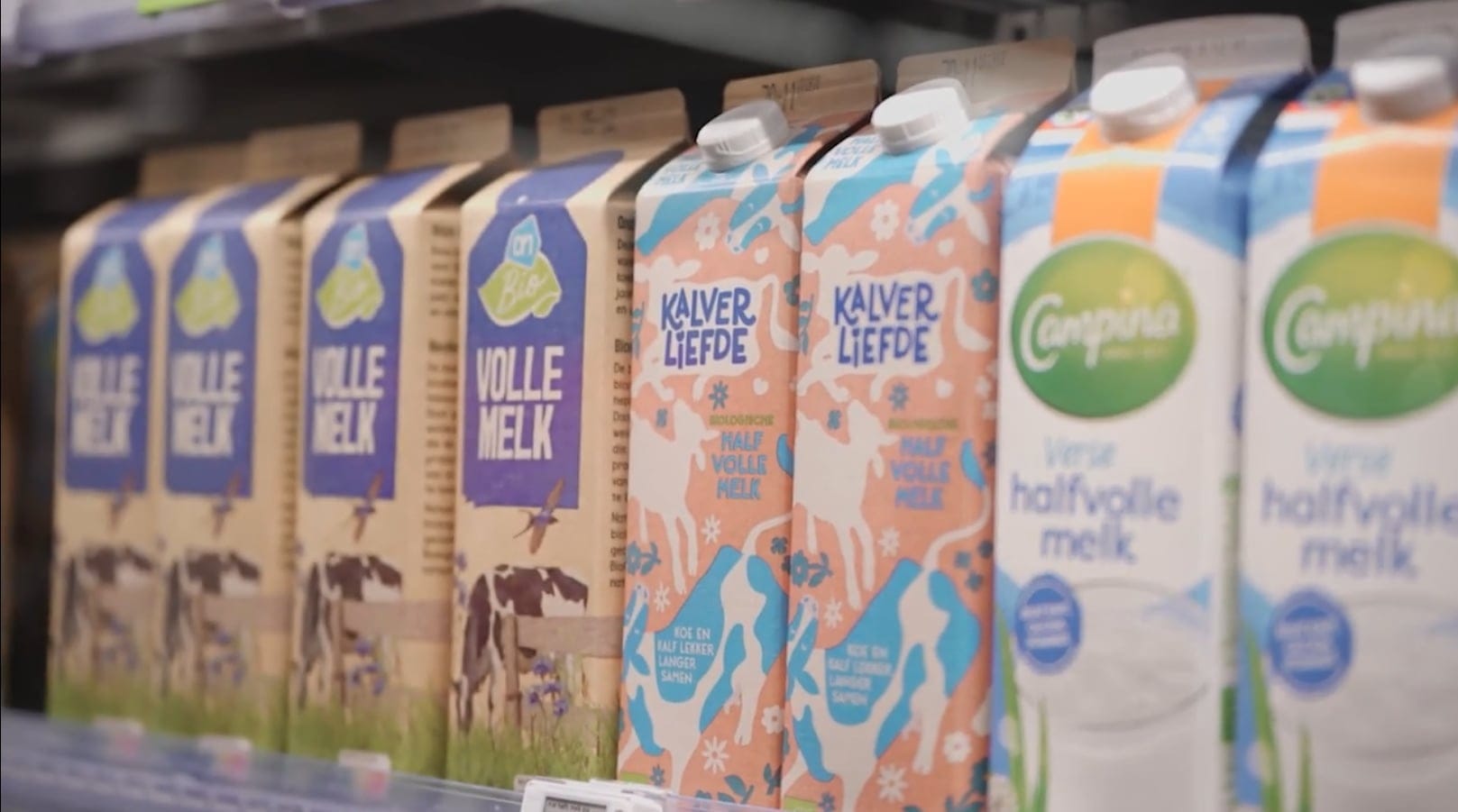
Welfare measures mainly enhance the image of meat and dairy products rather than genuinely improving animal welfare. Legislation often caters to the industry's needs. The government appears more focused on the financial interests of the livestock industry than on preventing animal suffering. With support from parties like the BBB and PVV, livestock farmers have gained even more influence in The Hague.
Animals have no hope from politicians, the NVWA (Netherlands Food and Consumer Product Safety Authority), or the industry lobby. Now, it's up to society to decide what to do next. Should we let politicians keep using ineffective measures for an unchangeable industry? Or should we take strong action to address animal suffering at its root? To truly end animal suffering, the industry must be dismantled.
Sources
- 51
- 52
- 53
- 54
- 55
- 56
- 57
- 58
- 59
What can you do?
Share this investigation with people around you.