Chapter 1 / 4
Research on transporting cows and calves
In 2025, the Ongehoord Investigation Group filmed the treatment of cows and calves in livestock collection centers. In these facilities, livestock transporters gather animals from different livestock farms. They then transport the animals to breeding farms, fattening farms, or slaughterhouses. Ongehoord filmed for 4 to 18 days at Veveha in Sint-Oedenrode, De Keizer Vee in Oud-Alblas, VVC Noord-Holland in Noordbeemster, De Bruijn Impex in Steenbergen, and Stens Transport in Staphorst.
Our new footage is part of a large-scale research project on animal transport. In 2020, we recorded pigs being unloaded from trucks at the Westfort slaughterhouse. [1] In 2022, we captured footage of pigs being herded into trucks using electric shocks, firecrackers, and bulldozers. [2] In 2023, our images of mistreated calves and cows sparked a media outcry, resulting in the suspension of a collection point. [3] The Netherlands Food and Consumer Product Safety Authority repeatedly promised improvements, but by 2025, no changes have occurred. Ongehoord concludes that animal suffering during transport is systemic and insurmountable.
Structural abuses
Slipping and falling
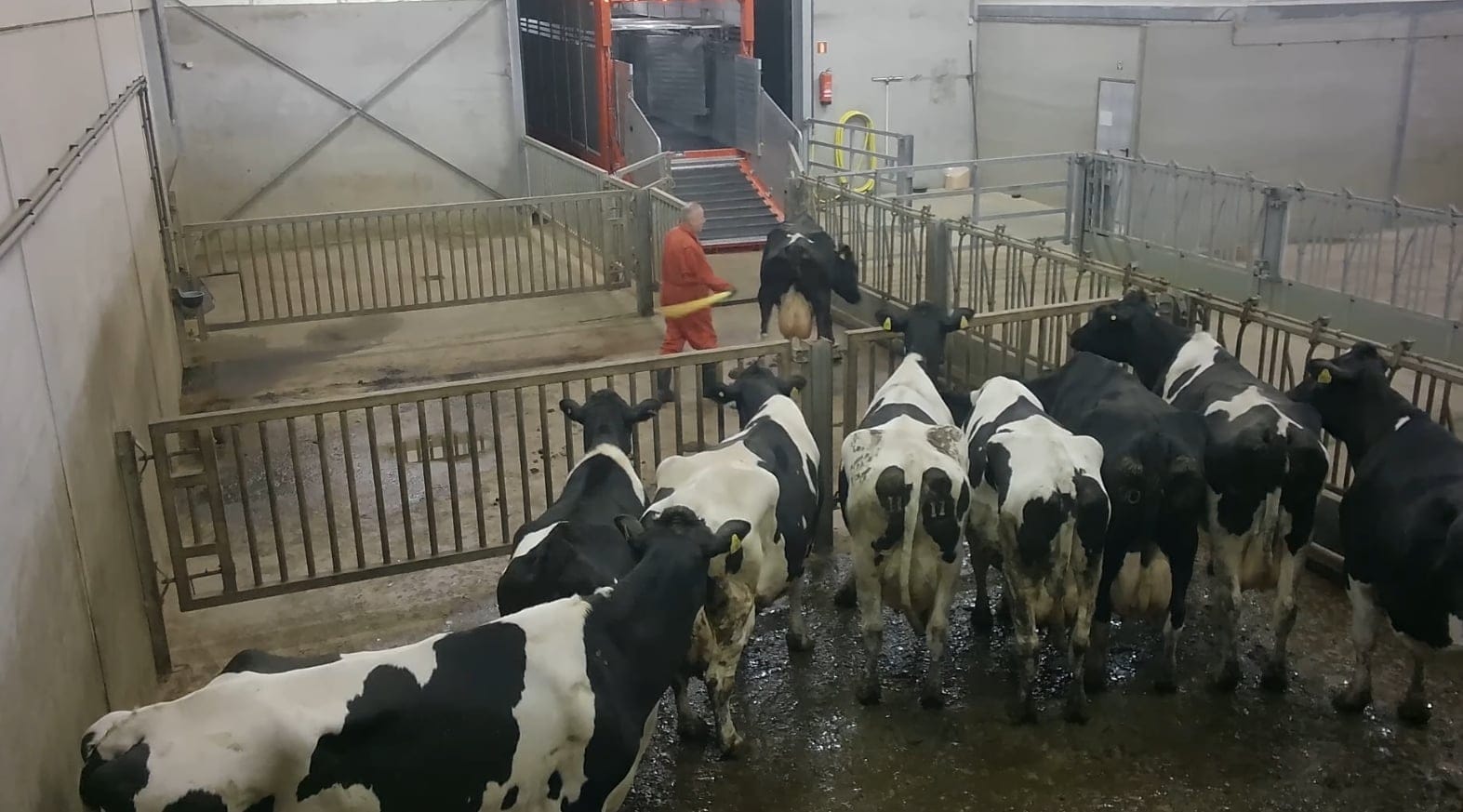
Floors in trucks and assembly areas were often slippery because they were soiled with feces and urine. This made it easy for animals to slip. In addition, assembly areas frequently lacked grids, which led to even more accumulation of urine and manure. Animals faced a high risk of falling on loading ramps as their poor depth perception made it difficult for them to judge the slope of the ramp.
Falling and slipping is dangerous and studies have highlighted that it leads to injuries and skin lesions in animals. [4] In the latest footage from Ongehoord, we observed calves falling during unloading in Sint-Oedenrode. At VVC Noord-Holland and Stens Transport, animals were seen slipping multiple times. In 2023, Ongehoord also captured a calf falling in the assembly area of Van der Walle livestock trading, along with several cows slipping in the assembly area of T. Kuiper Transport.
Crippled animals
Although European transport regulations prohibit the transport of lame animals, lame cows could still be found at the collection points of De Keizer Vee, VVC Noord-Holland, Stens Transport, and De Bruijn Impex. These cows cannot stand on all fours due to pain. We observed animals with swollen joints and hunched backs. Cows arch their backs to alleviate discomfort in their legs. [5]
In 2023, the same issue was observed at the collection points of Dane (Oudemolen) and Kuiper (Hoogblokland). Lame cows, suffering from pain, struggled to walk and moved slowly. This difficulty increased their risk of being violently pushed forward with sticks or electric shocks.
Lack of rest
Under normal circumstances, cows require at least 12 hours of lying down each day. This behavior is essential for relieving pressure on their hooves and enabling them to ruminate and rest. For weak or lame cows, the need to lie down becomes even more critical. When cows are forced to stand for extended periods, they experience stress. [6] [7] According to scientific research, insufficient rest or lying down poses one of the main risks for dairy cows during transport or at collection points. [8]
At the Stens Transport assembly station, cows, some of which were clearly lame, stood for over 17 hours. The crowded pens left little space, and the floors were covered in a thick layer of urine and manure. As a result, most cows refused to rest. A cow that could no longer endure the discomfort was forced to lie down in the slurry of urine and feces.
Use of stun guns
The use of stun guns has sparked controversy for years, yet they remain standard equipment for livestock traders and transporters. At Veveha, De Keizer Vee, and De Bruijn, stun guns were often used to herd cattle, particularly targeting lame or slow-moving animals. This practice was also observed in 2023 at Dane and Kuiper. At Veveha and VVC Noord-Holland, young calves received electric shocks, which is against the EU Transport Regulation. In 2023, investigators filmed the use of electric shock weapons on calves at the assembly station of Vanlommel, Belgium's largest veal producer.
Beating with sticks or other tools
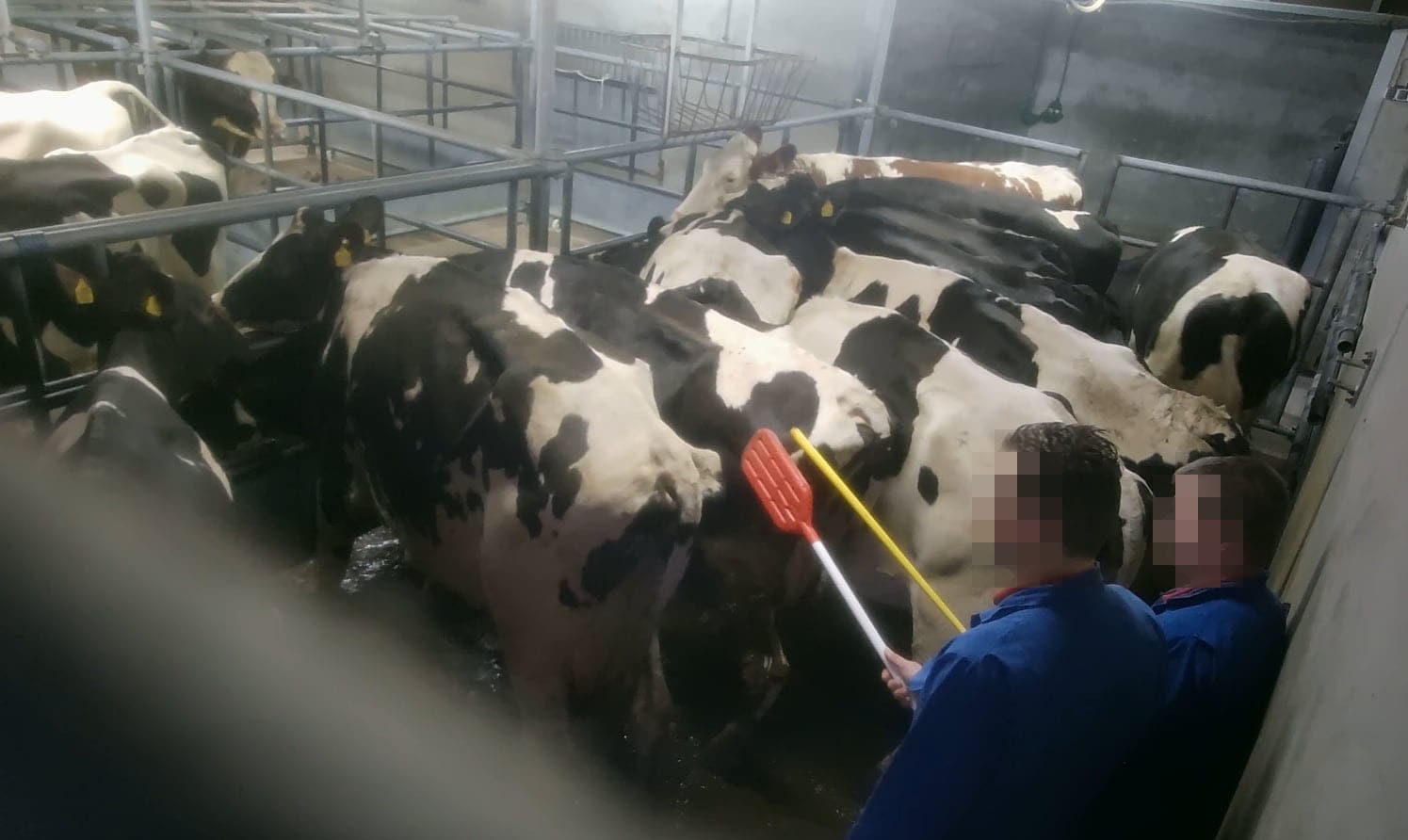
At all the locations investigated, workers routinely used sticks to herd animals, including cows and young calves. When the animals didn't move quickly enough, they were struck hard with the sticks, often hitting sensitive areas like the head. Workers also prodded animals in the buttocks or flanks, which caused significant pain. In assembly stations where electric shock devices were not used, the use of sticks became even harsher. This was evident at VVC Noord-Holland, where cows were beaten on various parts of their bodies with sticks and clubs.
At Veveha, a cattle trader strikes a calf with a spade. At De Keizer Vee, someone hits a sick cow on the head with a broom. At other locations, transporters hit animals with a herding rattle, a steel pin, a floor squeegee, and a ring binder. In 2023, investigators filmed animals being hit and prodded with a pitchfork at Dane.
Kicking, hitting with hands, pulling tails and ears
When transporters lacked sticks or stun guns, they resorted to using their hands and feet to move animals. They hit, kicked, or pulled on the ears and tails to get them to move. Calves, being small and weak, often couldn't resist and were regularly dragged by their tails or ears. This behavior was evident at Veveha and VVC Noord-Holland, where transporters pushed and hit calves by hand and pulled them by their tails. Similar incidents were observed in 2023 at veal traders Vanlommel and Van der Walle.
Excessive violence against sick animals
At the De Keizer Vee collection point, a cow arrived unable to stand. The staff, including director Niek de Keizer, kicked her, pulled her by the tail, yanked her legs, hit her in the face with a broom, and tortured her for an extended period using a stun gun. Director Niek delivered over 40 electric shocks to the cow. When this didn't work, they left her to fend for herself overnight. The next day, while she was fully conscious, they tied her hind legs to a shovel and dragged her away.
In 2023, similar scenes unfolded at the Dane livestock trading center in Oudemolen. There, after enduring prolonged abuse, a terminally ill cow was lifted with a hip clamp and then dragged away using a shovel.
Overview of the companies
The Emperor Cattle, Heiweg 4, Oud-Alblas (South Holland)
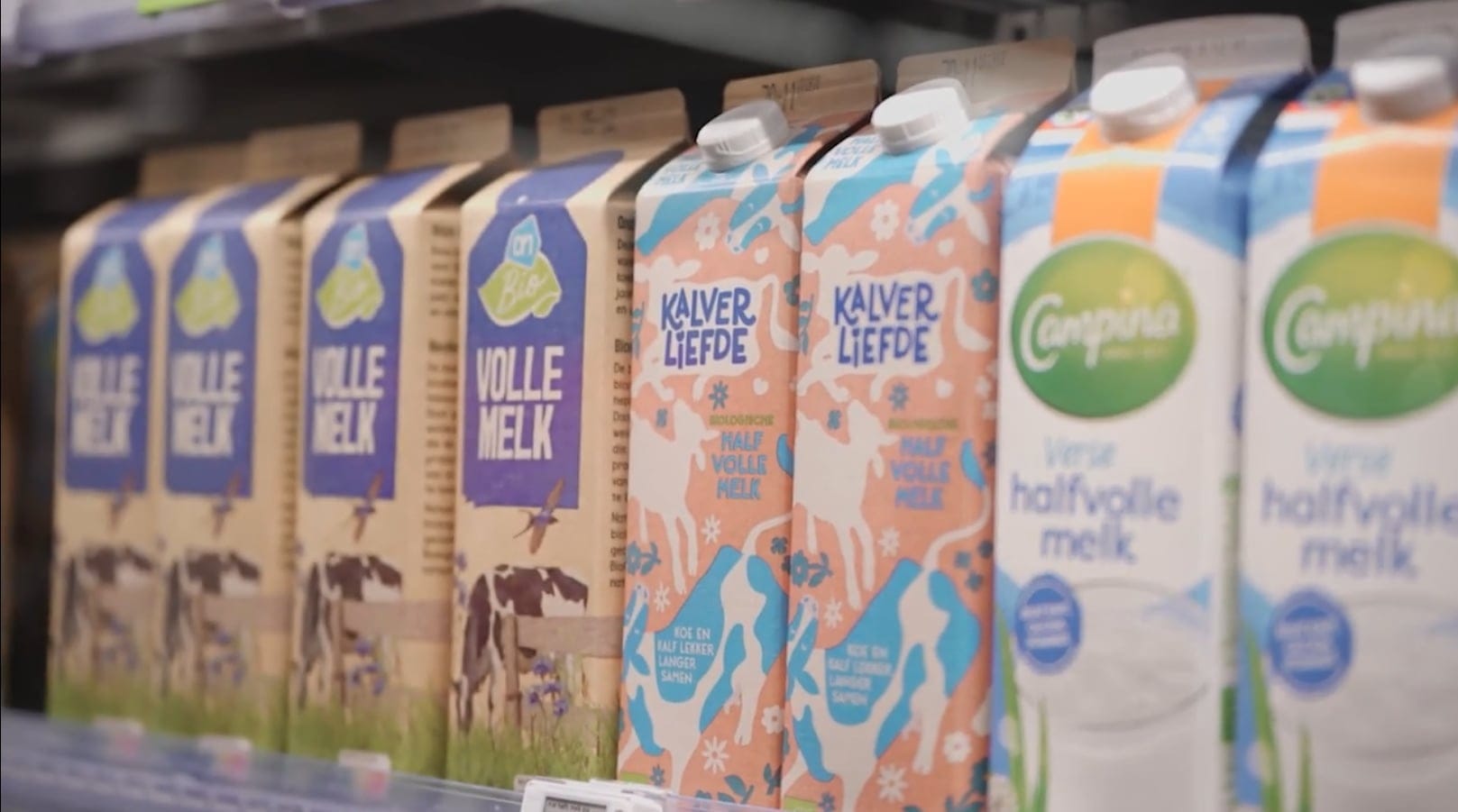
De Keizer Vee states on its website [9] that it engages in the purchase and sale of calves and cows for both dairy and meat production, including breeding animals and those intended for slaughter. The company is Skal-certified and serves many organic livestock farms as clients. In addition to transporting within the Netherlands, De Keizer Vee also exports cows to Kuwait, Russia, and Ethiopia. [10] During the four days of filming by Ongehoord, primarily cows that could no longer produce milk were present. Since no NVWA inspections were conducted, we know that the animals were intended for Dutch slaughterhouses (NVWA inspections at collection points only take place when animals are being exported).
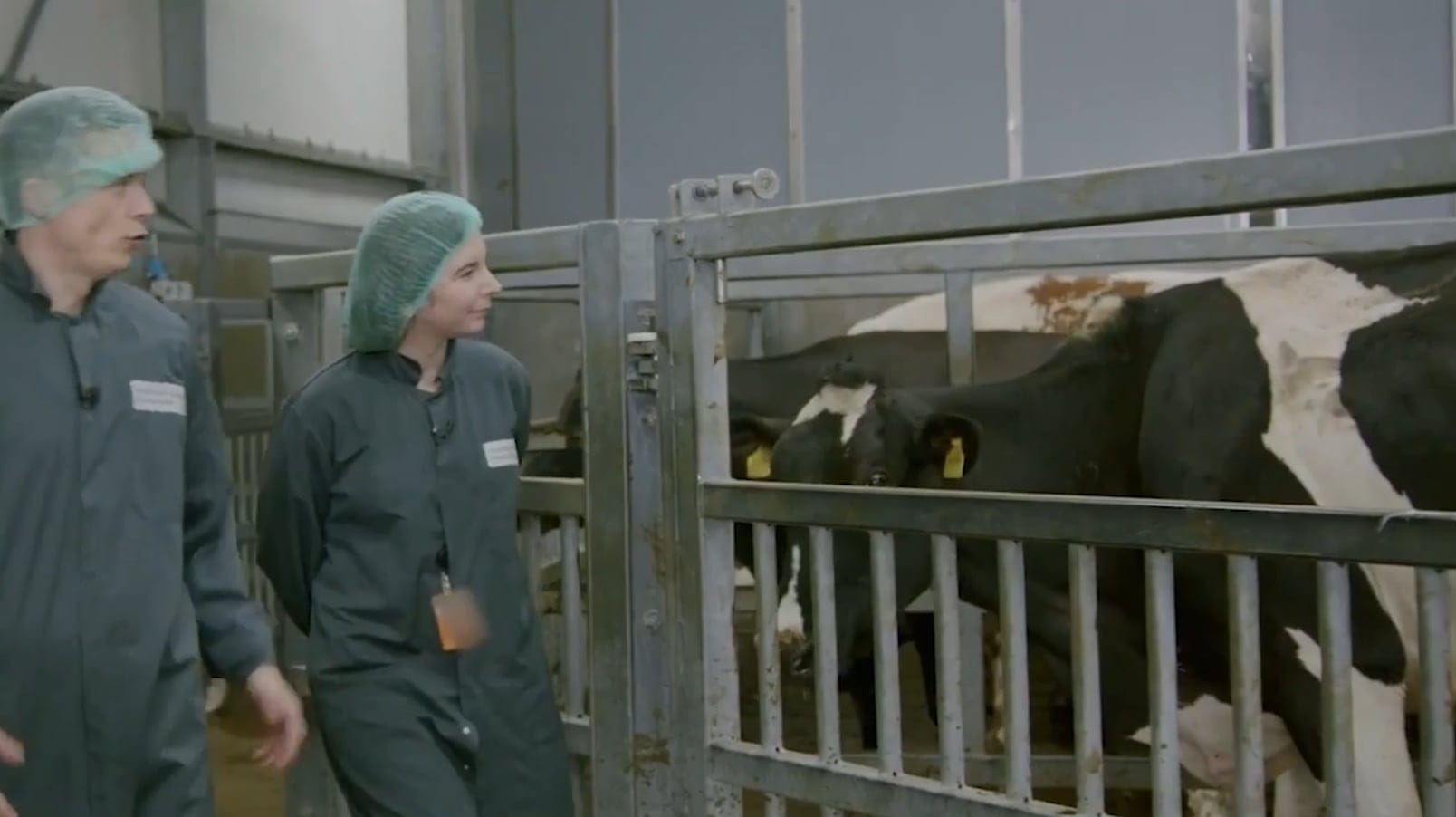
De Keizer Vee describes itself on its website as a trustworthy family business with years of experience and expertise. The website states that director Niek de Keizer "had a love for animals instilled in him from a young age." However, footage filmed by Ongehoord shows Niek repeatedly abusing a seriously ill cow with a stun gun.
The website and corporate film demonstrate that De Keizer Vee collaborates closely with the livestock transporter Vandommelen from Woerden. [11] [12] A report (2023) requested by Ongehoord last year revealed that the NVWA observed cattle with lameness or other serious health issues almost weekly during export inspections at Vandommelen. At that time, Ongehoord also sought information about De Keizer Vee, but the NVWA was unable to provide a single inspection report for the entire year of 2023. [13] The NVWA (Netherlands Food and Consumer Product Safety Authority) is also noticeably absent from the recent footage released by Ongehoord.
According to Niek de Keizer, it's not the cows, but the farmers in the Netherlands who are facing harsh treatment. That is why he participated in the notorious tractor demonstrations in The Hague, where Geert Wilders commended farmers for their significant exports and encouraged them to persist in opposing nitrogen regulations. [14] [15]
De Keizer Vee considers "transparency in their actions" a key value for the company. Ongehoord is pleased to support this by publishing the footage.
Cattle collection center North Holland, Middenweg 5, Noordbeemster (North Holland)
VVC Noord-Holland serves as the assembly center for livestock trader Richard Nelis. The company holds a permit to collect cattle (both calves and adults), as well as sheep and goats. [16] During the four days that Ongehoord filmed on-site, adult cattle were present, intended for Dutch customers (since no NVWA inspections were conducted). We also captured footage of young calves, which were destined for veal fattening farms.
VVC Noord-Holland has been designated as a "Calf Assembly Center" by the interest group Vee & Logistiek. Vee & Logistiek's recognition schemes are not related to official government recognition or permits; they are designed solely to build customer confidence and improve the image of companies and the sector. [17]
Limited public information is accessible regarding the company. VVC Noord-Holland/Veehandel Nelis lacks a company website, but frequently posts animals for sale on their Facebook page. [18]
Veveha, Zwijnsbergen 3, Sint-Oedenrode (North Brabant)
Veveha serves as a collection point for calves and adult cattle, both within the Netherlands and for export. During the four days that Ongehoord filmed there, both calves and cows were present. Veveha does not have a public website, is not active on social media, and does not contribute to articles or reports in the press.
The company is owned by Martien Verhagen, a lobbyist for the animal industry who appears in the Ongehoord footage. Verhagen serves on the board of Veepro, which is part of Vee & Logistiek, the interest group representing Dutch livestock traders, collectors, and animal transporters. [19] Within Vee & Logistiek, Veepro specifically targets export activities. Veepro's primary objective is to trade and transport breeding cattle from the Netherlands to markets around the world. To expand its export opportunities, Veepro organizes trade fairs, conferences, and trade missions. Veepro collaborates closely with the Ministry of Economic Affairs and the NVWA, the agency responsible for animal export documentation. [20]
Among the members of Veepro are cattle dealers Dane (Oudemolen), De Keizer Vee (Oud-Alblas), and, of course, Veveha, the company owned by board member Martien Verhagen. [21] The Ongehoord Investigation Group filmed instances of animal abuse at all these locations.
De Bruijn Impex, Zegblokswegje 2, Steenbergen (North Brabant)
De Bruijn Impex appears to avoid publicity: there is no website, no social media presence, and they have never been featured in the press. According to the NVWA register, this location serves as a collection point for cattle, sheep, and goats. [22] Ongehoord documented the activities in the cattle department over nine days. De Bruijn works with T. Kuiper Transport, the same company where Ongehoord recorded footage of lame and abused cows in 2023.
Stens Transport, Industrieweg 42, Staphorst (Overijssel)
In Staphorst, Ongehoord recorded the arrival and departure of cattle, including many lame animals, over a period of 18 days. Stens Transport delivers cattle daily for various livestock traders to nearly all slaughterhouses in the Netherlands. According to their website, Stens claims that it "does not engage in long-distance transport." For the sake of animal welfare, their trucks are on the road for a maximum of 8 hours. [23]
That Stens' concern for animal welfare should not be taken too seriously is evident from another of the company's "specializations." Stens transports breeding cattle for export on behalf of various livestock traders, moving them to other collectors who then transport the animals over long distances. [24] Breeding cattle are shipped globally from the Netherlands, with the entire journey often lasting several days. During this time, the animals are repeatedly loaded and unloaded at collection pens and checkpoints, which means they endure the stressful experience of being herded multiple times.
Sources
- 1
- 2
- 3
- 4
- 5
- 6
- 7
- 8
- 9
- 10
- 11
- 12
- 13
Woo-documenten 2023, opgevraagd door Ongehoord.
- 14
- 15
- 16
- 17
- 18
- 19
- 20
- 21
- 22
- 23
- 24