Chapter 3 / 4
New welfare measures are coming soon
In response to increasing public criticism of animal transport, the industry and government are rolling out new measures. However, Ongehoord sees these welfare and supervisory measures as a false solution. They fail to prevent violence during loading and unloading and do not tackle the root issue of dairy production: the constant flow of exhausted cows and unwanted calves. Additionally, welfare measures often come with their own drawbacks.
Ban on stun guns
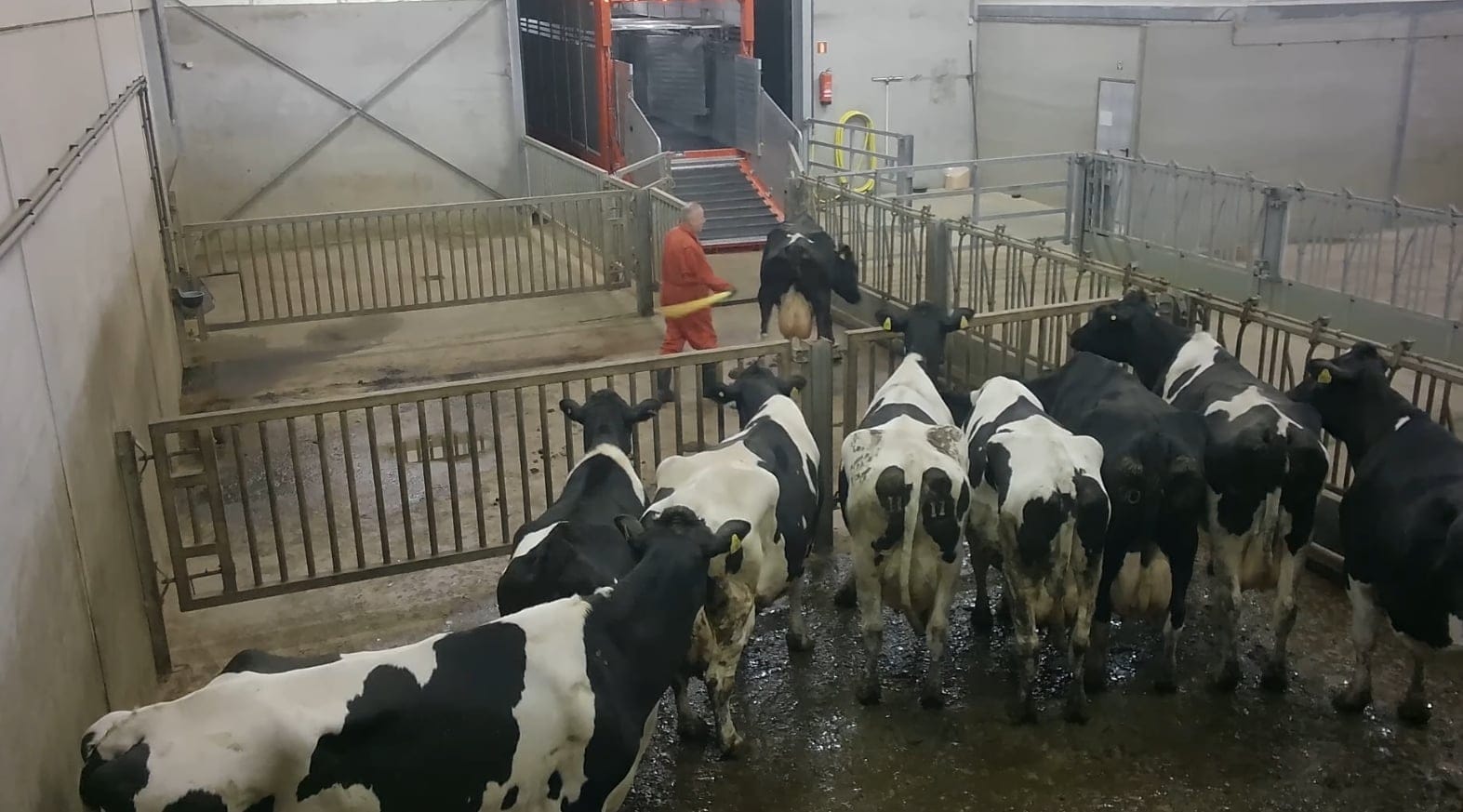
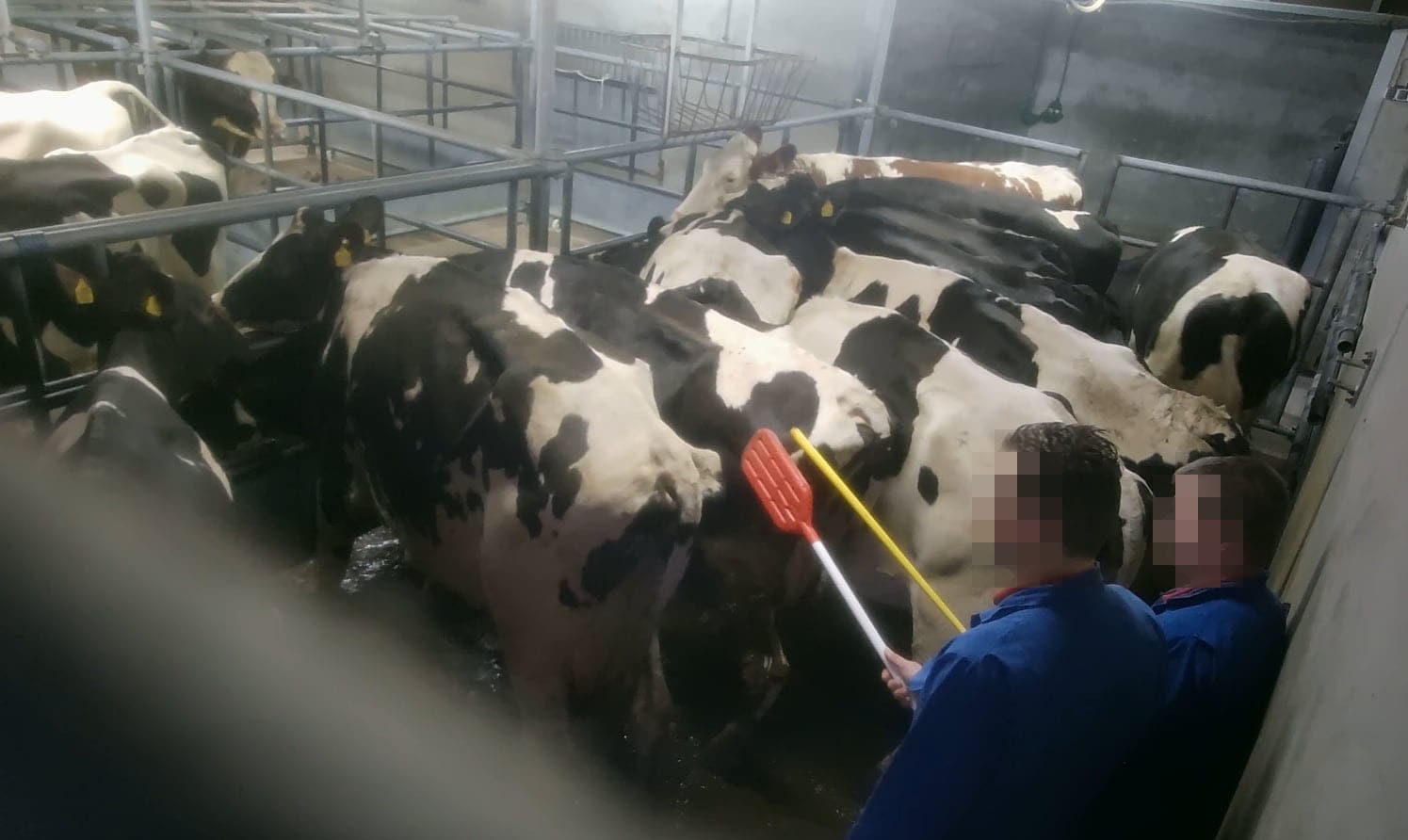
To reduce violence against animals, a ban on stun guns is being considered. [44] Ongehoord's footage demonstrates that such a ban is ineffective. In situations where transporters lack stun guns, animals are subjected to even harsher treatment, including being beaten with sticks, kicked, or dragged by their ears and tails. Ongehoord has been raising awareness about this issue for years. In 2023, we reached similar conclusions at other collection points. In 2020, we recorded the unloading of pigs at Westfort, a slaughterhouse that had initiated a ban on stun guns within its premises. Animals were brutally beaten with firecrackers. When Westfort also prohibited firecrackers and replaced them with "animal-friendly flag waving," inspection documents revealed that pigs were being struck with flagpoles. [45]
Aside from these objections, it remains to be seen how the NVWA (Netherlands Food and Consumer Product Safety Authority) will enforce the ban. The NVWA is typically not present when animals are loaded at breeding farms or collection points, and it lacks the capacity to monitor these activities. We also cannot depend on the industry's self-regulatory efforts. A ban on stun guns has been in place for years for animals under the Better Life quality mark. Although the Animal Protection Society asserts that compliance with regulations is closely monitored, Ongehoord has recorded the use of stun guns on multiple occasions at Beter Leven farms. [46]
CCTV surveillance in assembly points
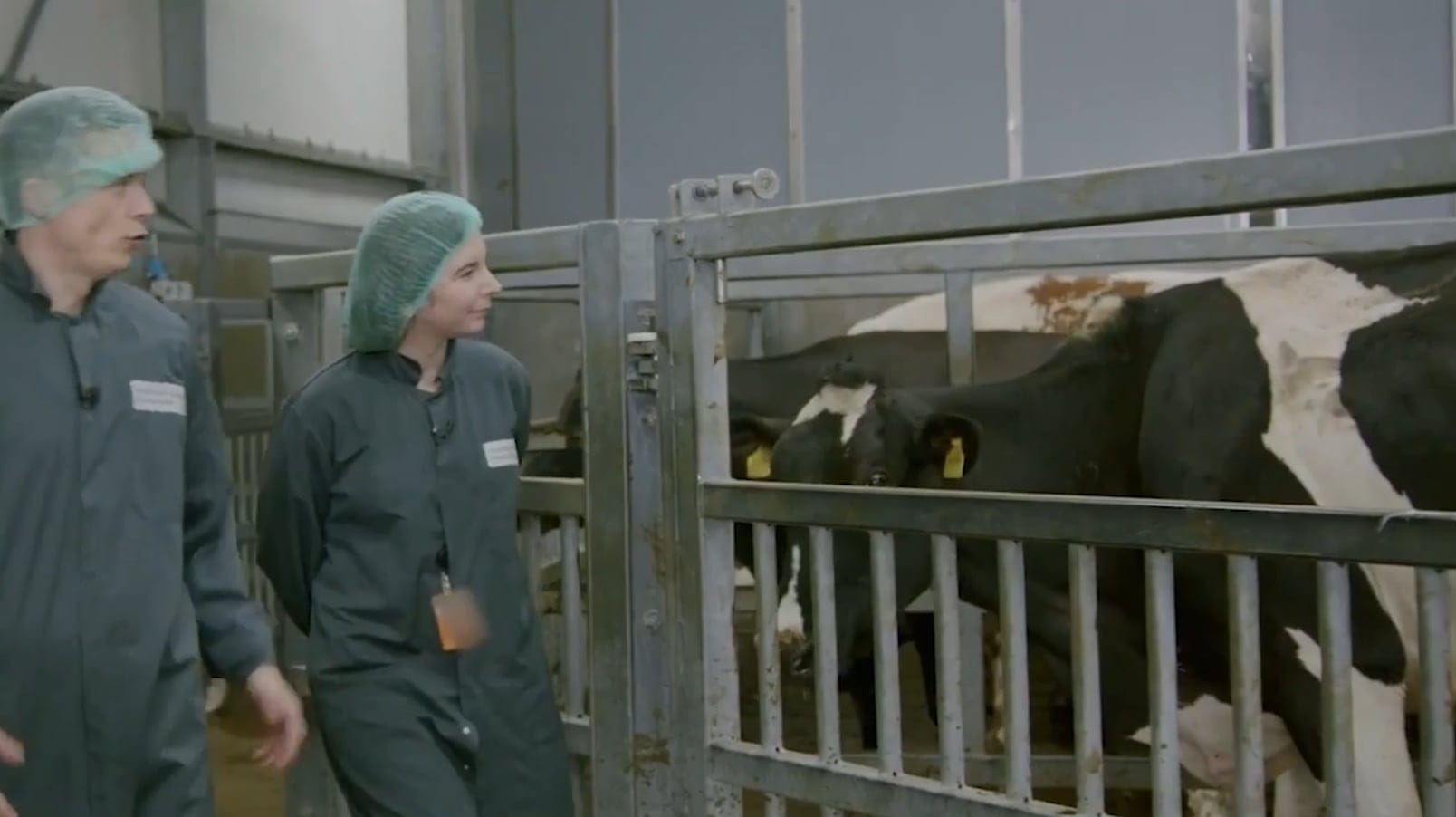
Inspired by the use of camera surveillance in slaughterhouses, options for implementing CCTV at collection points are currently being explored. [47] However, CCTV has not effectively prevented abuses in slaughterhouses. Westfort was already under CCTV surveillance in 2020. In addition to instances of violence against animals, Ongehoord captured footage of the arrival of numerous sick and crippled animals, as well as pigs hung up on hooks, bleeding out while still conscious. In 2021, undercover investigations by Pigs in Need uncovered serious abuses of cattle and pigs at the Gosschalk slaughterhouse, despite the presence of CCTV surveillance. [48]
Increase in the transport age of calves
The transport of surplus calves from dairy farms is socially controversial because the animals are only two weeks old. To address consumer concerns, the government plans to raise the minimum transport age for calves to 4 weeks by 2028. [49] However, increasing the minimum age will not eliminate the violence that occurs during loading and unloading. WUR calculated that raising the minimum transport age to 4 weeks would require 10% more transport movements to carry the same number of animals. Since 4-week-old calves are larger and heavier, fewer of them can fit in a truck. [50] More transports will result in increased work and time pressure for livestock traders, collectors, and transporters. It is anticipated that the use of violence will actually rise.
Sources
- 44
- 45
Woo-documenten 2023, opgevraagd door Ongehoord.
- 46
- 47
- 48
- 49
- 50