Chapter 2 / 4
NVWA Oversight
Dane and Kuiper: measures for the stage
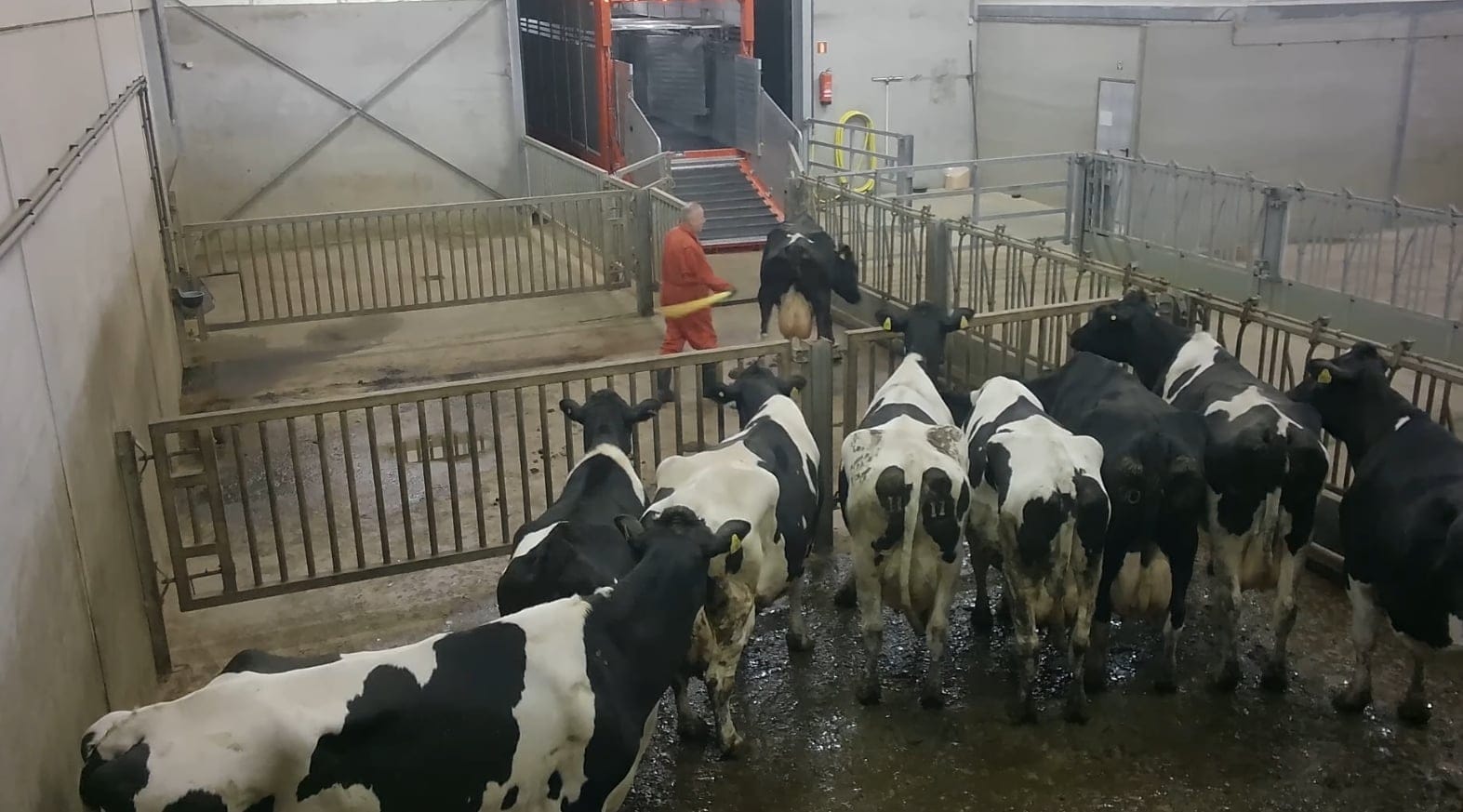
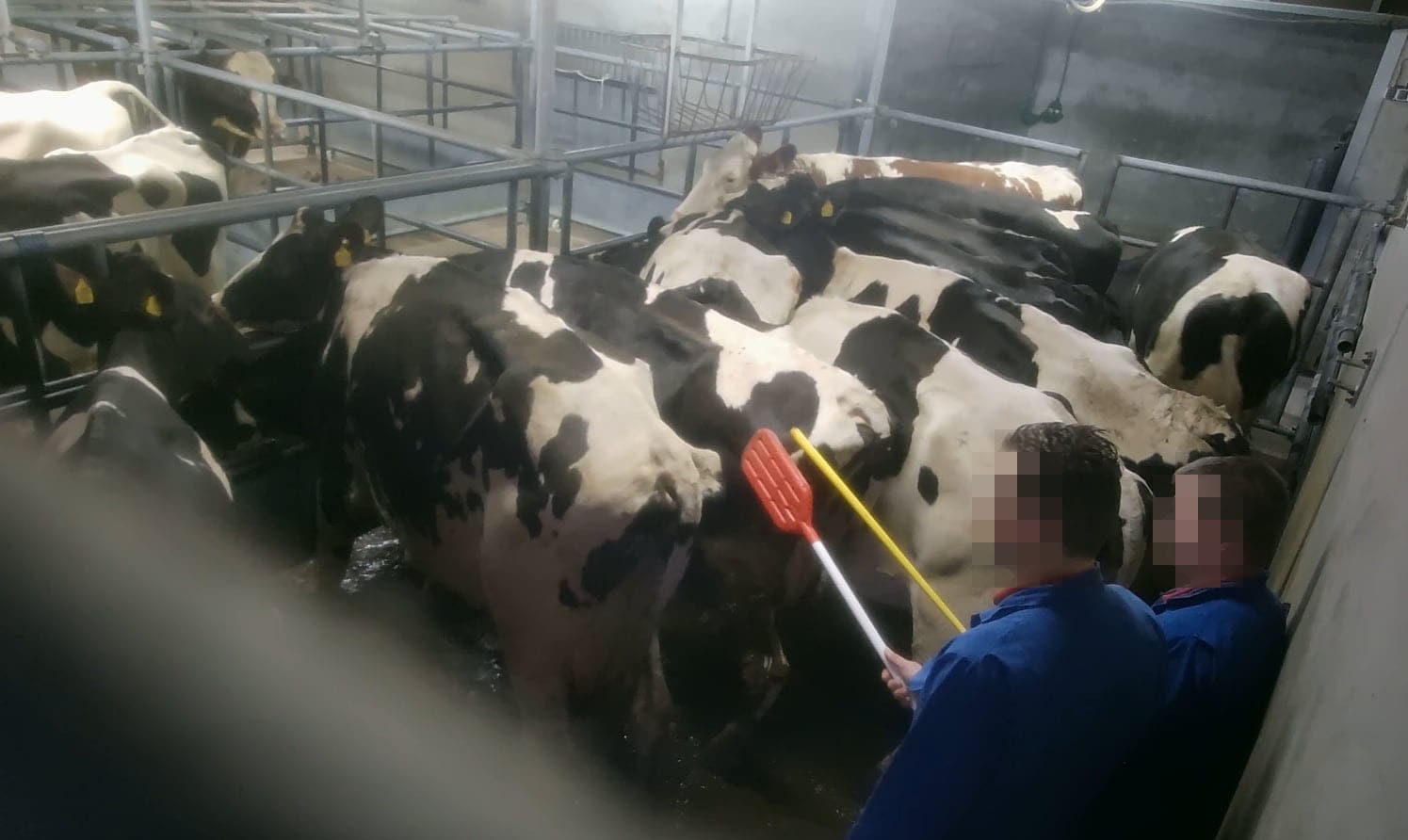
After our publication in April 2023, the NVWA announced in the media that livestock trader Dane (Oudemolen) had been under 'enhanced supervision' for some time and that the company had been immediately shut down. [25] This was merely a symbolic measure, as Ongehoord captured footage of Dane's cattle trucks operating during the suspension. It later came to light that the NVWA had temporarily revoked the permit for its collection point but had left its livestock trade, animal transport, and breeding activities unaffected. [26] In August 2023, Dane's collection point was also permitted to reopen. The NVWA expressed in the media that it had "every confidence" in Dane's improvement plan and in "the significant steps" the company had taken. [27] Interestingly, a WOO (Work and Safety at Work) request from Ongehoord concerning the improvements at Dane was rejected by the NVWA.
The NVWA initially stayed silent regarding the abuses at Teus Kuiper's collection point in Hoogblokland. It was only when EenVandaag sought information that the agency disclosed that the company had not been suspended but was under increased scrutiny. “Additional checks must ensure that animal welfare is guaranteed,” stated the NVWA. [28] New footage from Ongehoord shows a Kuiper transporter still loading cattle trucks in 2025. Earlier this year, the company was featured on Respect Vee, the promotional website of the interest group Vee&Logistiek. Wilco Kuiper, son of director Teus, was asked to explain how animals at their collection point receive "optimal care" and how he learned from his father and brother "how to transport livestock in a respectful manner". [29]
NVWA supervision: a drama for years
NVWA oversight has faced criticism for years. Even though the regulator has repeatedly introduced "tightened regulations," abuses in live animal transport seem to persist.
In 2019, the NVWA faced criticism regarding export certificates for seriously ill animals. [30] The 2Solve report on the NVWA highlighted major inconsistencies in how regulators interpret and enforce standards. An animal considered seriously ill by one inspector may be approved for transport by another. Some veterinarians take action against abuses, while others overlook infringements. [31]
In response to this criticism, the NVWA implemented "four-eyes supervision" for export inspections in 2019. This involved assigning a second inspector to evaluate the suitability of animals for transport. In April 2021, the Ministry of Agriculture determined that the NVWA should follow the “European guidelines for transport worthiness” when evaluating the condition of animals. [32] In September 2021, Ongehoord, through requested inspection documents, highlighted that the four-eye supervision and guidelines were not benefiting the animals: seriously ill and lame animals were still being transported to slaughterhouses. [33] Although the NVWA asserted in 2021 that Ongehoord's criticism was "outdated" (34), the supervisory authority reintroduced stricter rules in 2023, as the four-eye supervision and guidelines ultimately proved to be ineffective. [34] [35]
As recently as 2023, Ongehoord recorded seriously ill cows at collection points, and NVWA whistleblowers reported on EenVandaag that sick animals were still being sent to slaughterhouses. "Traders and transporters communicate about where a strict veterinarian is located and where a more lenient one can be found. If stricter inspections are implemented, the transports will simply be redirected." Inspectors who wish to take action feel hindered. They often find themselves in disputes with their managers or even face reprimands. [36]
In 2024, a WOO request from Pigs in Need revealed that the NVWA, during its limited inspections, observed numerous sick and lame cows being unloaded from trucks at slaughterhouses. [37] Supervisory measures and fines have had no impact on the industry whatsoever.
The new footage from Ongehoord shows that the NVWA has not yet addressed the issues related to the transport of animals in 2025. Similar to 2023, the investigation captured several lame cows at various collection points.
Supervision according to industry regulations
The European transport regulation is clear: if animals are “unable to move painlessly on their own,” they cannot be transported. [38] It is undeniable that a lame cow feels pain when it moves. Abnormal walking behavior, even in mild cases, always signifies pain: the cow alters its walking behavior in an attempt to alleviate discomfort in a painful area of its body. [39]
The ban on transporting lame cows conflicts with the financial interests of the animal industry. Meat from a lame cow is safe for consumption, allowing slaughterhouses to generate revenue from it. If farmers cannot transport lame cows to a slaughterhouse, they face costs for treatment, euthanasia, and disposal.
In 2012, the European animal industry lobby launched the “European Guidelines for the Transport Worthiness of Cattle.” [40] This brochure presents the industry's interpretation of transport regulations. According to the industry, cows with mild forms of lameness can be transported. The guidelines include a "lameness assessment," which states that "cows with impaired mobility" or "reduced mobility" may be transported. This encompasses, for instance, cows that "walk with shortened steps and a hunched back" (a sign of pain). Only when a cow can no longer support itself on all four legs is its mobility considered "significantly impaired," and, according to the lobby, it is then prohibited from being transported.
The powerful livestock lobby easily promoted its guidelines to the authorities in European member states. Even though these guidelines conflict with the original transport regulation, the Dutch Ministry of Agriculture decided that the Netherlands Food and Consumer Product Safety Authority (NVWA) must follow the industry's guidelines for veterinary inspections.
With these guidelines, the animal industry is bending regulations that are inconvenient for its operations. Cows with milder forms of lameness can now be transported to slaughterhouses, even though the animals are in pain, the travel conditions are particularly harsh, and scientific research has demonstrated that lameness worsens during transport. According to BuRo, lameness increases after approximately three hours of transport. Repeated unloading and loading, such as during transport through collection points, also leads to increased lameness and additional suffering. In the Netherlands, the transport time for cows going directly to a slaughterhouse ranges from 1 to 8 hours. Transport through collection points to Dutch slaughterhouses takes 10 to 20 hours. When cows are transported via collection points to foreign slaughterhouses (Belgium, Germany), the transport time can be up to 30 hours. [41]
The NVWA appears to be slowly recognizing that the industry guidelines are resulting in more abuses. Improvements were promised for early 2025 with a "new assessment protocol." Regrettably, the regulator has not gained much insight from previous experiences: this protocol is also being developed “in collaboration with the industry.” [42]
Ongehoord believes that other protocols or stricter regulations will not lead to meaningful change. With BBB leading the Ministry of Agriculture (which also oversees the NVWA), the power and influence of the livestock lobby have only increased. BBB promotes "simplified supervision," which would further limit the NVWA's role. This would put oversight and inspections in the hands of the market players themselves. The NVWA must "trust the companies," abuses should be viewed as "mistakes," the current fine policy needs to be further relaxed, and more opportunities should be created to slaughter unsuitable animals. [43]
Sources
- 25
- 26
- 27
- 28
- 29
- 30
- 31
- 32
- 33
- 34
- 35
- 36
- 37
- 38
- 39
- 40
- 41
- 42
- 43