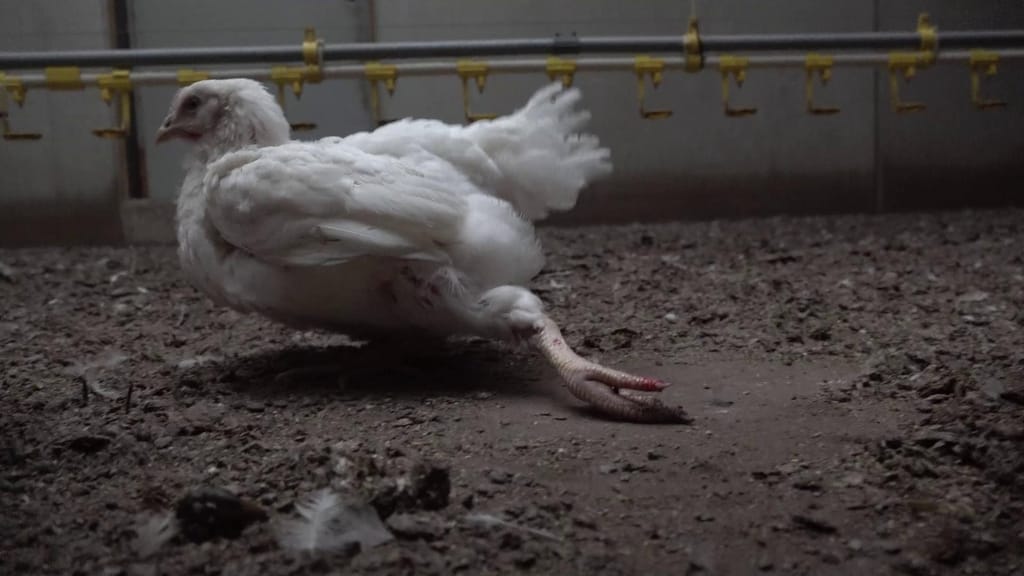
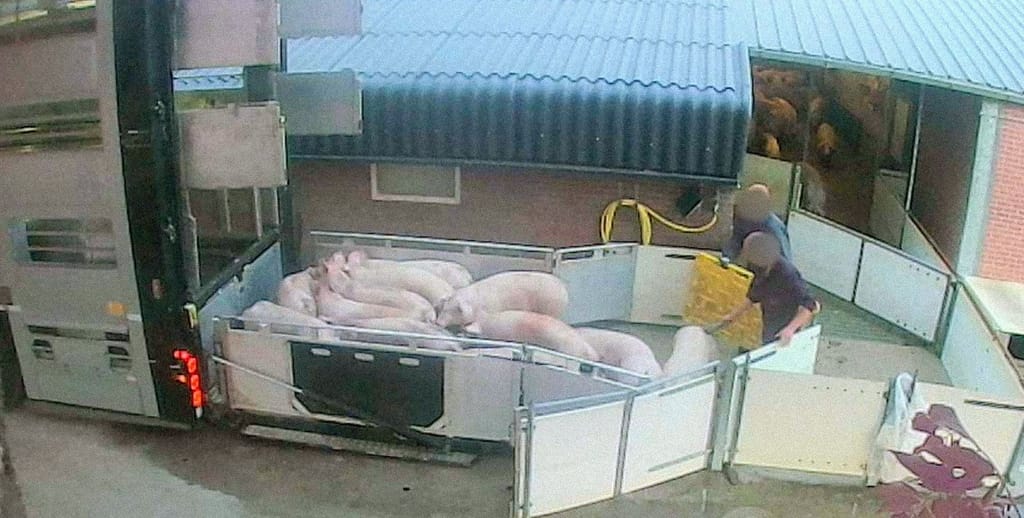
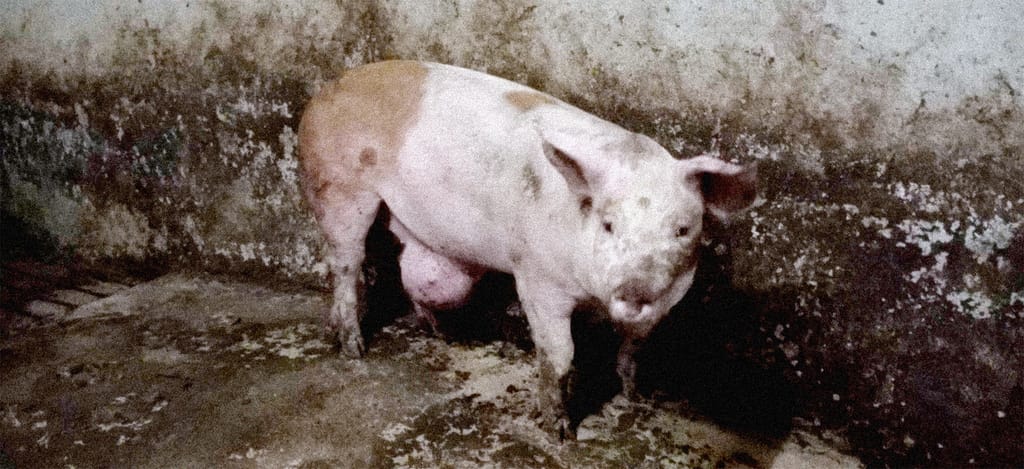
In June 2011, Ongehoord published its investigation into Dutch pig farming. The disturbing images of dead pigs, inflamed eyes, tumors, paralysis, and cannibalism sparked a national outcry. The different quality labels for pork seemed to do little to enhance the lives of these sensitive and intelligent animals.
Where we filmed
Natural life
Intelligent and sensitive
Pigs are highly intelligent, curious, and social animals. For instance, pigs can recognize objects of various colors and shapes, possess a sense of time, identify different individuals (including both pigs and humans), have a long-term memory, and excel at certain games more than dogs and primates.[1] The Utrecht School of the Arts and Wageningen University & Research (WUR), for example, have developed a computer game that allows people to play games with pigs.
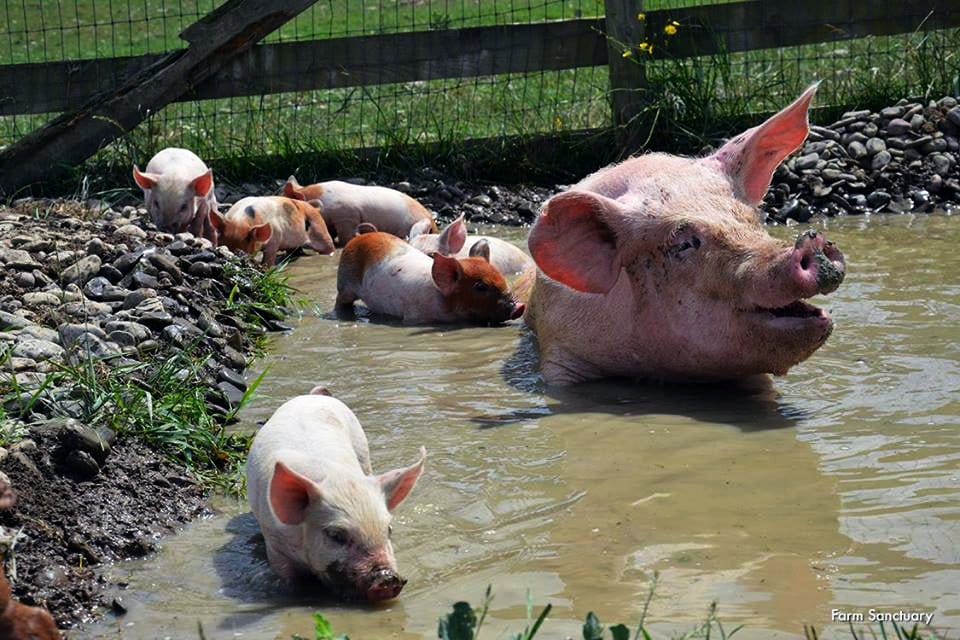
Pigs naturally live in groups of 1 to 4 individuals, including their young, and typically have only one male (boar). Play is crucial for pig development. For instance, piglets raised in environments where they can play with objects and other piglets show greater social and cognitive development. Pigs sleep in nests, which usually consist of a hole carefully covered with branches and/or grass. They also have designated areas for defecation, making them very clean and well-behaved animals when given the option. Since pigs cannot sweat, they frequently take mud baths to regulate their temperature and maintain cleanliness. Pigs are primarily active in the morning and evening, often resting and sleeping around midday.
A pig's distinctive snout is one of its most important body parts, as it connects them to the outside world; it contains most of their nerve endings, which they use to root around in the soil. Pigs root about 70% of the time when given the chance, and they do not do this solely to search for food. Rooting also alleviates stress and helps them meet their iron needs by absorbing iron-rich minerals.[2] Pigs possess a strong sense of smell through their noses, which is one reason they are used for truffle hunting.
Pigs are highly sensitive animals. For instance, they can become stressed easily. Sudden noises and loud sounds can cause their heart rate and blood pressure to increase rapidly. Additionally, pigs are very social creatures and appreciate physical contact with others of their kind. To communicate, pigs can produce up to 20 different sounds, including grunts and screeches.[3] Pigs are also affected by the emotional states of other pigs, which can be considered the most basic form of empathy.[4]
The exact time when pigs were domesticated is not known, but estimates suggest it occurred between 7000 and 9000 BC. All domesticated pigs are descendants of the wild boar, and it is estimated that there are currently around 300 breeds of pigs.[5]
Life in the industry
Intensive pig farming
Currently, there are about 12 million pigs in the Netherlands. However, this number doesn't reflect the full picture. Each year, over 30 million piglets are born. Unfortunately, around 6 million of these piglets die prematurely. Since more piglets are produced than can be raised into meat pigs, a significant number—between 6 and 7 million—are exported abroad at a young age. Additionally, another 3 million live meat pigs are also exported. This makes the Netherlands one of the leading pig-exporting countries in Europe.
The pig population includes approximately 1 million breeding pigs, 2 million piglets still with their mothers, 5 million young pigs weighing up to 50 kg, and around 4 million meat pigs.
The number of pig farms has decreased significantly since 2000. In that year, there were 7,700 farms, but by 2015, this number had fallen by 56% to 3,400. Interestingly, during the same period, the total number of pigs increased by 12% to reach 12 million, indicating that more pigs are being raised on each farm.[4] Most pig farms are situated in North Brabant, Limburg, and the eastern region of the country.
Pigs in modern pig farming are quite different from those of the past. A "breeding sow" now weighs twice as much as a wild boar and has double the number of teats.[5] Selective breeding, particularly in recent decades, has focused solely on maximizing production; the goal is to produce as many piglets as possible and to achieve rapid growth. For instance, a pig gains approximately 0.8 kg per day and reaches its maximum weight of 120 kg in about 7 months, after which it is sent to the slaughterhouse. Selective breeding for specific traits often compromises other important traits such as health, stress resistance, and social behavior.[6] For example, the well-known pink pigs (technically referred to as "white" pigs) have disproportionately short legs and long bodies, leading to unnatural weight distribution and various related issues.
Topigs Norsvin, one of the largest breeding companies globally, aims for "crossbreeds" that can "produce" 40 piglets per year. Currently, the average is 30-35 piglets per pig annually. In comparison, a wild boar typically has an average of 6-12 young per year, depending on its habitat and food availability.[7]
Larger litters are linked to increased piglet mortality and negatively affect welfare due to competition among piglets. Often, there are not enough teats for all to suckle, and lower birth weights make them more vulnerable to disease.[8] This situation also adds stress for the mother pig. On average, more piglets are born than a sow can adequately feed, leading to the use of "foster sows" and artificial "rearing systems" (a type of incubator). Legally, piglets can only be weaned (removed from their mothers) after 28 days, and in certain exceptional cases, even earlier, down to a minimum of 21 days. However, this earlier weaning does not occur occasionally in the current pig sector, but rather systematically, primarily for economic reasons.[9] In conventional housing, weaning is a sudden and very stressful event for piglets, often resulting in a so-called weaning dip, where the piglets' feed intake, growth, and immunity decline. In nature, weaning is a gradual process that concludes 15–22 weeks after birth.[10]
Another key difference between pigs from intensive pig farming and "natural" pigs is their age at slaughter. Finishing pigs are typically slaughtered after 6 to 8 months. Some pigs may even be slaughtered after 2 years because they are no longer economically viable. In the wild, pigs can live for 10 to 15 years, with some known to reach 20 to 25 years. In the Netherlands, however, most pigs do not live past their first birthday.
An unhealthy industry
Well-being, disease and mortality
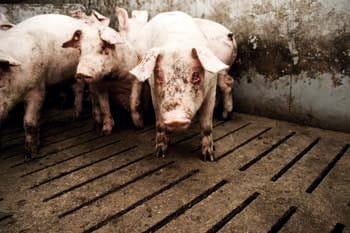
The invention and use of slatted floors has been the most significant advancement in (intensive) pig farming, both economically and in terms of animal welfare. Slatted floors enable the drainage of manure and urine, removing the need for absorbent straw (bare floors) and thus eliminating the labor-intensive task of emptying pens. This also means that a separate area for pigs to defecate is no longer necessary, allowing more pigs to be housed per square meter. This brings additional advantages for the pig farming industry, such as reduced heating costs. On average, pigs have only about 1 square meter of space available to them. However, this limitation prevents pigs from exhibiting their natural behaviors, such as building nests, sleeping and defecating separately, rooting, and regulating their temperature, etc. The ability of animals to display their normal or natural behaviour is one of the pillars of the definition of welfare.[11]
Housing conditions also significantly impact the emotional state of pigs. It turns out that pigs on bare floors reacted more pessimistically than pigs on a floor with enrichment material (straw).[12] For comparison, for hobby pigs, a surface area per pig of at least 75 m² is recommended.[13] Despite increased attention to pig welfare today, it remains quite limited and constrained by modern housing methods. For instance, “soeling” (covering the body with mud) or a mud bath has been greatly undervalued in pig welfare research. Before the rise of intensive livestock farming, it was considered a normal aspect of pig farming, whereas today, the ability to wallow is more of an exception than the norm. To regulate their body temperature, pigs are dependent on farmers and regularly experience heat stress, as temperatures are often kept relatively high to inhibit pig activity and increase growth yields.[14] Conversely, pig houses are extensively ventilated, especially in summer, because high pig densities can lead to overheating, and dust and ammonia concentrations can become excessive. However, drafts can cause stress and unrest, increasing the risk of tail and ear biting.
Stereotypic behavior is very common in pigs due to their inability to express natural behaviors. Stereotypic behavior includes repetitive movements and/or actions such as bar biting, tail biting, and other biting behaviors that arise from boredom, frustration, and various forms of stress.
Tail biting
Tail biting is one of the most significant welfare issues in modern pig farming. To prevent this behavior, young pigs have their tails docked at a very early age, which involves cutting off their tails. Tail docking is a painful procedure and does not always effectively prevent tail biting. Additionally, it fails to address the root causes of the problem. According to European Directive 2008/120/EC, tail docking of piglets is allowed, but it should not be performed routinely. However, current practices indicate otherwise.
- No straw is present
- A slatted floor is present
- The environment is bare
For instance, research indicates that an enriched environment significantly reduces tail biting.[16] However, recent studies from Wageningen University & Research reveal that tail biting still occurs even when the three previously mentioned welfare requirements are satisfied. This suggests that pigs continue to experience stress despite being in an improved, enriched environment.[17] This aligns with other research that has shown that while housing is crucial for pig welfare, better housing alone (such as on organic farms) does not guarantee optimal welfare, as genetic factors also influence how sensitive a pig is to stress.[18] Other forms of biting behavior, including ear biting, leg biting, and flank biting, are akin to tail biting. These behaviors also arise from boredom and stress due to the inability to exhibit natural behaviors. For instance, piglets are grouped together in large numbers after being separated from their mothers, and pigs from different litters are mixed, leading to additional stress and anxiety.
After a gestation period of about 115 days, a pig gives birth to around 14 piglets. Each piglet stays with its mother for about 25 days, receiving her milk during this time. After this, the piglets are "weaned," which means they are separated from their mothers and placed in groups of dozens in a "weaning unit." They remain in the weaning unit for about 7 weeks until they reach a weight of approximately 25 kg.
Next, the piglets are moved to a finishing pig house, where they are typically housed with 7 to 10 pigs in a pen. This can happen on the same farm (closed farm), but often they go to a specific "finishing pig farm." They stay there for about four months until they weigh between 110 and 120 kg. After reaching this weight, they are taken to the slaughterhouse. A "finishing pig" is therefore fattened and slaughtered before its first year of life.
Diseases and abnormalities
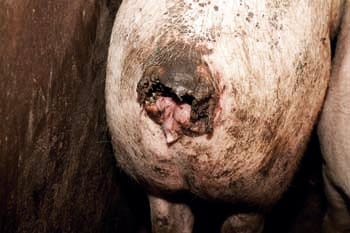
The unnatural living conditions, stable climate, and high infection pressure contribute to various diseases and health issues in pig farming.[19] One major reason is that the limits of maximum production are continually being pushed, leading to relatively low resistance in pigs. For instance, an increasing number of piglets are being born, resulting in smaller piglets with lower resistance. Additionally, selective breeding for rapid growth compromises a pig's resistance, as most energy and nutrients are directed towards muscle and fat production. Another significant factor contributing to the high incidence of diseases is housing. Pigs are kept in unnaturally high densities and large groups, allowing contagious diseases to spread quickly. In 2015, the average pig farm housed at least 3,400 pigs, which is 155% more than in 2000.[20] The number of farms has decreased by 56% during the same period, resulting in 3,400 farms. In other words, there are fewer but larger farms, which further heightens the risk of disease outbreaks and transmission.
Due to pigs' low resistance to disease and their high population densities, antibiotics are often administered to prevent disease outbreaks. A recent investigation among pig farmers in Belgium indicates that preventative antibiotics are commonly used, with even healthy pigs receiving essential medications meant for infections caused by resistant bacteria. Consequently, newborn piglets frequently become carriers of these resistant bacteria.[21] Pigs are highly sensitive to oxygen deficiency. Stress can lead to overload, resulting in heart failure and ultimately death. This is one reason why pigs are often deprived of food for 12 to 24 hours before being transported to the slaughterhouse (fasting). The digestion of food requires a significant amount of oxygen, and when combined with the stress of transport, this can quickly result in oxygen deficiency. Many diseases are consistently present on farms. For instance, over 95% of pig farms are affected by barn cough (mycoplasma), and more than 90% of farms are infected with PRRSV (abortion blue).[19]
Mycoplasma and PRRSV, along with Chlamydia, are among the most common causes of eye infections. These distinct red, inflamed eyes (conjunctivitis) are frequently observed in pigs, as these pathogens are prevalent on most farms. Besides bacterial and viral infections, ammonia can also lead to red eyes and respiratory issues such as coughing and irritated nasal mucous membranes. Many companies do not ventilate adequately in winter to cut costs (reduce heat loss), leading to ammonia concentrations that can rise as high as 50 ppm.[22] The legal maximum is 20 ppm. Exposure to 50 ppm ammonia for just 3 hours can cause irritation to the eyes and respiratory system.[23] Alongside respiratory and digestive diseases, leg and claw disorders are also common in pigs. Regarding premature culling of sows from pig farms, leg and claw issues rank second only to fertility problems. On average, around 10% of sows experience lameness, for instance.[19] The joints can be affected, with inflammation and osteochondrosis being the most prevalent conditions. Osteochondrosis is a disorder in joint development, primarily caused by selective breeding of pigs for rapid growth (muscle/fat tissue), which leads to delayed bone formation. This is not a significant concern for pigs raised for meat production, as they are typically slaughtered before osteochondrosis can develop. In Sweden, research indicates that sows in group housing, where there is more space per animal, experienced fewer shoulder abscesses (3.0% versus 13.4%) and claw abnormalities (4.6% versus 9.1%) compared to sows in individual loose housing.[24] Greater freedom of movement promotes stronger bones and muscles.[25]
In addition to classical swine fever, African swine fever (ASF) is another concern, which, as the name implies, primarily occurs in Africa. However, since 2007, the virus has also been detected in Eastern Europe/Russia, and since 2014 in the eastern part of Europe, including Poland. In 2018, the virus spread to Belgium and was identified in wild boars in the province of Luxembourg. Following the discovery of the virus in wild boars in the Ardennes, farmers' organizations, hunters, the VVD (People's Party for Freedom and Democracy), and the CDA (Christian Democratic Appeal) parties have collectively called for the culling of wild boars and maintaining a zero-level population to prevent the potential spread of African swine fever (ASF). Wageningen University states that the likelihood of spread by wild boars in the Netherlands is minimal.[26] In a previous outbreak in the Netherlands and Belgium, the spread was attributed to human activity, not wild boars. The recent detection of ASF in wild boars in the Ardennes also seems to stem from human actions, as the distance to infected areas in Eastern Europe is too vast for wild boars to traverse. Another possibility is that semi-tame wild boars from Eastern Europe have been reintroduced to the Ardennes, which would not be unprecedented. Several hunters have acknowledged this, and DNA research has confirmed that semi-tame wild boars have been released in the Ardennes.[27] Furthermore, hunters themselves represent one of the greatest risk groups for spreading the disease. Through hunting tourism, they may encounter infected animals in Eastern Europe and inadvertently introduce ASF into the Netherlands.
Scientific studies also indicate that hunting is counterproductive, as it can further propagate the disease and is not an effective control measure.[28] Animals are hunted and flee, disrupting the balance, and vacant spaces are filled by animals from other areas. The supplementary feeding of wild boars, often conducted by hunters, has also been identified as an additional risk factor for the spread of ASF in the same investigation.
The international transport of live animals rarely gets attention in the media, and farmers' organizations hardly mention it. For instance, the Netherlands imports pigs mainly from Belgium and Germany. Meanwhile, it exports live pigs primarily to Germany, but also to countries like Poland, Romania, and Hungary, where the ASF virus has been present for a while. While it's easy to blame wild boars as potential spreaders, this perspective distorts the reality of the situation.
Mortality
Pig mortality is typically divided into two categories: piglet mortality and sow mortality. These groups are considered the most vulnerable.
Piglet mortality
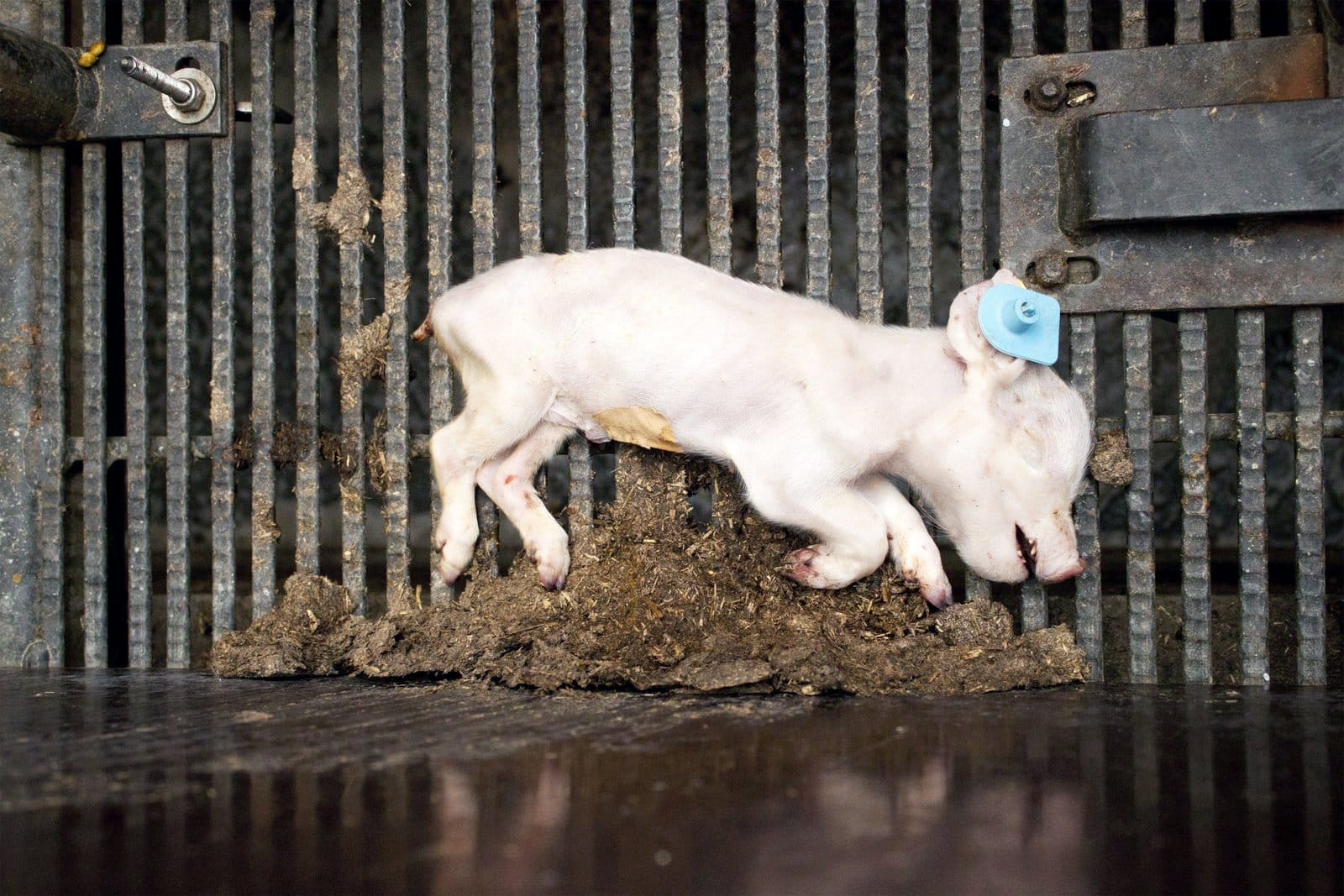
Piglet mortality includes both stillborn piglets and those that die after birth but before weaning. In 2015, 7.6% of piglets were stillborn, up from 6.9% in 2014. Additionally, piglet mortality after birth has risen in recent years, reaching 13.8% in 2015, compared to 13.0% in 2012 (LEI, AgroVision).
This increase in mortality is primarily due to the rising number of piglets being born. Selective breeding has led to an average of 14.2 piglets per sow in 2014, compared to 11.4 in 2001. As litter sizes grow, the piglets tend to be smaller and weaker. Additionally, there is a risk of insufficient milk production, as the number of piglets often exceeds the number of teats available on the sow.
Among the piglets that are stillborn, 75% are from the last three births. This is particularly true for older sows, as the birthing process takes longer due to weaker uterine muscles.[26] In older sows, labor is also more often induced with oxytocin injections, which raises the risk of premature placental abruption, potentially causing unborn piglets to die from a lack of oxygen. Inducing birth with oxytocin is frequently done too early, leading to smaller and weaker piglets. In 2012, it was estimated that one-third of all pig farmers in Flanders artificially induced labor.[27]
The primary causes of postnatal mortality are disease and overgrowth. Crushing occurs when a sow lies on or otherwise crushes her piglets. The risk is heightened with larger litters and piglets that have low birth weights. Additionally, sows may experience leg or claw issues and poor muscle condition due to prolonged standing, limited exercise, and selective breeding. This diminishes their ability to control their movements when lying down. Consequently, sows are sometimes confined in farrowing crates, where their movement is severely restricted, thus lowering the risk of crushing the piglets (which can still escape the crate). Pigs naturally create nests for giving birth. However, in conventional pig farming, they are unable to exhibit this natural behavior. As a result, sows can become very restless just before giving birth and may even begin nest-building behaviors during the process, which increases the risk of crushing. Lastly, selective breeding focuses on rapid weight gain and producing many piglets per litter, often at the expense of other important traits such as maternal instinct, which affects how alert sows are to their piglets.[28] In summary, this means that one in five piglets dies.
Sow mortality
In modern livestock farming, sows have often become true production machines; they are expected to produce as many piglets as possible in the shortest time. When "production" declines, their economic value also diminishes, leading to their being sent to the slaughterhouse for replacement. Typically, a sow averages six piglets (farrowings). After this, the number of stillborn piglets tends to rise. Consequently, a sow generally only lives to about four years of age.[29] However, many sows do not reach this age due to early culling or slaughter. Early culling happens when productivity falls short. Fertility issues and lameness are the primary reasons for the premature culling of sows.[30] "Culling" is a term used to describe sudden death or injuries severe enough that a sow must be euthanized immediately. International statistics indicate that average sow mortality has risen in recent years and could reach 10%.[31] This increase is linked to the growth in farm size and the heightened physical demands placed on sows.[32] The risk of mortality peaks around farrowing, as this is when sows often face the greatest stress. Additionally, there is a higher mortality rate in the summer due to heat stress.
Barn fires
Barn fires, particularly their frequency, are unfortunately a common result of current animal farming practices. In 2016, at least 13,592 pigs perished in eight barn fires.[33] In 2017, around 50,000 pigs died in seven fires.[34] As the number of pigs per farm continues to rise, the number of casualties per barn fire is also increasing. Barns housing animals inherently carry a high fire risk. For instance, the likelihood of a fire occurring at a poultry farm is eight times greater than at a typical home, and six times greater at a pig farm.[35] Since most animals are not self-sufficient (particularly pigs and chickens), evacuation options are limited. Often, there is only one or a few people present for hundreds or even thousands of animals, making survival chances very slim. Additionally, the Netherlands is one of the few countries where automatic fire extinguishing systems are not widely used. However, it remains uncertain whether this would significantly help, as most fires can spread rapidly through insulation materials in the ceiling and roof, which a sprinkler system, for example, cannot effectively address.
Quality labels
Quality marks
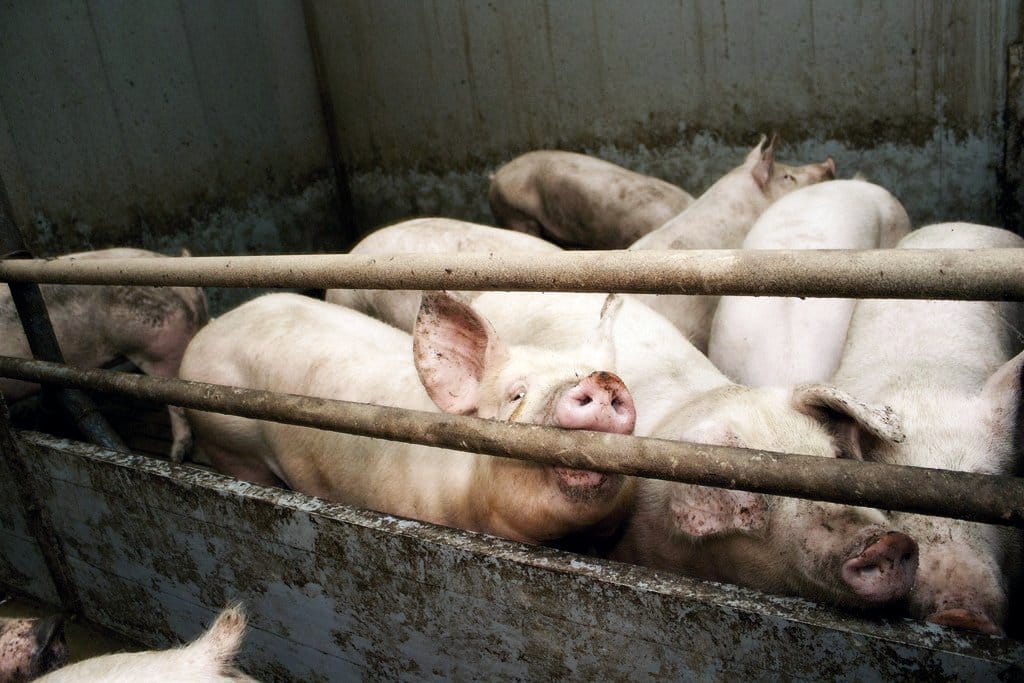
The pig industry offers several quality marks and projects that promise better animal welfare. However, many of these claims are hard to verify because of vague terminology and often a lack of legal standards. For instance, "free-range" does not have a legal definition. PROduCERT created the rules for the free-range meat quality mark, but the terms and conditions are not available on their website and must be requested via email.
Table 1 displays the most important official quality marks related to animal welfare, along with a summary of their characteristics. Figure 2 illustrates the share of the different Beter Leven quality marks.
| Conventional | Beter Leven ★ | Beter Leven ★★ | Beter Leven ★★★ | Milieukeur2 | Skal Organic | Free-range | |
|---|---|---|---|---|---|---|---|
| Area per pig (m²) | 0.8 | 1 | 1.1 | 1.3 | 1–1.1 | 0.8–1.3 | 0.7–1.2 |
| Outdoor access | no | no | covered | covered | no | yes | yes |
| Outdoor area for finishing pigs (m²) | N/A | N/A | 0.7 | 1 | N/A | 0.4–1.0 | 25 |
| Outdoor area paved? | N/A | N/A | yes | yes | N/A | allowed | allowed |
| Outdoor area covered? | N/A | N/A | fully allowed | max. 75% | N/A | max. 75% | fully allowed |
| Tail-docking prohibited | no | no | yes | yes | no | yes | yes |
| Castration prohibited | no | yes | no | no | yes | no | no |
| Days piglets stay with sow | 21–28 | 21–28 | min. 35 | min. 42 | not specified | not specified | not specified |
| Sow loose in farrowing pen | no | no | from day 5 | from day 3 | not specified | yes | from day 4 |
| Enrichment material | chain | rope, wood, straw cylinder | straw | straw | yes1 | yes1 | straw |
| Piglet transport (max. hours) | unlimited | 6 | 4 | 4/62 | not specified | not specified | not specified |
| Finishing pig transport (max. hours) | unlimited | 8 | 6 | 6 | not specified | not specified | not specified |
Organic pig farming features two quality marks: the EKO quality mark and the European organic quality mark. The 3-star Beter Leven certification differentiates between non-organic (Livar) and organic pigs. The key distinction is the space allocated per animal in the covered run. Interestingly, castration is not prohibited for organic pork. While "free-range" sounds appealing, it may not be as beneficial as it seems. For instance, the runs can be paved, and in many cases, up to 75% of the area can be covered. Pasture grazing is only allowed for pregnant sows under the 3-star Beter Leven certification. The space allocated per pig is minimal for most certifications, ranging from 0.6 to 1.0 m² for finishing pigs and 1.0 to 2.5 m² for sows. Only free-range pigs have more space in the run (25 m²). As mentioned earlier, a minimum of 75 m² is recommended for hobby pigs.[35]
However, more space can also have disadvantages in modern livestock farming. For instance, research indicates that piglet mortality rates up to weaning are significantly higher in organic pig farms (around 20%) compared to conventional housing (13%).[36] Another investigation revealed that while free-feeding resulted in fewer deaths at birth than traditional farrowing, the number of deaths increased after farrowing.[37] Risk factors for crushing include a large number of piglets, low birth weight, the condition of the mother pig's legs, and stress experienced by the mother pig and/or the piglets (due to competition for milk, poor maternal traits from selective breeding, etc.). Even though the mother pig has more space, the highly unnatural living conditions and selective breeding do not necessarily result in improved welfare for the pigs.
What can you do?
Share this investigation
Share this investigation with people around you.
Sources
37 sources
Marino, L. & Colvin, C.M. (2015) Thinking pigs: a comparative review of cognition, emotion, and personality in Sus domesticus. International Journal of Comparitive Psychology, 28
Fokkinga, Anno (2004) The Pig Book. Publisher THOTH Bussum ISBN 9789068683738
Watson, Lyall (2004) The whole hog: exploring the extraordinary potential of pigs. Smithsonian books Washington. ISBN 1-58834-216-6
Sanders, Violette (2000) The Pig as a Companion Animal. Etiko Publishers Nieuw Vennep ISBN 9789052661582
Reimert, Inonge (2014) (Em)pathetic pigs? The impact of social interactions on welfare, health and productivity. PhD thesis, Wageningen University ISBN: 978-94-6173-996-4
Groot Bruinderink, G & Dekker, Jasja (2010) Wild boars. KNNV publishers ISBN 9789050113281
Rutherford, K.M.D. et al. (2013) The welfare implications of large litter size in domestic pig I: biological factors. Animal Welfare 22; p. 199-218
van Dixhoorn, I. et al. (2011) Separating animals. Wageningen UR Livestock Research, report 428
van Nieuwamerongen, S.E. et al. (2014) Literature review on group housing of farrowing sows and their piglets, report 757, Wageningen UR, Livestock Research
FAWC (Farm Animal Welfare Council) (2009) Farm Animal Welfare in Great Britain: Past, Present and Future. Farm Animal Welfare Council: Millbank, London, UK
Douglas, C. et al.(2012). Environmental enrichment induces optimistic cognitive biases in pigs. Appl. Anim. Behav. Sci. 139, p. 65-73.
Diepens, R. (2016) The Big Little Pig Book. Naturally in the South ISBN 978-90-825135-0-9
Bracke, M.B.M. (2010) Sowing of pigs and implications for animal welfare. Wageningen UR Livestock Research, report 381
EFSA (2007) Scientific Opinion of the Panel on Animal Health and Welfare on a request from Commission on the risks associated with tail biting in pigs and possible means to reduce the need for tail docking considering the different housing and husbandry systems. The EFSA Journal 611, p. 1-13
Bolhuis, J.E. et al. (2006) Effect of rearing and housing environment on behavior and performance of pigs with different coping characteristics. Appl. Anim. Behav. Sci. 101, p. 68-85
Geert van der Peet et al. (2016) Keeping pigs with an intact tail. Implementing step 1 of the Dalfsen Declaration: demonstration project, practical network, and international collaboration. Wageningen UR Livestock Research. Report 939
Sutherland M.A et al.(2013). Animal health and welfare issues facing organic production systems. Animals 3:1021–1035.
Diseases in pigs (2011) Department of Sustainable Agricultural Development, Flemish Government. Deposit number D/2010/3241/391
CBS, September 23, 2016
Callens, Bénédicte (2015) Antimicrobial use and resistance in Belgian pig production, PhD thesis, Ghent University
Aarnink, A. et al. (2014) Towards energy-neutral pig houses with air recirculation: the Energy House. Wageningen UR Livestock Research; Livestock Research, Report 814
Wathes, C.M. et al. (2003) Ammonia concentrations and emissions in livestock production facilities: guidelines and limits in the USA and UK. Agricultural and Biosystems Engineering; Conference Proceedings and Presentations. Paper No. 034112
Hultén, F. et al. (1995) A field investigation on group housing of lactating sows with special reference to sow health at weaning. Acta Veterinaria Scandinavica 36(2): p. 201-212.
Marchant, J.N. et al. (1996) Effects of dry sow housing conditions on muscle weight and bone strength. Animal Science 62(1): p. 105-113
Vandersmissen, T. et al. (2012) Stillborn piglets and piglet mortality on modern pig farms. Brochure European Agricultural Fund for Rural Development
Considerations for Inducing Parturition (2012) Farmers' Union, Management & Technology; Pigs. June 8, 2012
Diepens, R. (2016) The Big Little Pig Book. Naturally in the South ISBN 978-90-825135-0-9
Longer lifespan without compromise (2011) Pig business; no. 7
Diseases in pigs (2011) Department of Sustainable Agricultural Development, Flemish Government. Deposit number D/2010/3241/391
Beek, J. Sow mortality. Department of Reproduction, Obstetrics and Herd Animal Medicine. Faculty of Veterinary Medicine, Ghent University.
2016 Progress Report of the Steering Committee for the Barn Fire Action Plan 2012-2016, Appendix 1 from the Evaluation of the Barn Fire Action Plan 2012-2016, WU/IFV, report 1035
Diepens, R. (2016) The Big Little Pig Book. Naturally in the South ISBN 978-90-825135-0-9
Higher piglet vitality in Dutch sow farming, 5th progress report; August 19, 2015. Piglet Vitality Steering Group.
van Nieuwamerongen, S.E. et al. (2014) Literature review on group housing of farrowing sows and their piglets, Wageningen UR Livestock Research, Report 757