Chapter 4 / 5
Mortality
Pig mortality is typically divided into two categories: piglet mortality and sow mortality. These groups are considered the most vulnerable.
Piglet mortality
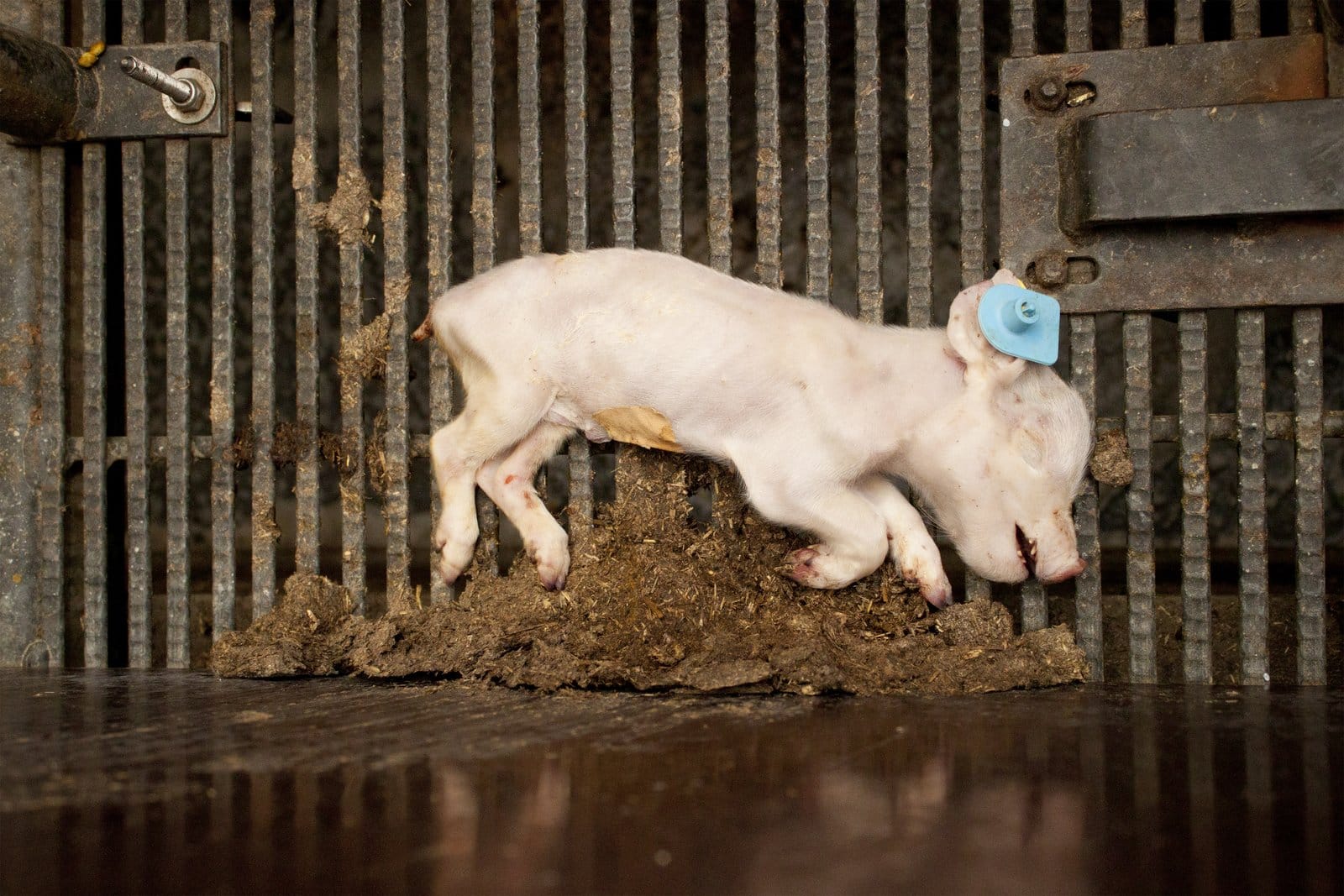
Piglet mortality includes both stillborn piglets and those that die after birth but before weaning. In 2015, 7.6% of piglets were stillborn, up from 6.9% in 2014. Additionally, piglet mortality after birth has risen in recent years, reaching 13.8% in 2015, compared to 13.0% in 2012 (LEI, AgroVision).
This increase in mortality is primarily due to the rising number of piglets being born. Selective breeding has led to an average of 14.2 piglets per sow in 2014, compared to 11.4 in 2001. As litter sizes grow, the piglets tend to be smaller and weaker. Additionally, there is a risk of insufficient milk production, as the number of piglets often exceeds the number of teats available on the sow.
Among the piglets that are stillborn, 75% are from the last three births. This is particularly true for older sows, as the birthing process takes longer due to weaker uterine muscles. [26] In older sows, labor is also more often induced with oxytocin injections, which raises the risk of premature placental abruption, potentially causing unborn piglets to die from a lack of oxygen. Inducing birth with oxytocin is frequently done too early, leading to smaller and weaker piglets. In 2012, it was estimated that one-third of all pig farmers in Flanders artificially induced labor. [27]
The primary causes of postnatal mortality are disease and overgrowth. Crushing occurs when a sow lies on or otherwise crushes her piglets. The risk is heightened with larger litters and piglets that have low birth weights. Additionally, sows may experience leg or claw issues and poor muscle condition due to prolonged standing, limited exercise, and selective breeding. This diminishes their ability to control their movements when lying down. Consequently, sows are sometimes confined in farrowing crates, where their movement is severely restricted, thus lowering the risk of crushing the piglets (which can still escape the crate). Pigs naturally create nests for giving birth. However, in conventional pig farming, they are unable to exhibit this natural behavior. As a result, sows can become very restless just before giving birth and may even begin nest-building behaviors during the process, which increases the risk of crushing. Lastly, selective breeding focuses on rapid weight gain and producing many piglets per litter, often at the expense of other important traits such as maternal instinct, which affects how alert sows are to their piglets. [28] In summary, this means that one in five piglets dies.
Sow mortality
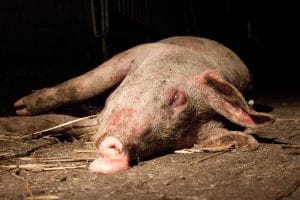
In modern livestock farming, sows have often become true production machines; they are expected to produce as many piglets as possible in the shortest time. When "production" declines, their economic value also diminishes, leading to their being sent to the slaughterhouse for replacement. Typically, a sow averages six piglets (farrowings). After this, the number of stillborn piglets tends to rise. Consequently, a sow generally only lives to about four years of age. [29] However, many sows do not reach this age due to early culling or slaughter. Early culling happens when productivity falls short. Fertility issues and lameness are the primary reasons for the premature culling of sows. [30] "Culling" is a term used to describe sudden death or injuries severe enough that a sow must be euthanized immediately. International statistics indicate that average sow mortality has risen in recent years and could reach 10%. [31] This increase is linked to the growth in farm size and the heightened physical demands placed on sows. [32] The risk of mortality peaks around farrowing, as this is when sows often face the greatest stress. Additionally, there is a higher mortality rate in the summer due to heat stress.
Barn fires
Barn fires, particularly their frequency, are unfortunately a common result of current animal farming practices. In 2016, at least 13,592 pigs perished in eight barn fires. [33] In 2017, around 50,000 pigs died in seven fires. [34] As the number of pigs per farm continues to rise, the number of casualties per barn fire is also increasing. Barns housing animals inherently carry a high fire risk. For instance, the likelihood of a fire occurring at a poultry farm is eight times greater than at a typical home, and six times greater at a pig farm. [35] Since most animals are not self-sufficient (particularly pigs and chickens), evacuation options are limited. Often, there is only one or a few people present for hundreds or even thousands of animals, making survival chances very slim. Additionally, the Netherlands is one of the few countries where automatic fire extinguishing systems are not widely used. However, it remains uncertain whether this would significantly help, as most fires can spread rapidly through insulation materials in the ceiling and roof, which a sprinkler system, for example, cannot effectively address.
Sources
- 26
Vandersmissen, T. et al. (2012) Stillborn piglets and piglet mortality on modern pig farms. Brochure European Agricultural Fund for Rural Development
- 27
Considerations for Inducing Parturition (2012) Farmers' Union, Management & Technology; Pigs. June 8, 2012
- 28
Diepens, R. (2016) The Big Little Pig Book. Naturally in the South ISBN 978-90-825135-0-9
- 29
Longer lifespan without compromise (2011) Pig business; no. 7
- 30
Diseases in pigs (2011) Department of Sustainable Agricultural Development, Flemish Government. Deposit number D/2010/3241/391
- 31
- 32
Beek, J. Sow mortality. Department of Reproduction, Obstetrics and Herd Animal Medicine. Faculty of Veterinary Medicine, Ghent University.
- 33
2016 Progress Report of the Steering Committee for the Barn Fire Action Plan 2012-2016, Appendix
1 from the Evaluation of the Barn Fire Action Plan 2012-2016, WU/IFV, report 1035
- 34
- 35
Diepens, R. (2016) The Big Little Pig Book. Naturally in the South ISBN 978-90-825135-0-9