Chapter 2 / 5
Life in the industry
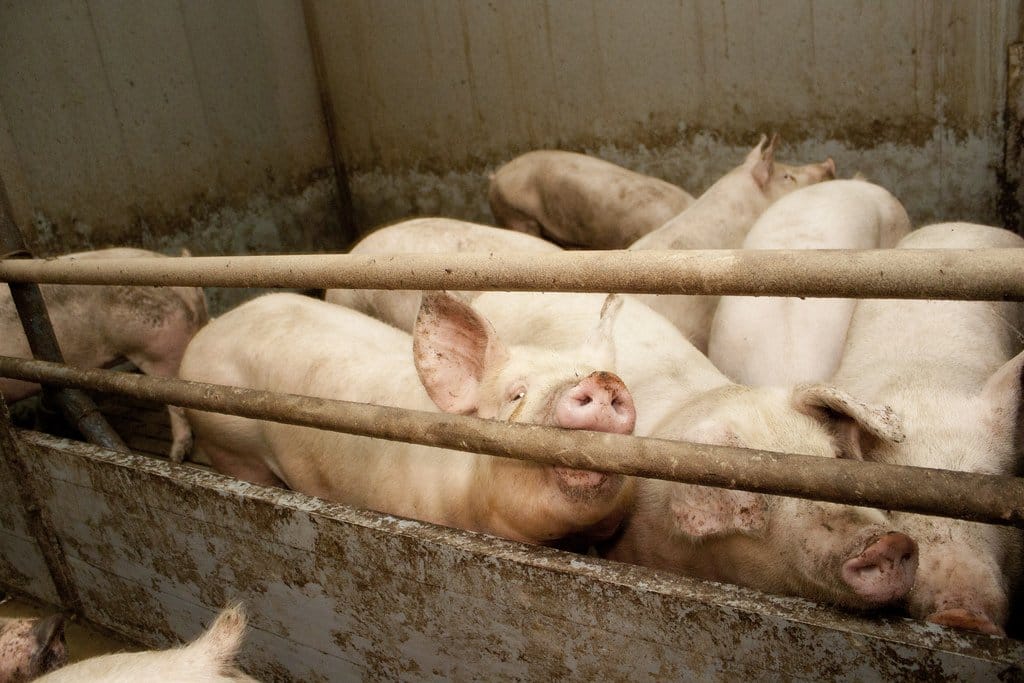
Intensive pig farming
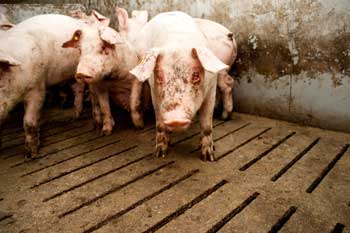
Currently, there are about 12 million pigs in the Netherlands. However, this number doesn't reflect the full picture. Each year, over 30 million piglets are born. Unfortunately, around 6 million of these piglets die prematurely. Since more piglets are produced than can be raised into meat pigs, a significant number—between 6 and 7 million—are exported abroad at a young age. Additionally, another 3 million live meat pigs are also exported. This makes the Netherlands one of the leading pig-exporting countries in Europe.
The pig population includes approximately 1 million breeding pigs, 2 million piglets still with their mothers, 5 million young pigs weighing up to 50 kg, and around 4 million meat pigs.
The number of pig farms has decreased significantly since 2000. In that year, there were 7,700 farms, but by 2015, this number had fallen by 56% to 3,400. Interestingly, during the same period, the total number of pigs increased by 12% to reach 12 million, indicating that more pigs are being raised on each farm. [4] Most pig farms are situated in North Brabant, Limburg, and the eastern region of the country.
Pigs in modern pig farming are quite different from those of the past. A "breeding sow" now weighs twice as much as a wild boar and has double the number of teats. [5] Selective breeding, particularly in recent decades, has focused solely on maximizing production; the goal is to produce as many piglets as possible and to achieve rapid growth. For instance, a pig gains approximately 0.8 kg per day and reaches its maximum weight of 120 kg in about 7 months, after which it is sent to the slaughterhouse. Selective breeding for specific traits often compromises other important traits such as health, stress resistance, and social behavior. [6] For example, the well-known pink pigs (technically referred to as "white" pigs) have disproportionately short legs and long bodies, leading to unnatural weight distribution and various related issues.
Topigs Norsvin, one of the largest breeding companies globally, aims for "crossbreeds" that can "produce" 40 piglets per year. Currently, the average is 30-35 piglets per pig annually. In comparison, a wild boar typically has an average of 6-12 young per year, depending on its habitat and food availability. [7]
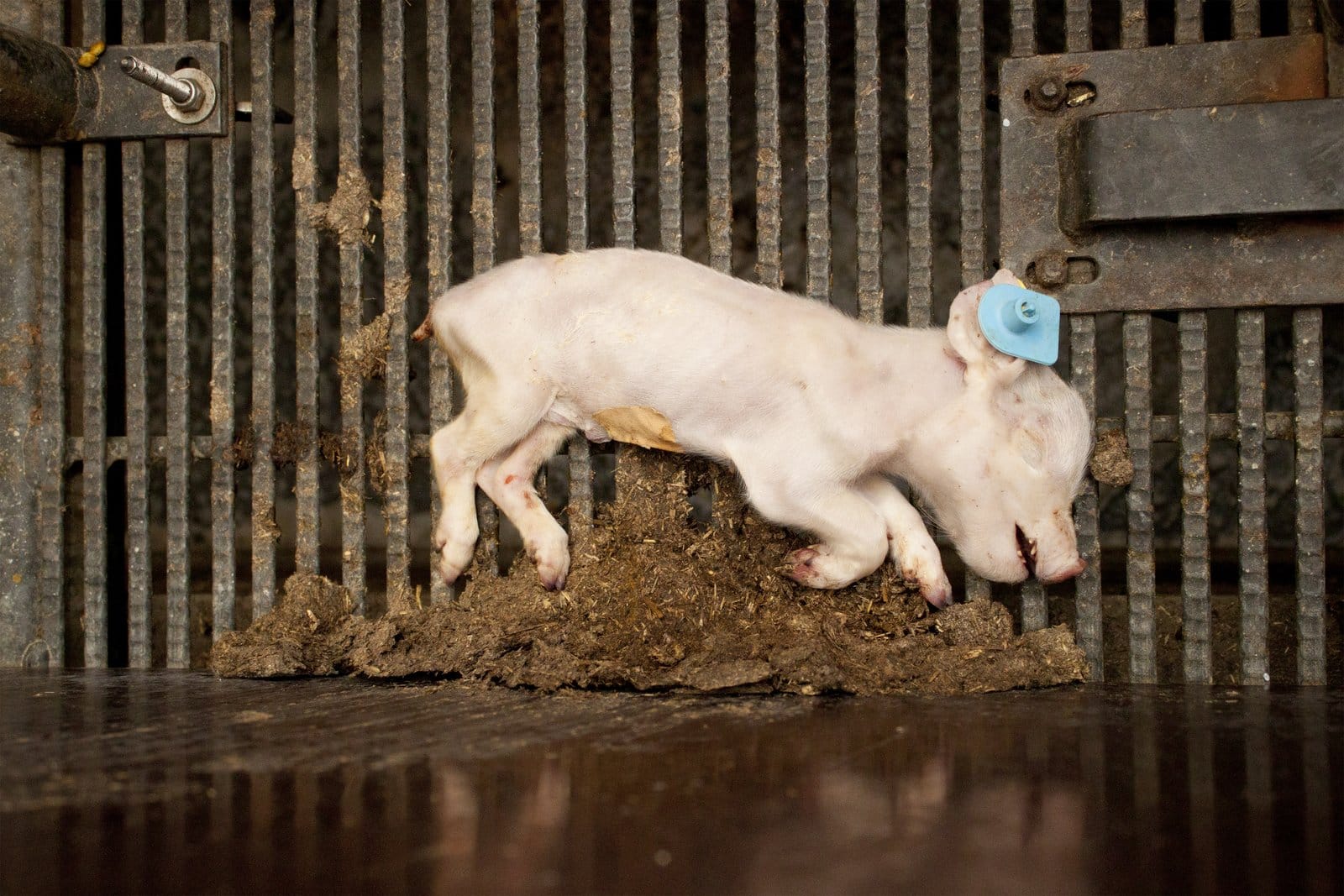
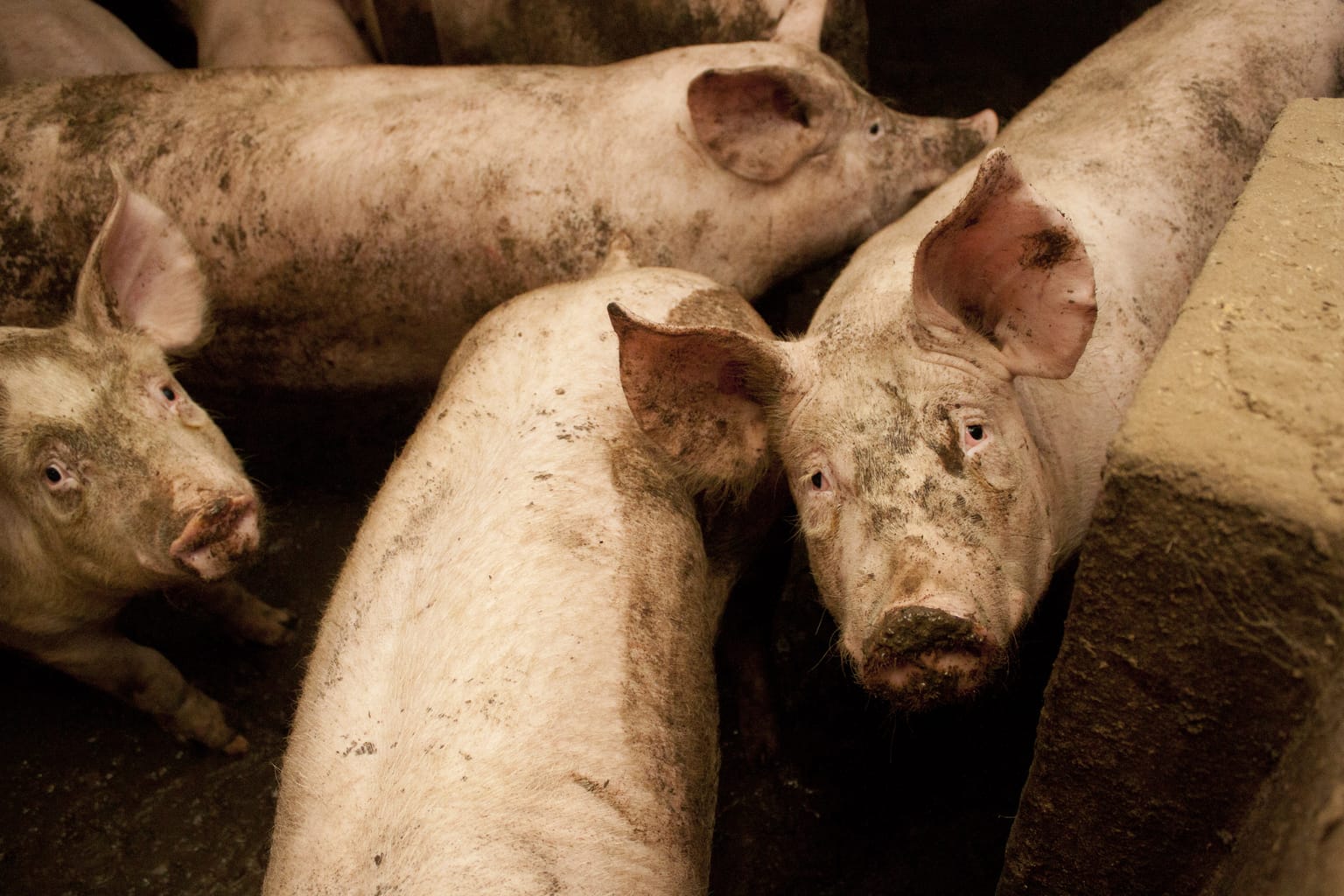
Larger litters are linked to increased piglet mortality and negatively affect welfare due to competition among piglets. Often, there are not enough teats for all to suckle, and lower birth weights make them more vulnerable to disease. [8] This situation also adds stress for the mother pig. On average, more piglets are born than a sow can adequately feed, leading to the use of "foster sows" and artificial "rearing systems" (a type of incubator). Legally, piglets can only be weaned (removed from their mothers) after 28 days, and in certain exceptional cases, even earlier, down to a minimum of 21 days. However, this earlier weaning does not occur occasionally in the current pig sector, but rather systematically, primarily for economic reasons. [9] In conventional housing, weaning is a sudden and very stressful event for piglets, often resulting in a so-called weaning dip, where the piglets' feed intake, growth, and immunity decline. In nature, weaning is a gradual process that concludes 15–22 weeks after birth. [10]
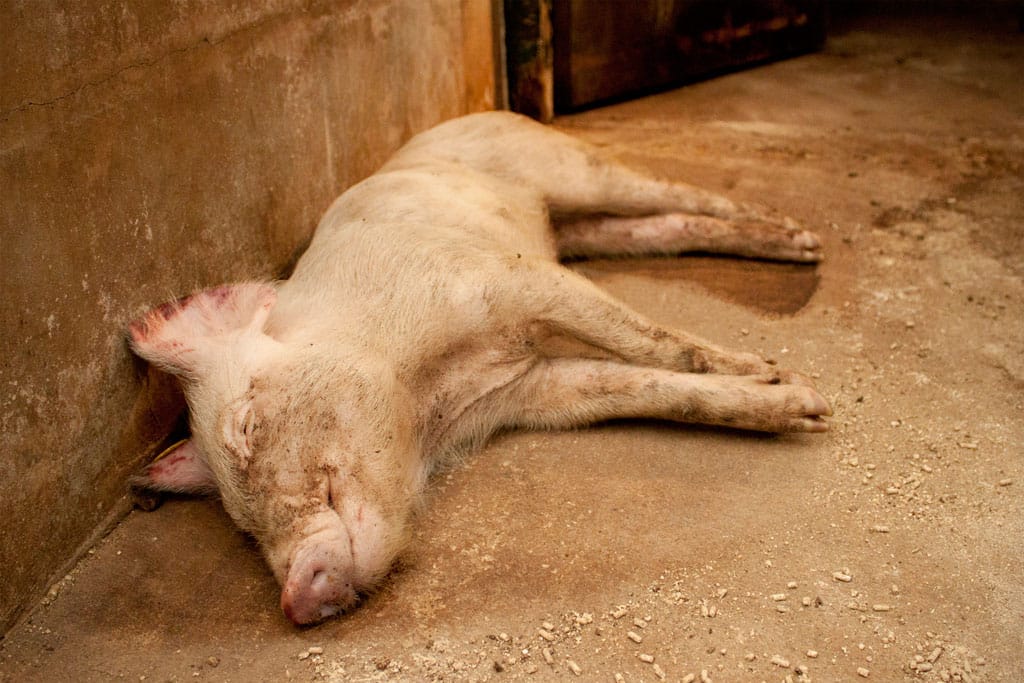
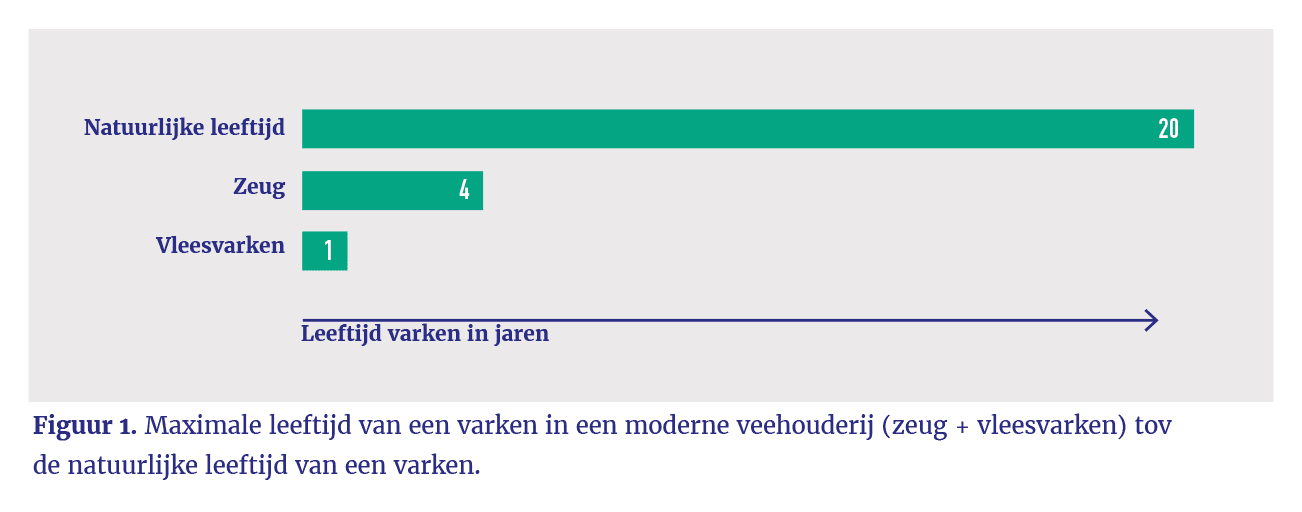
Another key difference between pigs from intensive pig farming and "natural" pigs is their age at slaughter. Finishing pigs are typically slaughtered after 6 to 8 months. Some pigs may even be slaughtered after 2 years because they are no longer economically viable. In the wild, pigs can live for 10 to 15 years, with some known to reach 20 to 25 years. In the Netherlands, however, most pigs do not live past their first birthday.
Sources
- 4
- 5
Sanders, Violette (2000) The Pig as a Companion Animal. Etiko Publishers Nieuw Vennep ISBN 9789052661582
- 6
Reimert, Inonge (2014) (Em)pathetic pigs? The impact of social interactions on welfare, health and productivity. PhD thesis, Wageningen University ISBN: 978-94-6173-996-4
- 7
Groot Bruinderink, G & Dekker, Jasja (2010) Wild boars. KNNV publishers ISBN 9789050113281
- 8
Rutherford, K.M.D. et al. (2013) The welfare implications of large litter size in domestic pig I: biological factors. Animal Welfare 22; p. 199-218
- 9
van Dixhoorn, I. et al. (2011) Separating animals. Wageningen UR Livestock Research, report 428
- 10
van Nieuwamerongen, S.E. et al. (2014) Literature review on group housing of farrowing sows and their piglets, report 757, Wageningen UR, Livestock Research